

Perforated Aluminum Sheets
Perforated aluminum panels are typically chosen primarily for their aesthetic properties in interior/exterior design work such as the construction of various types of floors, ceilings, screens, awnings and other architectural or decorative panels. Other typical applications may include the food industry, factories or laboratory environments where perforated aluminum panels typically perform slurry drenching, draining and collection duties in industrial washing and drying stations.
Patterned Aluminum Panels
Aluminum patterned panels are metal panels that have a raised indentation on one side, creating a raised pattern that is usually 1.5mm in height, and no pattern on the other side. They are often referred to as checkerboards, toggleboards, pentagonal boards or Durbar floorboards, and they are mostly made of aluminum, but steel sheet versions are also sold.
They are relatively thick and strong aluminum panels with good impact resistance and load-bearing properties, and are ideal for interior or exterior areas with high foot traffic and heavy vehicle traffic, such as service walkways, cargo loading areas and parking lots. The raised pattern hides surface damage and provides additional slip resistance and grip.
Anodized Aluminum Sheet
Anodizing is an electrochemical process used to increase the thickness of the oxide layer on a metal surface. Aluminum anodized sheet not only increases resistance to corrosion and abrasion (once a sealant is applied to counteract the porous nature of the highly anodized metal), but also provides better adhesion properties for paints, dyes, films, glues, and other decorative uses.
Thus, anodized metals are often represented by highly dyed aluminum sheets or other decorative sheets, such as anodized aluminum sheets widely used in vehicle parts, smartphones, tools, cookware, sports equipment, and building materials.


Composite Aluminum Panels
Aluminum composite panels or panels, often abbreviated ACS or ACP, are made from two very thin sheets of coil-coated aluminum bound to the exterior of a non-aluminum core material (usually plastic). They are commonly used as lightweight but strong panels for exterior curtain walls and building facades, as well as in a wide range of insulation and folding panel applications. Sometimes called sandwich panels or dibond panels, they are much lighter than their solid metal equivalents. This makes them easier to install and maintain in day-to-day use, and they are often easier to machine, cut and neatly shape with simple tools. As a result, they are ideally excellent for weatherproof signs, sign trays (especially where more complex design work is required, such as decorative letters), as well as decorative door panels, post cladding and other exterior decorative elements.
Brushed Aluminum Sheets
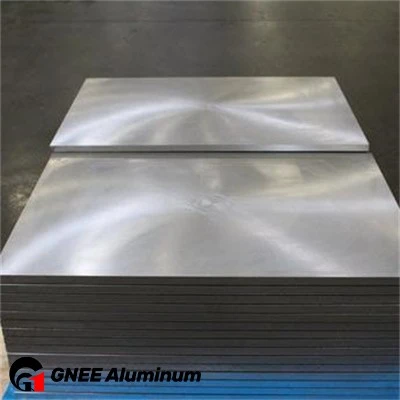
Different types of aluminum panels are available in brushed or unbrushed variants, including anodized and composite panels. In this context, "brushed" refers to a fairly uniform pattern of shiny parallel scratches and scuffs that are intentionally introduced on the surface of the sheet metal to give it a satin-like luster. This effect is widely used for a variety of interior finishes and fittings.
Choosing to purchase brushed aluminum panels is often a major aesthetic decision - the brushed look is extremely popular globally as a stylistic finishing touch that detracts from the reflective properties of an otherwise glossy surface. Although brushed is actually the result of an additional secondary process that results in a satin-bright finish, as a design element it can (somewhat counter-intuitively!) help give a raw or unfinished "industrial" look. It is often used to highlight that certain objects or panels are made of metal, contrasting with areas made of other materials.