Introduction to 6061 Aluminum
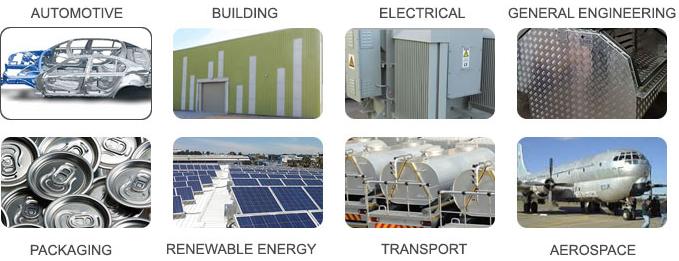
6061 aluminum alloy is one of the most representative materials within the 6000 series. Known for its excellent mechanical strength, processing performance, electrical and thermal conductivity, and high strength-to-weight ratio, it is widely used in aerospace, automotive manufacturing, bicycle components, shipbuilding, electronic housings, and various other fields.
As a heat-treatable alloy, 6061 aluminum is available in multiple tempers. Common tempers include the O and H states, while the T temper series represents materials that have reached a stable condition after (or without) work hardening. The T designation is typically followed by one or more numbers, commonly seen in heat-treated and strengthened alloys.
6061 Aluminum T6 vs. T651
What Is the Difference Between 6061-T6 and 6061-T651?
6061 aluminum alloy in the T6 and T651 tempers are both widely used, with their primary differences arising from variations in the heat-treatment and stress-relief processes.
6061-T6
The T6 temper specifically refers to an alloy that has undergone solution heat treatment followed by artificial aging. It applies to products that do not require cold work (other than straightening or flattening that does not affect mechanical properties) after solution treatment. As the flagship product within the 6061 series supplied by GNEE, 6061-T6 is well-known for its stable performance and high strength.
6061-T6 is an aluminum-magnesium-silicon alloy with strong corrosion resistance and uniform material properties. It offers high strength-typically reaching a hardness value above HV 90-along with excellent machinability and a good anodizing response.
6061-T651
The T651 temper is derived from the T6 condition but includes an additional stress-relieving stretch, often referred to as the stretch-straightening or stretch-balancing treatment. This process helps equalize and reduce internal stress distributions within the alloy. As a result, 6061-T651 offers better dimensional stability, improved mechanical consistency, and greater resistance to deformation during machining.
6061-T651 aluminum plates also provide excellent workability, corrosion resistance, and toughness. They anodize well and achieve vibrant, uniform finishes after coloring or surface treatment.
Key mechanical properties include:
Tensile Strength: 310 MPa
Yield Strength: 276 MPa
Hardness: 95 HB
Representative Uses of 6061 Aluminum
Common applications of 6061-T6 and 6061-T651 supplied by GNEE include:
Aerospace tooling and fixtures
LCD and semiconductor manufacturing equipment
Automated machinery components
Metallurgical fixtures
Diode and electronic mold frames
Automotive components
Model car chassis and precision base plates

How to Choose Between T6 and T651
T6 Temper
The T6 temper is best suited for the following conditions:
High strength-to-weight requirements:
When components must maintain strong load-bearing capacity while remaining lightweight, the T6 temper offers sufficient hardness and strength for such demanding applications.
Simple machining operations:
If the part design involves straightforward machining with fewer processing steps, T6 is often the ideal choice due to its reliable performance during basic fabrication.
Cost considerations:
For projects with tight budgets, T6 is generally more economical than T651, making it a practical option for cost-sensitive applications.
T651 Temper
The T651 temper is typically preferred in the following scenarios:
When enhanced machinability is needed:
The T651 temper undergoes controlled stretching, which significantly improves machinability. This makes it advantageous for complex or precision machining tasks.
Applications requiring high dimensional stability:
T651 is recommended when components must maintain strict dimensional accuracy after machining.
The stress-relief stretching process minimizes internal stresses, reducing distortion. As a result, it is widely used in industries such as automation, robotics, and precision equipment manufacturing.
When improved weldability is required:
The stretching involved in producing the T651 temper can also enhance the alloy's weldability. Therefore, T651 is the preferred choice when outstanding welding performance is needed.