

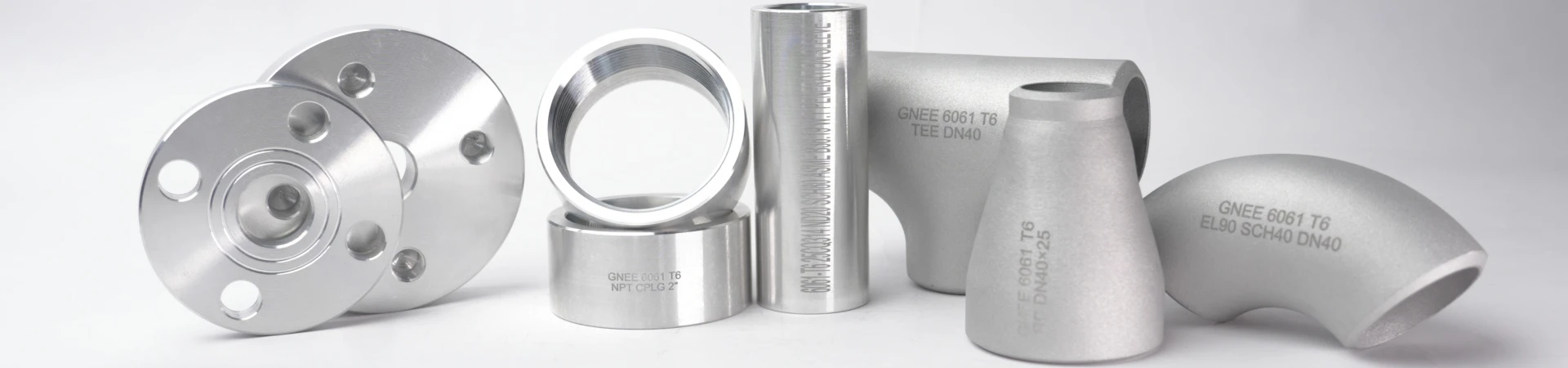
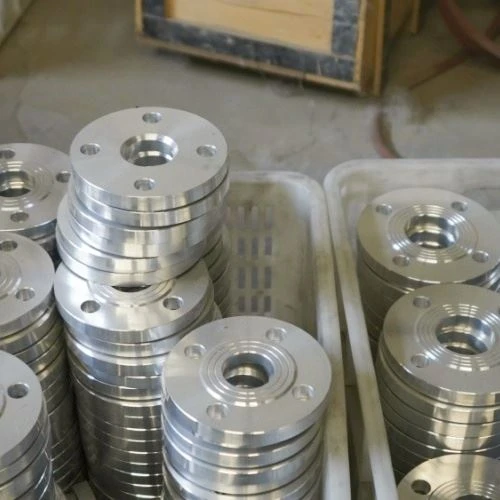


Henan Gnee New Material Co., Ltd. is one of the most reliable manufacturers and suppliers of aluminum slip-on flange in China. With abundant experience, we warmly welcome you to wholesale high quality aluminum slip-on flange in stock here from our factory. Good service and reasonable price are available.
An aluminum slip-on flange is a ring-shaped pipe connector that slides over the end of a pipe and is secured with fillet welds on both sides of the joint. It belongs to the slip-on (SO) family of flanges defined by ASME B16.5 and is made from aluminum alloys rather than steel. The main reason engineers choose it is its weight: aluminum has a density of about 2.7 g/cm³, roughly one third that of carbon steel, so a slip-on flange in aluminum can weigh far less than the same size in steel while still carrying low- and medium-pressure services.
This page covers what the flange is, the alloys and standards behind it, the dimensions you can expect, where it is used, and how it compares with weld neck and socket weld alternatives.
Specifications of Aluminum slip-on flange
|
Attribute |
Typical value or range |
|
Flange type |
Slip-on (SO), raised face (RF) or flat face (FF) |
|
Common alloys |
6061-T6, 5083-H112, 5086, 3003, 6082 |
|
Material standards |
ASTM B247 (forgings), ASTM B209 (plate) |
|
Dimensional standard |
ASME B16.5 (NPS 1/2 to 24); ASME B16.47 (NPS 26 to 60) |
|
European reference |
EN 1092-4 (aluminum alloy flanges) |
|
Size range |
NPS 1/2 to 24 under ASME B16.5; larger sizes on request |
|
Pressure classes |
Class 150, 300, and 600 where supported by the design code |
|
Facing types |
Flat face (FF), raised face (RF), ring-type joint (RTJ) |
|
Joint method |
Pipe inserted through the bore, fillet welded inside and outside |
Read More:Aluminum Flanges
How a Aluminum Slip-on flange works
A slip-on flange has a bore slightly larger than the outside diameter of the pipe. The pipe passes through the flange until it reaches the shoulder, then the fitter makes a fillet weld at the inside of the bore and another at the outside face. Those two welds hold the flange in place and seal the joint.
This design is simpler to align than a weld neck flange because the pipe does not need precise beveling or a matching hub. It is also lighter and uses less material than a weld neck, which makes it a common choice for fabricated equipment, skids, and utility piping. The trade-off is that the fillet welds carry the load rather than a continuous butt weld, so the engineering design, not the flange name, decides whether slip-on is acceptable for a given pressure and temperature.

Materials and standards
Aluminum alloys
The alloy and temper decide strength, corrosion behavior, and how the flange welds. The grades most often specified for aluminum slip-on flanges are:
6061-T6 is the general-purpose choice. It offers a good balance of strength, weldability, and corrosion resistance and suits HVAC, chilled-water, and many industrial utility lines.
5083-H112 and 5086 are the marine-grade options. They resist saltwater corrosion better than 6061 and are used on vessels and offshore systems where the flange sees brackish or seawater exposure.
3003 is a formable, moderate-strength alloy for non-demanding, non-corrosive services.
6082 provides a higher strength-to-weight ratio and is used in structural and transport applications.
Standards that apply
ASME B16.5 sets the dimensions, bolt-circle layout, facing, and marking for flanges from NPS 1/2 to 24. Flanges above NPS 24 follow ASME B16.47. The dimensional data in B16.5 is material-independent, so an aluminum flange and a steel flange of the same class share the same outline dimensions.
ASTM B247 covers aluminum and aluminum-alloy die and hand forgings, the usual material form for forged flanges. Plate-cut flanges may instead use ASTM B209 (sheet and plate).
EN 1092-4 is the European standard for aluminum alloy flanges and is common on projects that specify DN sizes and PN ratings.
A point that matters for safety: ASME B16.5 pressure-temperature rating tables are based on steel and other listed materials and do not include aluminum. An aluminum flange made to B16.5 dimensions should not automatically be given the same pressure rating as a steel flange of the same class. The allowable rating depends on the alloy, temper, temperature, gasket, bolting, and the applicable piping code, so it must be established by the design rather than read from a steel table.
Dimensions: Class 150 example
The table below shows representative ASME B16.5 Class 150 raised-face dimensions. These are dimensional values and do not change with the flange material.
|
NPS |
Outside diameter (in) |
Bolt circle (in) |
Bolt hole (in) |
Thickness (in) |
Bolt holes |
|
1/2 |
3.50 |
2.38 |
0.62 |
0.44 |
4 |
|
1 |
4.25 |
3.13 |
0.62 |
0.56 |
4 |
|
2 |
6.00 |
4.75 |
0.75 |
0.75 |
4 |
|
3 |
7.50 |
6.00 |
0.75 |
0.94 |
4 |
|
4 |
9.00 |
7.50 |
0.75 |
0.94 |
8 |
|
6 |
11.00 |
9.50 |
0.88 |
1.00 |
8 |
|
8 |
13.50 |
11.75 |
0.88 |
1.13 |
8 |
|
10 |
16.00 |
14.25 |
1.00 |
1.19 |
12 |
For Class 300 and 600, the same standard defines thicker rings, larger bolt circles, and different bolt sizes. Always confirm the full set of dimensions (OD, bore, thickness, bolt circle, bolt-hole diameter, number of holes, and facing) against the ordered class and standard before production.

Applications of aluminum slip-on flanges
Aluminum slip-on flanges fit services where weight and corrosion matter more than extreme pressure. Typical uses include:
HVAC and chilled water. Cooling water, condenser water, and air-handling lines are among the most common applications because aluminum is light and conducts heat well.
Marine and shipbuilding. Fresh-water, compressed-air, and utility lines on vessels use marine alloys such as 5083 and 5086. Only specific alloys are suitable for seawater exposure, so the alloy must be chosen against the actual environment.
Water treatment. Filter lines, backwash lines, clear-water piping, and tank connections use aluminum where the water chemistry is compatible.
Factory compressed air. Aluminum piping is popular for compressed-air systems because it is light and does not rust internally. The flange rating still has to match the system design pressure.
Tanks and vessels. Nozzles and equipment interfaces on tanks often use slip-on flanges for straightforward, field-welded connections.
Chemical and industrial utility lines. Services that are non-corrosive to aluminum and run at low or medium pressure can use aluminum flanges, provided the conveyed medium and temperature are checked against the alloy.


Advantages of aluminum slip-on flanges
Lower weight. At about one third the density of steel, aluminum reduces the load on supports, skids, and structures, which matters on ships, vehicles, and rooftop plant.
Corrosion resistance. The natural oxide layer protects aluminum in many neutral environments, and marine alloys extend that protection to brackish and seawater service.
Easier handling and installation. Lighter flanges are simpler to lift and align, and the slip-on design needs no pipe beveling.
Good weldability and machinability. Alloys such as 6061 weld predictably with common filler wires, which keeps fabrication straightforward.
Recyclability. Aluminum can be recycled with a fraction of the energy needed for primary production, which supports lower-carbon specifications.
aluminum slip-on flanges vs other flange types
|
Feature |
Slip-on |
Weld neck |
Socket weld |
Lap joint |
|
Pipe connection |
Passes through bore, fillet welded both sides |
Butt welded to a tapered hub |
Inserted into a socket, fillet welded |
Loose flange over a stub end |
|
Alignment |
Easy |
Moderate |
Moderate |
Easy, flange can rotate |
|
Typical use |
General fabricated and utility piping |
High stress, cyclic, or thermal duty |
Small-bore, higher-pressure lines |
Frequent dismantling |
|
Weight |
Low |
Higher |
Low to moderate |
Low |
Slip-on is not simply "the low-pressure option" and weld neck is not automatically "the high-pressure option." The right choice depends on the piping code, the loads, the temperature cycle, and the welding specified in the design.
Welding notes
Slip-on flanges are joined with fillet welds at the bore and the face. For 6061 the common filler wires are 4043 or 5356; for 5083, 5183 or 5356 is typical. Welding procedure and filler metal should be confirmed with the flange supplier and the project welding specification before production, because the wrong filler or procedure can weaken the joint or hurt corrosion resistance.
Quality and Inspection
|
Inspection |
Purpose |
|
Material Identification |
Confirm alloy (PMI or spectro) |
|
OD / ID Measurement |
Verify dimensions |
|
Thickness Measurement |
Confirm flange thickness |
|
PCD Inspection |
Check bolt-hole circle |
|
Bolt Hole Inspection |
Verify diameter and position |
|
Facing Inspection |
Check sealing surface |
|
Thread Gauging |
For threaded flanges |
|
Visual Inspection |
Check surface and machining quality |
Material certificates available per EN 10204 3.1. Third-party inspection (SGS, BV) available on request.

Why Choose GNEE
Direct manufacturer - Factory-direct pricing, no middleman markup
ISO 9001 certified - Quality management system in place
Material certificates - EN 10204 3.1 certificates with each shipment
Export experience - Shipping to 100+ countries worldwide
Custom CNC machining - Flanges machined to your drawings
Third-party inspection - SGS, BV available on request


Frequently asked questions
What is an aluminum slip-on flange?
It is a flange made from an aluminum alloy with a bore slightly larger than the pipe. The pipe slides through the flange and is held by fillet welds on both sides. It is used to connect pipe, valves, and equipment in low and medium pressure systems where weight and corrosion resistance matter.
Which aluminum alloy should I specify?
Use 6061-T6 for general-purpose and HVAC services, 5083-H112 or 5086 for marine and seawater exposure, 3003 for non-demanding non-corrosive lines, and 6082 where a higher strength-to-weight ratio is needed. The choice follows the service environment and the design code.
Can an aluminum slip-on flange take the same pressure as a steel flange?
Not by default. ASME B16.5 dimensions are shared across materials, but its pressure-temperature rating tables do not cover aluminum. An aluminum flange of the same class must have its allowable rating set by the alloy, temper, temperature, and applicable code, so it should be verified by the design rather than copied from a steel rating table.
What standards apply to aluminum slip-on flanges?
Dimensions follow ASME B16.5 for NPS 1/2 to 24 and ASME B16.47 above that. The forging material is usually covered by ASTM B247, with plate-cut versions referencing ASTM B209. European projects may use EN 1092-4 with PN ratings.
How is a slip-on flange installed?
The pipe is inserted through the flange bore to the shoulder, then fillet welded on the inside and outside of the joint. The pipe does not need beveling, which makes alignment and field welding straightforward compared with a weld neck flange.
Where are aluminum slip-on flanges used?
Common applications are HVAC and chilled-water systems, marine and shipboard utility lines, water-treatment piping, factory compressed-air networks, tank and vessel nozzles, and selected non-corrosive chemical utility lines.
Slip-on or weld neck: which should I choose?
Choose slip-on for general fabricated and utility piping where easy alignment and lower weight are priorities. Choose weld neck where the design calls for a butt-welded hub to handle higher stress, thermal cycling, or demanding pressure service. The piping code and engineering design decide, not the flange name alone.
Request a quote
Tell us the alloy, size, standard, pressure class, facing, and quantity, and our engineering team will return a quote with material certificates and inspection records. A complete inquiry looks like this: "6061-T6 aluminum slip-on flange, DN150, ASME B16.5, Class 150, RF, 100 pcs, chilled water." For non-standard bolt circles, bores, or thicknesses, send a dimensioned drawing and we will review it with you.
Hot Tags: aluminum slip-on flange, China aluminum slip-on flange manufacturers, suppliers, factory