

Aluminum pipe flanges connect pipes, valves, and pumps in a piping system. They let you bolt two ends together so the joint can be opened for cleaning, inspection, or maintenance. Below you will find the types we supply, the alloys we use, available sizes and pressure classes, and how to request a quote.
What is an aluminum pipe flange
A flange is a flat, round disc with bolt holes. You weld, slip, or thread it onto the pipe end, then join it to another flange with bolts and a gasket. Aluminum is chosen when weight, corrosion resistance, or non-sparking behavior matter more than a very high pressure or temperature rating.
We supply aluminum flanges made from aluminum alloy only. Common alloys are 6061-T6, 6082-T6, and 5083. We do not mix in stainless steel or brass on this product line - if you need those materials, we can quote them separately.
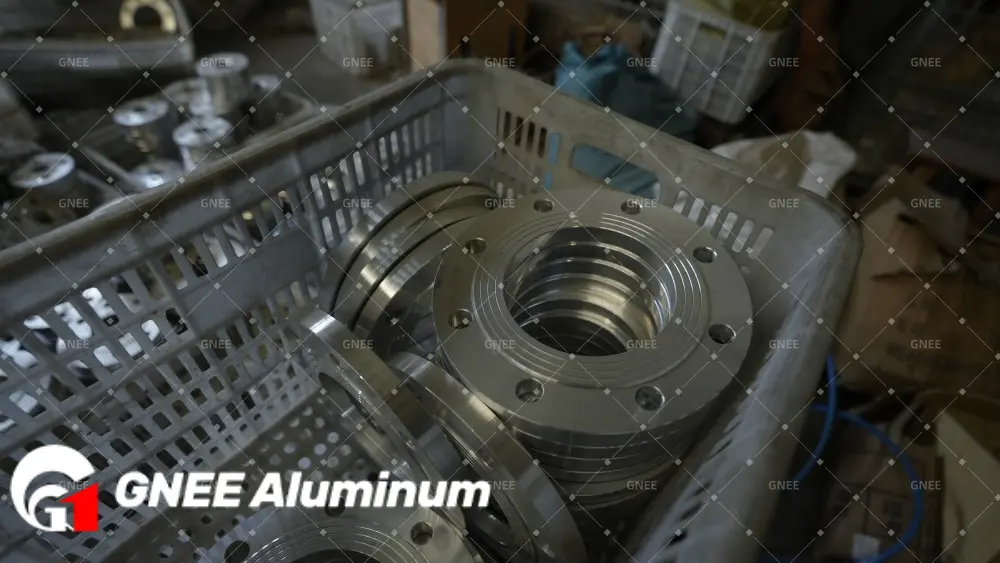
Specifications
| Material (alloy) | 6061-T6, 6082-T6, 5083, others on request |
|---|---|
| Size range | 1/2"–24" (DN15–DN600) |
| Pressure class | ASME B16.5 Class 150 (PN 20); other classes on request |
| Standards | ASTM B247 (material), ASME B16.5 / EN 1092-1 (dimensions) |
| Surface | Mill finish; anodized or powder-coated on request |
| Temperature | Up to about 200 °C (392 °F) continuous; not for steam or high temp |
| Certifications | ISO 9001; EN 10204 3.1 mill test certificate |
| Packaging | Plywood cases or pallets, seaworthy export packing |
| MOQ | Flexible; small orders accepted |
| Lead time | 15–30 days after order confirmation |
Pressure class and temperature limits depend on alloy, size, and service conditions; confirm with our engineering team before ordering.
Types we supply
Weld Neck (WN)
Has a long tapered hub welded to the pipe. Used where stress at the joint must be spread out.
Slip-On (SO)
Slips over the pipe and is welded on both sides. Easier and cheaper to fit than weld neck.
Blind (BL)
A solid disc that closes the end of a line. Used for test points, end caps, or future expansion.
Lap Joint (LJ)
Used with a stub end; the flange can rotate for easy bolt alignment and is simple to take apart.
Threaded (THD)
Screws onto a threaded pipe; used on small sizes and low pressure.
How to choose the right flange type
Need to open the line often? Use lap joint, or blind for end caps.
Higher joint stress? Use weld neck.
Budget and easy fitment priority? Use slip-on.
Small line, low pressure? Use threaded.
Materials and alloys
Aluminum flanges are lighter than steel - aluminum density is about 2.70 g/cm³ against steel's 7.85 g/cm³, so an aluminum flange weighs roughly one-third of the same steel flange. That lowers handling, freight, and support costs.
6061-T6: good strength and corrosion resistance; the most common general flange alloy.
6082-T6: similar to 6061 with slightly better corrosion resistance in some environments.
5083: good for marine and welded structures; used where weldability matters.
Pressure and temperature limits
Aluminum flanges are rated for low to moderate pressure and ambient-to-moderate temperature. We normally supply them to ASME B16.5 Class 150 (PN 20). They are not suitable for high-pressure steam, high-temperature oil and gas service, or strong acid and alkali lines. For those conditions, stainless steel or alloy steel is the right choice. Tell us your media, pressure, and temperature and we will confirm the suitable alloy and class.
Applications
Aluminum flanges are used where weight and corrosion matter:
Building structures: curtain walls, roof drainage, and architectural pipework where light weight simplifies support.
Machinery manufacturing: frames, guarding, and equipment piping that needs to be taken apart for service.
Pressure vessels (low pressure): aluminum tanks and vessels in food, pharma, and cryogenic service, where aluminum's clean surface and low-temperature behavior help.
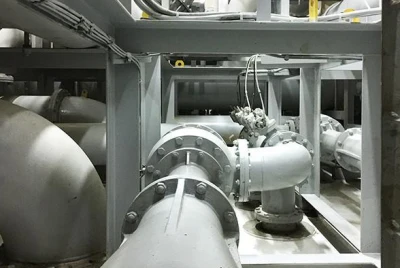
Piping and fluid transfer: water treatment, compressed air, and low-pressure process lines, including corrosive or non-sparking-required environments.
We do not recommend aluminum flanges for high-temperature steam, high-pressure hydrocarbon, or strong acid service.
Benefits and limitations
Benefits
Corrosion resistance: aluminum forms a protective oxide layer; good in atmospheric, marine, and many chemical environments.
Light weight: about one-third the weight of steel, easier to lift, ship, and install.
Non-sparking: useful in flammable or explosive areas.
Good machinability and weldability for most alloys.
Limitations
Lower strength and pressure rating than steel; limited to lower classes.
Lower temperature ceiling than steel; not for high-temperature service.
Softer surface; needs care in handling and gasket selection.
Flange facing, drilling, and gaskets
Facing: raised face (RF) as standard; flat face on request.
Drilling: ANSI B16.5 standard drilling; DIN, JIS, and BS patterns available on request.
Gaskets: soft gaskets (non-asbestos, PTFE) are recommended because aluminum is softer - avoid over-tightening the bolts.
Standards and certifications
Our aluminum flanges are produced to ASTM B247 for material and to ASME B16.5 or EN 1092-1 for dimensions. Each order can be supplied with an EN 10204 3.1 mill test certificate and ISO 9001 quality documentation. If your project requires a specific certification standard, tell us in your inquiry.

FAQ
Which alloy should I choose?
6061-T6 for general use; 5083 for welding and marine; 6082-T6 where slightly better corrosion resistance is needed.
What is the maximum pressure?
Normally Class 150 (PN 20). Higher classes are possible but must be engineered case by case.
Can you supply certificates?
Yes - EN 10204 3.1 MTC and ISO 9001 documents are available.
What is the MOQ and lead time?
MOQ is flexible; lead time is 15–30 days after confirmation.
Do you make non-standard sizes?
Yes, send your drawing and we will confirm.
Request a quote
We keep MOQ flexible and accept small orders. Standard lead time is 15–30 days after drawing and specification confirmation. To get a quote, send an inquiry with the following details:
Flange type (slip-on, weld neck, blind, lap joint, threaded)
Size and pressure class
Alloy and surface requirement
Quantity
Drawing, if non-standard or custom drilling
Send an inquiry