

1. What Is a 6061-T6 Aluminum Flange?
A 6061-T6 aluminum flange is a pipe-connecting component - available in slip-on, weld neck, blind, socket weld and lap joint configurations - manufactured from 6061 aluminum alloy in the T6 temper, a precipitation-hardened condition produced by solution heat treatment followed by artificial aging. 6061 belongs to the 6xxx (Al-Mg-Si) aluminum alloy series, in which magnesium and silicon combine to form Mg₂Si precipitates that give the alloy its strength.
Common product standards include ASTM B247 / ASME SB-247 (aluminum alloy die forgings, hand forgings and rolled ring forgings), ASTM B209 (plate) and ASTM B211 (bar) when flanges are machined from stock, with dimensional patterns per ASME B16.5, EN 1092-4 or JIS B2220. Typical sizes run from 1/2" (DN15) to 24" (DN600) in Class 150 / PN16 ratings, with larger diameters available by project requirement.
Buyers specify 6061-T6 flanges because the alloy combines a minimum tensile strength of 260 MPa (forgings per ASTM B247), good weldability by TIG/MIG, strong atmospheric and marine corrosion resistance, and roughly one-third the weight of a comparable carbon steel flange - a combination well suited to marine piping, industrial gas and cryogenic systems, where reduced weight and corrosion resistance matter more than the maximum pressure rating of steel.
2. 6061-T6 Aluminum Flange Manufacturer and Supplier
GNEE supplies 6061-T6 aluminum flanges for export, produced by forging, rolled ring forging, or CNC machining from certified B209 plate and B211 bar, depending on flange geometry and order quantity.
Available supply includes:
Alloys and tempers: 6061-T6 as standard; T651 and T652 stress-relieved tempers on request; 5083 and 6082 flanges as alternatives.
Flange types: slip-on, weld neck, blind, socket weld, lap joint and plate flanges; custom geometries per drawing.
Size range: 1/2"–24" (DN15–DN600) in ASME B16.5 Class 150/300 patterns; EN 1092-4 PN10/PN16 and JIS B2220 5K/10K dimensions; larger sizes by negotiation.
Facings: flat face (FF), raised face (RF); machined bolt circles and gasket surfaces to standard or drawing.
Processing: CNC turning and milling, drilling, boring, thread cutting, deburring; anodizing and other surface treatments through qualified partners.
Documentation: mill test certificates, chemical and mechanical test reports, dimensional inspection records, and EN 10204 3.1 certification where specified.
Note that pressure–temperature ratings for aluminum flanges depend on the applicable piping design code and must be established by design - an aluminum flange with B16.5 dimensions should not automatically be assigned the same pressure rating as a steel flange of the same class.

3. Why Choose a 6061-T6 Aluminum Flange?
|
Feature |
Why It Matters |
Typical Application |
|
Corrosion resistance |
The natural oxide film resists salt spray, humidity and many chemicals without painting or coating |
Shipboard seawater and ballast piping |
|
Low weight (~2.70 g/cm³) |
Roughly one-third the weight of steel flanges, reducing structural load and installation effort |
Marine piping, weight-sensitive skids |
|
Heat-treatable strength |
T6 temper delivers minimum 260 MPa tensile strength (ASTM B247 forgings), far above annealed 6061-O |
Pressure-containing piping connections |
|
Weldability |
TIG/MIG weldable with 4043 or 5356 filler; joints can be designed for full-strength service |
Slip-on and weld neck flange-to-pipe joints |
|
Machinability |
Free-cutting behavior allows tight-tolerance bores, facings and bolt holes |
CNC-machined custom flanges |
|
Low-temperature toughness |
No ductile-to-brittle transition; properties remain reliable at cryogenic temperatures |
Air separation, LNG and refrigeration systems |
4. 6061-T6 Aluminum Flange Specification
|
Item |
Specification |
|
Alloy |
6061 (UNS A96061) |
|
Temper |
T6 (T651 / T652 on request) |
|
Standard |
ASTM B247 / ASME SB-247 (forgings); ASTM B209 / B211 (machined stock) |
|
Dimensional Standard |
ASME B16.5; EN 1092-4; JIS B2220 |
|
Product Form |
Slip-on, weld neck, blind, socket weld, lap joint, plate flange |
|
Size Range |
1/2"–24" (DN15–DN600); larger sizes by project |
|
Pressure Class |
Class 150 / Class 300; PN10 / PN16 (rating subject to design code) |
|
Facing |
Flat face (FF), raised face (RF) |
|
Surface |
Mill finish; anodized or coated on request |
|
Manufacturing Process |
Die forging, rolled ring forging, or CNC machining from plate/bar |
|
Typical Applications |
Marine piping, industrial gas, cryogenic systems, chemical equipment |
5. Chemical Composition of 6061 (per ASTM B247 / Registered Composition)
|
Element |
Minimum (%) |
Maximum (%) |
|
Silicon (Si) |
0.40 |
0.80 |
|
Iron (Fe) |
- |
0.70 |
|
Copper (Cu) |
0.15 |
0.40 |
|
Manganese (Mn) |
- |
0.15 |
|
Magnesium (Mg) |
0.80 |
1.20 |
|
Chromium (Cr) |
0.04 |
0.35 |
|
Zinc (Zn) |
- |
0.25 |
|
Titanium (Ti) |
- |
0.15 |
|
Others, each |
- |
0.05 |
|
Others, total |
- |
0.15 |
|
Aluminum (Al) |
Balance |
- |
The composition limits above are the registered limits for 6061, which are applied consistently across ASTM B247 forgings, B209 plate and B211 bar, and match EN AW-6061 under EN 573-3. Because the limits are identical, a certificate showing this composition satisfies both American and European chemical requirements for the alloy.
6. Mechanical Properties of 6061-T6 Flanges (Minimum Standard Requirements)
|
Property |
ASTM B247 Forgings |
ASTM B211 Bar (machined flanges) |
|
Ultimate Tensile Strength, min |
260 MPa (38 ksi) |
290 MPa (42 ksi) |
|
Yield Strength (0.2% offset), min |
240 MPa (35 ksi) |
240 MPa (35 ksi) |
|
Elongation in 2" or 4D, min |
Varies by section thickness (approx. 7%) |
Varies by thickness/section (approx. 8–10%) |
These are minimum standard requirements, not typical values. Actual certified heats of 6061-T6 commonly test at 290–310 MPa tensile and 245–276 MPa yield - above the minimums - but procurement and design should be based on the guaranteed minimums for the specific product form ordered. Properties also differ by section: a heavy rolled-ring forging will not carry the same elongation guarantee as a small machined bar section. When a specific minimum value is contractually required, it should be stated on the purchase order and confirmed on the mill test certificate.
7. What Does T6 Mean?
T6 is a temper designation meaning solution heat treated and artificially aged:
Solution treatment: the forging or bar is heated to approximately 530 °C so the Mg₂Si phase dissolves into the aluminum matrix.
Quenching: rapid cooling (usually in water or polymer) locks the alloying elements in supersaturated solid solution.
Artificial aging: reheating to roughly 175 °C for several hours precipitates fine Mg₂Si particles, which block dislocation movement and raise strength.
Effects of T6:
Strength: the highest standard temper strength for 6061 - minimum tensile strength roughly doubles compared with annealed 6061-O.
Formability: significantly reduced compared with O or T4; T6 flanges are not cold-formed, they are machined.
Welding: weldable by TIG/MIG, but the heat-affected zone locally reverts toward the annealed condition and loses a substantial portion of its strength unless the assembly is re-solution-treated and re-aged.
Related tempers: T651 (solution treated, stress relieved by stretching, then artificially aged) and T652 (stress relieved by compression, common for forgings) offer the same strength with reduced residual stress - recommended for flanges requiring heavy machining, where residual stress would otherwise cause distortion.
8. Available Sizes, Surface Finishes and Processing
Thickness / flange thickness: per ASME B16.5, EN 1092-4 or JIS B2220 pattern for the applicable class; custom thickness per drawing.
Nominal sizes: 1/2" through 24" (DN15–DN600); larger diameters as rolled ring forgings.
Tolerances: dimensional and bolt-circle tolerances per the governing flange standard; tighter CNC tolerances on request.
Machining: CNC turning, milling, boring, drilling and threading; sealing faces machined to standard flatness and finish requirements.
Cutting: flanges machined from plate or bar are cut to size before final machining.
Bending: not applicable to finished flanges (T6 temper is not cold-formed); pipe-end forming is carried out on the connecting pipe.
Surface finishes: mill finish as standard; anodizing (clear or colored), chemical conversion coating or painting available on request.
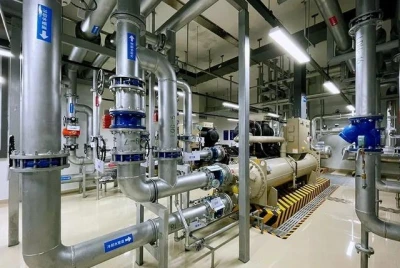
9. 6061-T6 Aluminum Flange Applications
Marine and Shipbuilding Piping
6061-T6 flanges are widely used in shipboard piping for seawater, ballast, fuel and hydraulic lines. The alloy's chloride corrosion resistance eliminates the painting maintenance that carbon steel flanges demand, and its low weight reduces topside load. Weld neck and slip-on flanges connect aluminum piping where vibration from vessel motion requires a sound welded joint. Classification-society requirements (e.g., ABS, DNV, CCS) can be supported with the corresponding inspection documentation.
Industrial Gas, Air Separation and Cryogenic Systems
Aluminum retains toughness at very low temperatures with no ductile-to-brittle transition, making 6061 flanges a practical choice for air separation units, industrial gas distribution and low-temperature refrigeration piping. Here the key properties are cryogenic toughness, non-magnetic behavior and leak-tight machined sealing faces.
Heat Exchangers and Process Equipment
Aluminum plate-fin and shell equipment uses 6061 flanges at nozzle and manifold connections. High thermal conductivity, corrosion resistance and machinability for gasket surfaces are the deciding properties.
Chemical and Water Treatment Equipment
Where fluids are only mildly aggressive to aluminum, 6061 flanges connect process lines, dosing skids and modular water treatment plants. The natural oxide film handles many neutral and mildly acidic/alkaline services; compatibility must be confirmed against the actual medium.
Vacuum Systems and Instrumentation
6061-T6 machines to flat, stable gasket faces and is non-magnetic and low-outgassing after cleaning, so it is used in vacuum lines and analytical instrumentation where steel is unsuitable.

10. Manufacturing and Heat Treatment
A forged 6061-T6 flange follows this route:
Raw Material (certified billet) → Melting and Casting → Homogenization → Forging / Rolled Ring Forging (approx. 430–480 °C) → Solution Heat Treatment (~530 °C) → Quenching → Artificial Aging (~175 °C) → Rough Machining → Finishing Machining → Inspection → Marking and Packaging
The T6 temper is created in the two heat-treatment steps: solution treatment dissolves the Mg₂Si phase, and artificial aging re-precipitates it in a fine, uniformly distributed form. Stress-relieved variants (T651/T652) add a controlled stretching or compression step after quenching, before aging. Flanges machined from B209 plate or B211 bar inherit the temper of the stock material, which is certified at the mill.
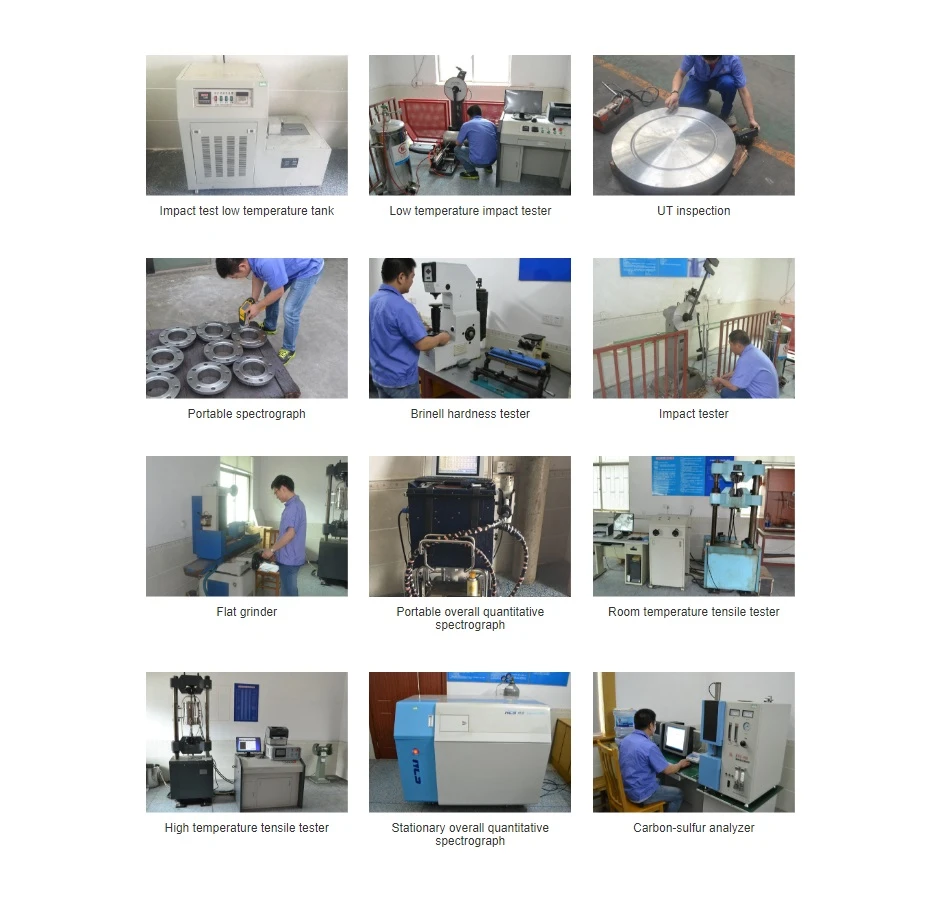
11. Quality Inspection and Certification
GNEE can provide the following inspection and documentation:
Chemical composition analysis (spectrometric)
Tensile testing (ultimate and yield strength, elongation)
Hardness measurement on request
Dimensional inspection: OD, thickness, bore, bolt circle, hole diameter and facing finish
Visual and surface inspection of sealing faces
Dye penetrant testing (PT) or ultrasonic testing (UT) when specified for critical service
Mill Test Certificate (MTC), EN 10204 3.1 type certification
Third-party inspection (SGS, BV, TÜV or client-appointed) arranged on request
12. Export Packaging
Flanges are packed for ocean freight as follows:
Sealing faces protected with film or inserts to prevent handling damage
Individual or bundled wrapping in waterproof kraft paper or plastic film
Packed in wooden crates or on wooden pallets with steel strapping
Edge protection on bundles
Each flange marked with alloy, temper, size, rating, heat number and standard as applicable
Packaging customized to client or project requirements (e.g., case marking, sequential numbering)

13. 6061-T6 Aluminum Flange vs Similar Aluminum Alloys
6061-T6 Flange vs 5083 Flange
|
Property |
6061-T6 |
5083 (typically O/H111/H112) |
|
Alloy Series |
6xxx (Al-Mg-Si), heat-treatable |
5xxx (Al-Mg), non-heat-treatable |
|
Strength |
Higher (min. 260 MPa UTS, forged T6) |
Lower minimum strength in common tempers |
|
Corrosion Resistance |
Good |
Excellent - the stronger choice for continuous seawater immersion |
|
Weldability |
Good, but HAZ loses strength unless re-heat-treated |
Very good, and welded joints retain strength |
|
Formability |
Limited in T6 |
Good |
|
Typical Applications |
Machined flanges, cryogenics, general industrial |
Hull structures, marine piping with heavy welding |
6061-T6 Flange vs 6082 Flange
|
Property |
6061-T6 |
6082-T6 |
|
Alloy Series |
6xxx (Al-Mg-Si) |
6xxx (Al-Mg-Si), slightly higher Mn |
|
Strength |
Comparable, slightly lower |
Slightly higher minimum strength in many products |
|
Corrosion Resistance |
Good |
Good, marginally better in marine atmospheres |
|
Weldability |
Good |
Good, somewhat lower welded strength |
|
Typical Applications |
Global standard, especially American-market designs |
Preferred in European EN-standard projects |
5083 is the better selection where seawater immersion and field welding dominate; 6082 suits EN-standard European projects; 6061-T6 remains the most readily available, best-documented general-purpose option with the widest base of ASME/ASTM references.
14. FAQ
What is a 6061-T6 aluminum flange?
A pipe-connecting flange made from 6061 Al-Mg-Si alloy, solution heat treated and artificially aged (T6), supplied as a forging or machined from certified plate/bar to ASME B16.5, EN 1092-4 or JIS B2220 dimensions.
What standards cover aluminum flanges?
Material: ASTM B247 / ASME SB-247 for forgings, ASTM B209/B211 for machined stock. Dimensions: ASME B16.5, EN 1092-4 (aluminum flanges), JIS B2220. Certification: EN 10204 3.1 when specified.
Is a 6061-T6 aluminum flange corrosion resistant?
Yes. 6061 has good resistance to atmospheric, marine and many chemical environments. For continuous seawater immersion, 5083 offers higher resistance.
Is it weldable?
Yes, by TIG or MIG using 4043 or 5356 filler. Note that the heat-affected zone loses a significant part of its T6 strength unless the component is re-heat-treated after welding.
Can aluminum flanges be machined?
Yes - 6061-T6 machines very well, which is why many flanges are CNC-machined from bar or plate, and why sealing faces and bolt holes are machined to close tolerances.
What is the difference between T6, T651 and T652?
All are solution treated and artificially aged. T651 is stress relieved by stretching; T652 by compression (typical for forgings). Strength is equivalent; T651/T652 reduce distortion in heavily machined parts.
What sizes and pressure classes are available?
Commonly 1/2"–24" (DN15–DN600) in Class 150/300 and PN10/PN16 patterns; larger sizes as rolled ring forgings. Pressure ratings must be verified against the applicable piping design code for aluminum.
Is a 6061 flange suitable for cryogenic service?
Yes. Aluminum has no ductile-to-brittle transition, so 6061 is used in air separation, industrial gas and low-temperature piping.
Can GNEE provide MTC and inspection certificates?
Yes - mill test certificates, chemical and mechanical test reports, dimensional records, EN 10204 3.1 certification, and third-party inspection on request.
How does it compare with a carbon steel flange?
About one-third the weight and far better corrosion resistance in marine environments, but lower strength and pressure capability; suitable where weight and corrosion, not maximum pressure, drive the design.
15. Why Buy 6061-T6 Aluminum Flanges from GNEE?
GNEE supplies 6061-T6 flanges with consistent, certified material - each order traceable by heat number to its chemical and mechanical test results. Forgings, rolled rings and machined flanges are available across standard ASME, EN and JIS dimensions, and custom geometries are produced to client drawings with CNC machining, anodizing and other surface treatments arranged as required.
Inspection documentation (MTC, EN 10204 3.1, third-party inspection) and export-grade packaging protect the material from mill to jobsite, and the technical team can confirm temper, size and standard compliance before production so that the flange you receive matches the piping code it will serve. Quotations are issued quickly against a clear specification.