

1.Corrosion Resistance of 1100 Aluminum Diamond Plate
The most defining characteristic of the 1100 series is its purity. It is considered a commercially pure aluminum, meaning it contains a minimum of 99.0% aluminum. It lacks added alloying elements like copper, manganese, or magnesium.
In the world of metallurgy, high purity means exceptional resistance to oxidation and chemical corrosion. When 1100 aluminum is exposed to air and moisture, it instantly forms a microscopic, dense oxide layer that prevents further rusting.
If you are installing aluminum panels in a wet environment, a washdown facility, or a humid coastal area, the 1100 grade performs brilliantly without needing any expensive clear-coat paints or anodizing.
| Corrosion Metric | 1100 Aluminum Diamond Plate | 3003 Aluminum Diamond Plate | 5052 Aluminum Checker Plate |
| Aluminum Purity | ≥ 99.0% | ~ 98.6% | ~ 97.5% |
| General Corrosion | Excellent | Very Good | Excellent |
| Oxidation Resistance | Very High | High | Very High |
| Marine Saltwater Use | Moderate | Good | Excellent (Best Choice) |
Key Takeaway: If your project involves regular water exposure but not direct ocean saltwater, the 1100 grade provides all the rust protection you need at a fraction of the cost of marine grade 5052.
2.Forming and Bending 1100 Aluminum Plate
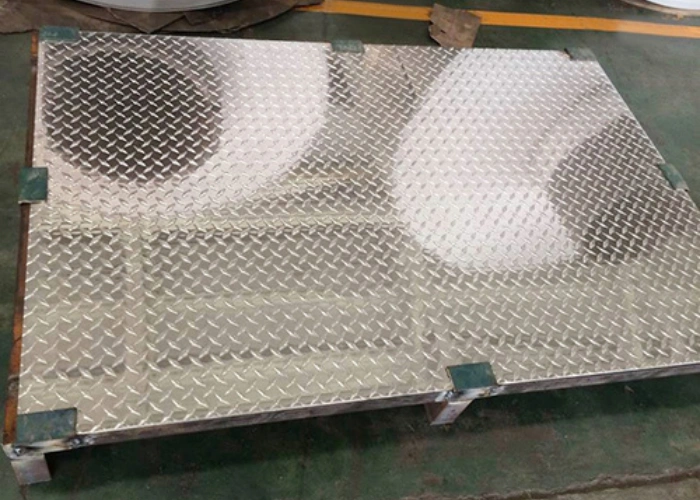
For fabricators, material cost is only one part of the equation; processing cost is the other. This is where the 1100 alloy truly dominates.
Because it is basically pure aluminum, it is incredibly ductile. The "O" (annealed) or "H14" (half-hard) tempers of the 1100 aluminum diamond plate offer the best formability in the industry.
When you put a 3003 aluminum diamond plate or a hard 5052 plate into a press brake to bend it 90 degrees, you must be careful about the bending radius to prevent the metal from cracking along the fold. With 1100 aluminum, the material easily folds without fracturing, even across the raised diamond patterns.
Furthermore, because the metal is softer, it creates significantly less wear and tear on your factory's cutting tools, laser cutters, and stamping dies. This means fewer tooling replacements and faster production times, driving down your total manufacturing costs.
3.Anti-slip of 1100 Aluminum Tread Plate
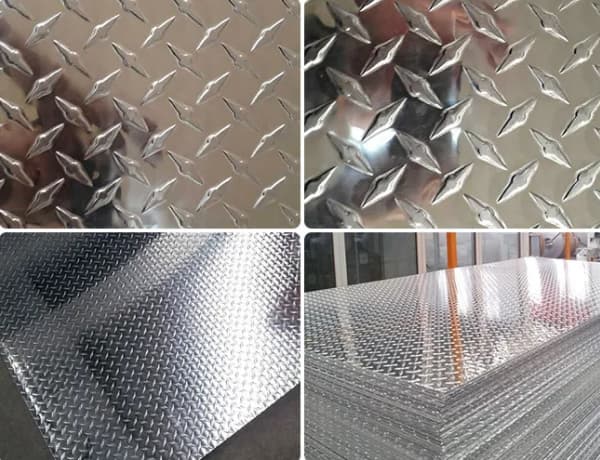
The purpose of a diamond plate (or tread plate) is to prevent slipping. The anti-slip performance depends heavily on how sharp and deep the embossed pattern is.
During our manufacturing process, the raw aluminum coil passes through massive steel rollers that press the pattern into the metal. Because the 1100 alloy is soft, our rollers can press deeply into the surface, creating very distinct, sharp, and well-defined 5-bar or diamond lugs.
Because the edges of these raised patterns are so sharp, the 1100 aluminum tread plate offers incredibly high initial friction. When a worker steps on a brand-new 1100 plate, the grip feels incredibly secure, even if the surface is slightly wet.
However, you must remember the physical trade-off: The softness that allows for sharp embossing also means the pattern will flatten faster under heavy, abrasive friction compared to harder alloys.
4.Price Comparison of 1100 Aluminum Tread Plate
Budget constraints drive many procurement decisions. If your company is trying to win a competitive contract for interior wall linings or trailer side panels, using a wholesale 1100 aluminum diamond plate supplier will give you a significant pricing advantage.
Why is 1100 cheaper?
- Raw Material: It does not require the addition of expensive alloying metals like Magnesium (used in 5052) or Manganese (used in 3003).
- Processing: It requires less energy and time to roll and emboss at the mill because the pure aluminum yields easily to the rollers.
If you are buying 50 Metric Tons of aluminum, switching from 3003 to 1100 (where structurally appropriate) can save you thousands of dollars without sacrificing the visual appearance or the rustproof qualities of the final product.
5.Why Not Use 1100 Aluminum Plate for Heavy Loads?
You should never use 1100 aluminum diamond plate for high-stress structural applications. Let's look at the mechanical data:
- Yield Strength of 1100 Aluminum: ~30 to 50 MPa
- Yield Strength of 3003 Aluminum: ~40 to 100 MPa
- Yield Strength of 5052 Aluminum: ~130 to 180 MPa
Yield strength is the point at which the metal bends and will not return to its original shape. Because 1100 has a low yield strength, heavy, concentrated loads will permanently dent it.
If you use a 2.0mm 1100 plate as a ramp for a heavy pallet jack, the metal will warp, and the raised diamonds will physically crush flat under the steel wheels. Once the diamonds are flat, the plate becomes a severe slipping hazard. If your project involves heavy industrial traffic, you must step up and request a custom 5052 aluminum checker plate quote from us.
Common Applications for 1100 Aluminum Diamond Plate
- Decorative Wall Panels (Wainscoting): Widely used in commercial garages, home gyms, and retail stores. A thin 1.0mm or 1.5mm 1100 aluminum plate is cheap, lightweight, looks highly industrial, and protects drywall from scuffs.
- Food Truck and Utility Trailer Interiors: Used for interior walls and light-duty floor sections (over a rigid wood subfloor). It provides a bright, cleanable, rust-proof surface that easily passes health inspections.
- Indoor Low-Traffic Stairs: Perfect for emergency staircases or maintenance catwalks inside factories where only human foot traffic occurs.
- Equipment Covers and Toolboxes: Because it is so easy to bend, fabricators frequently use 1100 to fold custom, weather-proof boxes for truck beds.
Why Buyers Choose GNEE 1100 Aluminum Plate
- Purity Verification: We rigorously test our aluminum ingots to guarantee a minimum 99.0% purity, ensuring you get the maximum corrosion resistance.
- Precise Thickness Tolerances: Many cheap suppliers sell "negative tolerance" plates (e.g., selling 1.8mm as 2.0mm). GNEE maintains a strict ±0.1mm base thickness tolerance. You get exactly the volume of metal you pay for.
- Bright Surface Control: For decorative applications, appearance is everything. We ensure our 1100 plates are free from roller marks, dark oxidation spots, and surface scratches.
Export Packaging
Aluminum is vulnerable to moisture during ocean transit. If condensation forms inside a shipping container, it can cause "white rust" (water staining) on the plates, ruining the surface finish.
GNEE uses a multi-layer protective packaging system:
- PVC Film: Applied directly to the patterned surface to prevent physical scratching.
- Waterproof Wrapping: Every stack is enclosed in waterproof kraft paper and heavy-duty polyethylene film.
- Desiccants: Industrial moisture-absorbing packets are sealed inside the wrapping.
- Rigid Pallets: Secured with steel strapping to fumigated wooden pallets, ensuring the soft 1100 patterns do not grind against each other during ocean turbulence.

Conclusion
Choosing the 1100 aluminum diamond plate is a smart, calculated engineering decision. You are choosing it precisely because you want exceptional rust resistance, effortless bending, and low raw material costs, without overpaying for structural strength you don't need.
For wall protection, light-duty trailers, and decorative applications, 1100 remains the undisputed champion. But if heavy machinery is involved, always consult with us about upgrading to 3003 or 5052.