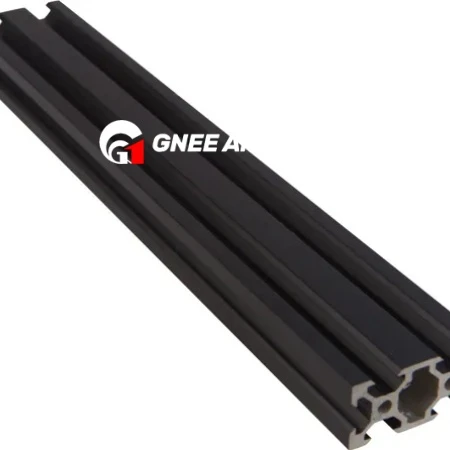
With the continuous progress of industrialization, aluminum materials are increasingly widely used in many fields. With its low density, high strength, corrosion resistance and excellent thermal conductivity, aluminum material plays a pivotal role in the manufacturing of aircraft, automobiles, electronic products and other fields. The surface treatment of aluminum parts, as an indispensable part of these applications, its quality directly affects the overall performance of the product. Among them, black anodizing, as a key surface treatment method, can bring significant advantages in corrosion resistance, hardness, abrasion resistance and aesthetics to aluminum parts.
What is anodizing?
Anodizing is an electrochemical reaction designed to form an oxide layer on the surface of aluminum. The core process involves placing an aluminum component in an electrolyte solution as an anode and applying an electric current to create an oxide film on the surface of the component. The oxide film not only has excellent corrosion resistance, but also high hardness and good insulating properties. The thickness and color of the oxide film can be further controlled by adjusting the composition of the electrolyte and the electrolysis conditions.
So, what is black anodizing?
Black anodizing is a special process, also based on electrochemical principles, designed to improve the properties and appearance of metal surfaces. In this process, a variant of aluminum oxide (Al2O3) is formed on the surface of the metal, the color of which may include black. This treatment not only enhances the corrosion, hardness and wear resistance of aluminum parts, but also significantly improves their aesthetics.
Black anodizing has a wide range of applications in a number of industries, including aerospace, automotive, and electronics. In the aerospace field, aluminum parts treated with this treatment are commonly used to manufacture aircraft shells, engine parts and other key components. In the automotive industry, black anodized aluminum parts are widely used in the manufacture of body and engine parts. In addition, the electronics industry also uses this technology in large quantities to produce components such as cell phone housings and computer housings.
It is worth noting that black anodizing is not only applicable to aluminum, but also to other metals such as magnesium, titanium and zinc. These metals are treated to improve their corrosion, hardness and wear resistance, as well as their appearance, to meet the needs of a wide range of sectors, including aerospace, automotive manufacturing and electronics.