

Welding 6061 T6 aluminum brings distinct problems and opportunities for welders from many sectors. 6061 T6 aluminum is a popular choice for a variety of applications, including aerospace components, automotive parts, and marine constructions, due to its high strength, light weight, and corrosion resistance. However, producing faultless welds with this aluminum alloy necessitates a thorough understanding of its properties as well as the application of appropriate welding processes. In this post, we'll look at the best ideas and tactics for producing faultless welds while working with 6061 T6 aluminum, assuring the integrity and dependability of welded structures and components.
Why Choose 6061 T6 Aluminum for Welding?
While 6061 T6 aluminum is a common material for a variety of purposes, including welding, it is not always the ideal choice based merely on weldability. Here's a discussion of the pros and cons, as well as why alternative options may be more suited for specific welding requirements:
Pros of using 6061 T6 for welding:
Decent weldability: When compared to other aluminum series, particularly the 7000 series, 6061 T6 has comparatively good weldability. This means it can be linked using a variety of welding techniques with less chance of cracking.
Availability: 6061 T6 is a widely available and reasonably priced aluminum alloy, making it an excellent choice for a variety of tasks.
Cons of using 6061 T6 for welding:
Cracking susceptibility: Despite being called "weldable," 6061 T6 cracks easily due to the presence of magnesium and silicon in its composition. To avoid these difficulties, precise welding techniques and cautious handling are required.
Welding might affect the strength of 6061 T6 because of the heat used. This may not be suitable for applications needing great structural integrity.
Better alternatives for specific welding needs:
If weldability is a major priority, other series, such as the 5000 series (e.g., 5052), provide improved weldability with reduced chance of cracking and low strength loss when compared to 6061 T6.
As a result, selecting the proper aluminum alloy for welding should involve a thorough study of the project's specific requirements:
If weldability is critical, consider options such as the 5000 series.
If other variables, such as availability and formability, are more critical, and you can handle the potential issues of welding 6061 T6, it may be a viable option.
Finally, the best option depends on the precise requirements of your welding job.
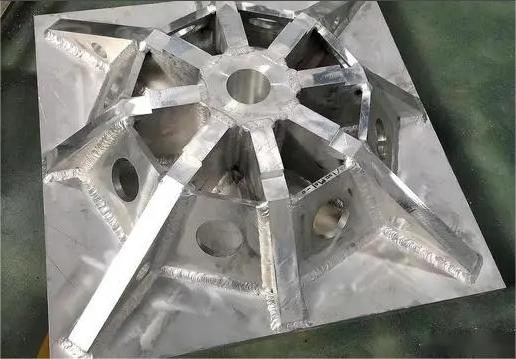
What are the Common Applications of Welding 6061 T6 Aluminum?
Despite the challenges associated with welding, 6061 T6 aluminum finds various applications due to its combination of properties:
General Applications:
Fabrication: 6061 T6 is widely utilized in general fabrication tasks due to its good weldability, formability, and availability. This enables the development of numerous architectures and components.
restore: It can be used to restore existing buildings made of the same material, but cautious handling is required to avoid introducing cracks.
Specific Applications of Welding 6061 T6 Aluminum:
6061 T6 is used in automotive components including as frames, wheels, and engine blocks. However, due to the possibility for strength loss after welding, its application is frequently confined to non-critical components.
maritime: It is suitable for non-structural maritime applications such as decks, railings, and some boat parts due to its corrosion resistance. However, for critical structural components, different materials may be preferable.
Building and Construction: Because of its strength and availability, 6061 T6 can be utilized in non-load-bearing building components such as cladding, frames, and decorative features.
Consumer items: It is used in a variety of consumer items, including electronics enclosures, sporting goods, and furniture, where its lightweight properties and aesthetic appeal are valued.
6061-T6 Aluminum Pipe – Product Specifications
| Item | Specification |
|---|---|
| Alloy / Grade | 6061 |
| Temper | T6 (solution heat-treated and artificially aged) |
| Standards | ASTM B221, ASTM B241, ASTM B210, ASME SB221, EN 755 |
| Type | Welded / Seamless / ERW / Extruded |
| Outside Diameter | 10 mm – 500 mm (customized up to large diameter) |
| Wall Thickness | 1.0 mm – 50 mm (Schedule SCH5, SCH10, SCH40, SCH80, SCH160 available) |
| Length | Single Random, Double Random, or Cut Length (up to 12000 mm) |
| Tensile Strength | ≥ 290 MPa |
| Yield Strength | ≥ 240 MPa |
| Elongation (A50) | ≥ 8% |
| Density | 2.70 g/cm³ |
| Surface Finish | Mill finish, anodized, powder coated, polished |
| End Types | Plain End (PE), Beveled End (BE), Threaded End (TE) |
| Corrosion Resistance | Excellent resistance to atmospheric and marine environments |
| Machinability | Excellent – suitable for drilling, cutting, welding, and forming |
| Applications | Aerospace structures, automotive frames, marine piping, hydraulic systems, bicycle frames, industrial structural components |

