

Which Is Better for Aluminum Tubes: 6061-T6 or 6063-T5?
6061-T6 and 6063-T5 are both widely used aluminum alloys for tubing, but they serve entirely different engineering purposes. 6061-T6 offers high yield strength and is strictly suitable for structural and heavy load-bearing applications. Conversely, 6063-T5 provides superior extrusion characteristics and a flawless surface finish, making it the ideal choice for architectural, decorative, and complex-shaped tubes.
The choice depends entirely on your priority: 6061-T6 is strength-oriented, while 6063-T5 is appearance-oriented.
Still unsure which alloy matches your engineering blueprints? Send your drawings to our technical team for a free material consultation and factory-direct quote today.
6061-T6 vs 6063-T5 Aluminum Round Tube
For a quick procurement reference, here is the fundamental breakdown of the two alloys when manufactured as aluminum tubing.
| Item | 6061-T6 Aluminum Tube | 6063-T5 Aluminum Tube |
| Alloy Family | Al-Mg-Si (6000 Series) | Al-Mg-Si (6000 Series) |
| Primary Focus | Structural Strength | Surface Aesthetics & Complex Shapes |
| Mechanical Strength | High | Medium |
| Surface Finish (Anodizing) | Normal / Functional | Excellent / Highly Decorative |
| Extrudability | Moderate (Simple shapes) | Excellent (Intricate profiles) |
| Weldability | Good (Requires appropriate filler) | Excellent |
| Machinability | Excellent (Chips break easily) | Fair (Can be gummy) |
| Typical Use Cases | Heavy structural frames, hydraulics | Window frames, furniture, handrails |
What 's 6061-T6 Aluminum Structural Tubing?
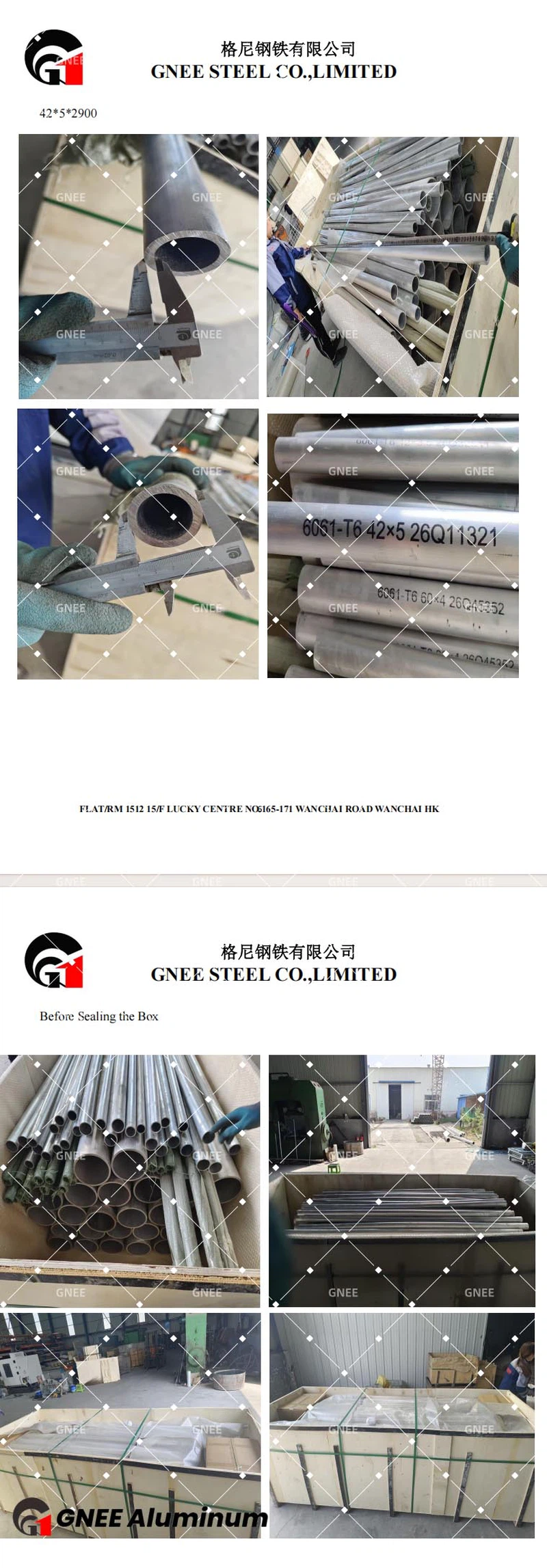
6061 is one of the most versatile heat-treatable aluminum alloys. The "T6" temper designation is where the magic happens. T6 means the aluminum tube has been solution heat-treated (heated to extreme temperatures and rapidly quenched in water or forced air to trap the alloying elements) and then artificially aged in an oven.
This metallurgical process maximizes the precipitation of magnesium silicide within the aluminum matrix, granting the 6061-T6 aluminum structural tubing exceptional yield strength and durability. While it possesses reliable corrosion resistance, its surface finish after extrusion is industrial. It anodizes decently for protection, but it will not provide the mirror-like or perfectly uniform color finish required for high-end consumer goods.
What Is 6063-T5 Extruded Aluminum Pipe?
Commonly known as the "architectural alloy," 6063 contains slightly lower amounts of magnesium and silicon compared to 6061. The "T5" temper indicates that the tube was cooled from an elevated-temperature shaping process (the extrusion press) and then artificially aged.
Because the 6063 alloy flows much smoother through an extrusion die, 6063-T5 extruded aluminum pipe can be manufactured with incredibly complex cross-sections and extremely thin walls. Its defining feature is its surface finish. Straight out of the die, 6063 is smooth and clean. It responds brilliantly to chemical anodizing, powder coating, and polishing, resulting in uniform, vivid colors with no visible grain lines.
6061-T6 vs 6063-T5 Aluminum Pipes Mechanical Properties Comparison
| Mechanical Property | 6061-T6 Tubing | 6063-T5 Tubing | Practical Implication |
| Ultimate Tensile Strength | ≈ 290 MPa (42,000 psi) | ≈ 186 MPa (27,000 psi) | 6061-T6 resists breaking under extreme tension much better. |
| Yield Strength | ≈ 240 MPa (35,000 psi) | ≈ 145 MPa (21,000 psi) | 6061-T6 can bear nearly double the structural weight without permanently bending. |
| Elongation at Break | ≈ 8% – 10% | ≈ 12% | 6063-T5 is slightly more ductile, making it easier to form and bend. |
| Hardness (Brinell) | ~95 HB | ~60 HB | 6061-T6 performs significantly better in CNC machining operations. |
Crucial Note: The main difference between these two tubes lies in strength and surface finish, not corrosion resistance. Both offer excellent resistance to atmospheric oxidation.
Stop overpaying for 6061 if you only need decorative tubes, and stop risking structural failure with 6063.
Contact GNEE to secure the exact alloy your project demands at wholesale prices
When to Choose 6061-T6 vs 6063-T5 Custom Aluminum Tubing
Choose 6061-T6 Aluminum Tubing if your project involves:
- Structural Applications: Any framework that must support heavy mechanical loads.
- High Internal Pressure: Hydraulic lines, pneumatic cylinders, and pressurized fluid transmission.
- Extensive CNC Machining: The hardness of T6 allows for precise drilling, tapping, and turning without gummy chip buildup.
- Industrial Environments: Where structural safety outweighs aesthetic perfection.
Choose 6063-T5 Aluminum Tubing if your project involves:
- Decorative Applications: Retail displays, consumer electronics housings, and visible lighting fixtures.
- Architectural Profiles: Custom window frames, sliding door tracks, and structural glazing systems.
- Complex Extrusion Shapes: Tubes requiring intricate internal fins, slots, or extremely tight corner radii.
- Premium Anodizing: When a flawless, color-matched surface is non-negotiable.
Core Industrial Applications for 6061 and 6063 Aluminum Pipes
Understanding where these materials end up in the real world helps clarify their capabilities.
Typical 6061-T6 Tube Applications:
- Scaffolding and heavy-duty industrial staging.
- Automotive roll cages, driveshafts, and chassis components.
- Marine piping and high-pressure fluid lines.
- Aircraft seating frames and non-critical aviation struts.
Typical 6063-T5 Tube Applications:
- Architectural handrails and balustrades.
- Premium furniture tubing (chairs, tables).
- Heat sink tubes for electronics.
- Irrigation pipes are made of materials with excellent natural corrosion resistance.
GNEE Aluminum Tube Supply Capability
As a professional manufacturer and direct supplier in China, GNEE specializes in producing both heavy-duty structural aluminum tubing and precision architectural extrusions.
1. Multi-Alloy & Multi-Specification Supply
We understand that modern fabrication projects are complex. You might need 6061-T6 for the main load-bearing frame and 6063-T5 for the outer decorative shell.
- Supported Alloys: 6061, 6063, 5083, 5086, 5052, 7075.
- Tempers: T6, T5, T4, O, H111, H32.
- Shapes: Seamless mandrel extruded, porthole extruded, round, square, rectangular, and custom profiles.
- Mixed Container Loading: GNEE supports multi-grade and multi-specification orders in one single shipment. This eliminates the need to meet massive minimum order quantities (MOQs) for a single alloy, drastically simplifying your procurement and reducing freight costs.
2. Advanced Production Equipment
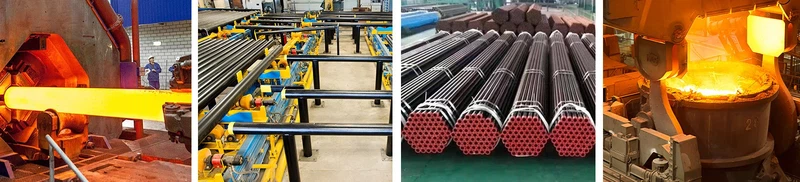
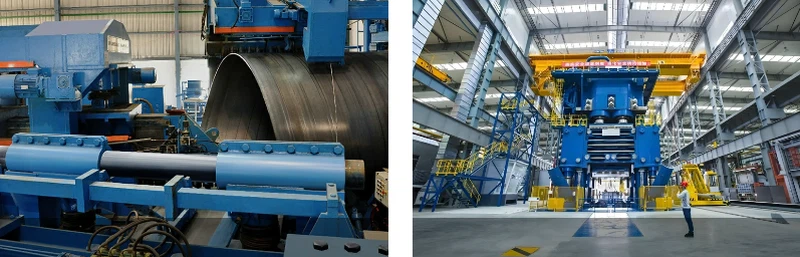
High-tonnage extrusion lines capable of producing custom large-diameter OD and heavy wall thicknesses.
Precision cold-drawing lines for extremely tight ID/OD tolerances.
CNC cutting equipment for precise cut-to-length services (±0.5mm tolerance).
3. Strong Production Capacity
Consistent large-scale production ensures stable lead times.
Fast delivery turnaround: Typically 7 to 25 days depending on die availability and order volume.
Extensive export experience: Currently supplying industrial manufacturers in over 100 countries globally.
Packaging Standards for Wholesale 6061 & 6063 Aluminum Tubes
Aluminum is highly susceptible to galvanic corrosion (white rust) and surface scratching during ocean transit. GNEE employs a rigorous export packaging standard:
- Surface Protection: Tubes are interleaved with kraft paper or wrapped in protective plastic film to prevent friction damage.
- Moisture Barrier: Bundles are wrapped in VCI (Volatile Corrosion Inhibitor) materials to isolate them from humid, salty sea air.
- Secure Bundling: Tubes are strapped tightly using PET bands with edge protectors.
- Outer Casing: For LCL shipments, bundles are encased in robust, ISPM-15 compliant seaworthy wooden crates.
