The production of household aluminium foil involves a sophisticated industrial process that transforms raw bauxite into ultra-thin, flexible sheets. The journey from ore to foil combines metallurgy, precision engineering, and quality control to meet food-grade standards.
Bauxite Mining and Alumina Extraction:
The process begins with mining bauxite, a reddish ore rich in aluminium hydroxide. Bauxite is crushed and treated with sodium hydroxide under high pressure and temperature, a method called the Bayer process. This separates alumina (aluminium oxide, Al₂O₃) from impurities like iron and silica. The resulting alumina is a white powder, which is then smelted.
Smelting to Pure Aluminium:
Alumina undergoes electrolysis in a Hall-Héroult cell. The alumina is dissolved in molten cryolite at 950°C, and an electric current splits the aluminium oxide into liquid aluminium and oxygen. The molten aluminium (99.8% pure) is cast into ingots, slabs, or coils for further processing.
Cold Rolling:
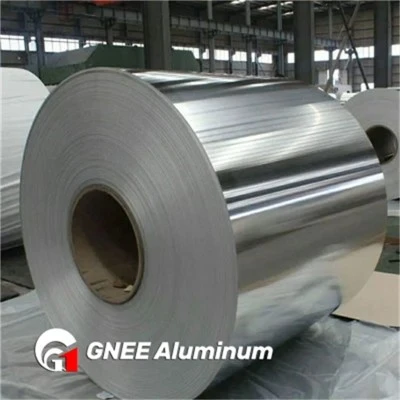
To create foil, aluminium slabs are heated and passed through rolling mills. Initial passes reduce thickness from ~20 cm to 2–6 mm. The metal is then cold-rolled at room temperature to achieve thinner gauges. Lubricants and coolants prevent overheating. Intermediate annealing (heating to 340°C) softens the metal, preventing brittleness from work hardening.
Foil Rolling:
The final rolling occurs in a tandem mill, where two layers of aluminium are rolled simultaneously. This dual-layer method compensates for imperfections and produces foil as thin as 0.006 mm (6 microns). The rolling force must be meticulously controlled-excessive pressure causes tearing, while insufficient force leaves uneven thickness.
Slitting and Cutting:
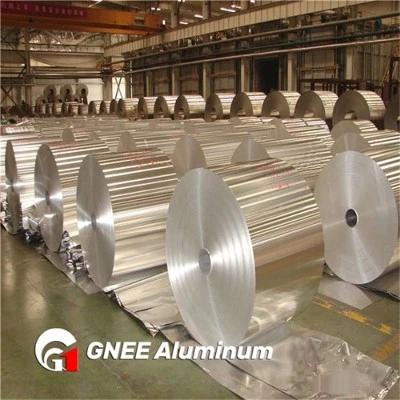
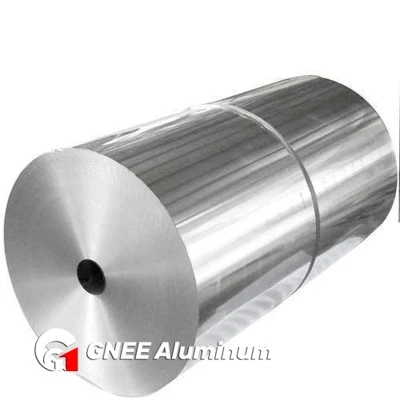
The rolled foil is slit into narrower rolls based on customer specifications. Household foil typically ranges from 10–30 cm in width. Edges are trimmed to remove irregularities, and the foil is wound onto cardboard cores for retail packaging.
Quality Control:
Foil undergoes rigorous testing. Thickness is measured via laser micrometers, ensuring consistency. Pinhole detection systems identify microscopic flaws that compromise barrier properties. Tensile strength and elongation tests confirm flexibility. For food-grade foil, chemical assays verify the absence of contaminants like lead or cadmium.
Packaging and Coating (Optional):
Some foils are laminated with polymers or coated with lacquers to enhance heat resistance or enable printing. However, most household foil is uncoated to maintain recyclability. Rolls are wrapped in moisture-resistant paper or plastic and boxed for distribution.
Sustainability and Innovations:
Modern foil production prioritizes energy efficiency. Recycling aluminium saves ~95% of the energy required for primary production. Advances in rolling technology reduce waste, and water-based lubricants minimize environmental impact. Researchers are also exploring biodegradable coatings to address single-use concerns.
Technical Challenges:
Producing ultra-thin foil without tears requires precise alloy composition (often 8011 or 8079 grades with iron and silicon for strength). Dust control is critical, as particles can cause breaks during rolling. Maintaining a sterile environment for food-grade foil is equally vital to meet FDA or EU regulations.
This intricate process ensures that household aluminium foil remains a marvel of material science-lightweight yet durable, adaptable yet reliable-for countless everyday applications.