

What Is 7075-T6 Aluminum?
7075 aluminum alloy-often referred to as aircraft aluminum or aerospace aluminum-uses zinc as its primary alloying element. It was the first high-strength Al-Zn-Mg-Cu alloy to successfully incorporate chromium, significantly improving resistance to stress-corrosion cracking, particularly in sheet products.
The chemical composition of 7075 aluminum typically includes 87.1–91.4% aluminum, 5–6% zinc, 2.1–2.9% magnesium, and 1.2–2% copper, with small controlled amounts (≤0.5%) of silicon, titanium, chromium, iron, manganese, and other elements.
7075-T6 aluminum refers to 7075 alloy in the T6 temper, achieved through solution heat treatment, homogenization at around 450°C, rapid quenching, and artificial aging at 120°C for approximately 24 hours. This carefully controlled process allows the alloy to reach its maximum strength potential, meeting standard mechanical performance requirements.
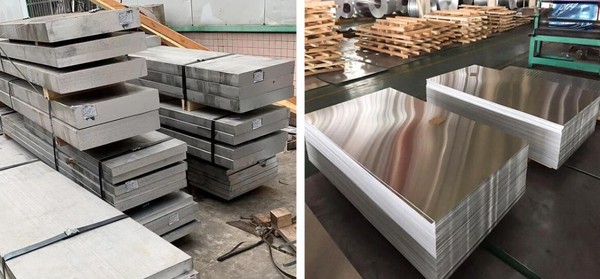
What Makes 7075 Aluminum Stand Out?
Among aluminum alloys, the 7075 series delivers the highest strength, rivaling that of many steels. While strength is its most notable advantage, its true value lies in the balance of properties it offers-low density, excellent machinability, and good corrosion resistance.
Although its corrosion resistance is lower than that of some other aluminum alloys, it still performs significantly better than many 2000-series alloys. In applications where 2024 aluminum might otherwise be used, 7075 is often preferred when higher mechanical strength is required.
Basic Properties of 7075 Aluminum
Density: 3.0 g/cm³ (190 lb/ft³)
Machinability: Excellent. It can be formed in the annealed condition and then heat treated. Due to its high strength, springback during forming is greater than with lower-strength alloys.
Formability: Can be improved by heating the material to 95–120 °C (200–250 °F) during forming if difficulties occur in the annealed state.
7075-T6 Aluminum Mechanical Properties
Brinell Hardness: 150
Elastic (Young's) Modulus: 70 GPa
Ultimate Tensile Strength: 560 MPa
Yield Strength: 480 MPa
Elongation at Break: 7.9%
Fatigue Strength: 160 MPa
Poisson's Ratio: 0.32
Shear Modulus: 26 GPa
Shear Strength: 330 MPa
7075-T6 Aluminum Thermal Properties
Melting Onset (Solidus): 480 °C (890 °F)
Specific Heat Capacity: 870 J/kg·K (0.21 BTU/lb·°F)
Thermal Conductivity: 130 W/m·K (75 BTU/h·ft·°F)
Thermal Expansion: 23 µm/m·K
7075-T6 Aluminum Electrical Properties
Electrical Conductivity (Equal Volume): 33% IACS
Electrical Conductivity (Equal Weight): 98% IACS
Applications and Uses of 7075-T6 Aluminum
Thanks to its outstanding strength-to-weight ratio, 7075-T6 aluminum is widely used across many industries and remains especially popular in aerospace, marine, and transportation sectors.
Typical applications include high-end bicycle components, tooling, gliders, meter gears, fuse components, missile parts, worm gears, keys, regulating valve parts, aircraft fittings, and a broad range of aerospace and defense equipment. It is also commonly used in military applications, such as assault rifle upper and lower receivers, extension tubes, and precision firearm components.
Disadvantages of 7075-T6 Aluminum
Despite its excellent performance, 7075 aluminum does have certain limitations:
Lower corrosion resistance compared to some other aluminum alloys; for improved stress-corrosion resistance, 7075-T7351 may be a better alternative than T6.
Lower ductility than other alloys in the 7000 series, despite good machinability.
Higher cost, which can restrict its use in cost-sensitive applications.
Conclusion
7075-T6 aluminum is a preferred material in industries where lightweight and high resistance to stress are essential, particularly aerospace, marine, and transportation sectors. At the same time, its well-balanced combination of mechanical and physical properties makes it highly valued across many other industrial applications.
As a professional supplier of high-performance aluminum alloys, GNEE provides 7075-T6 aluminum solutions that meet demanding engineering and industrial requirements.
