

Battery aluminum foil refers to lithium-ion battery cathode foil, that is, non-modified cathode foil about 0.01mm thick is called collector aluminum foil.
Collector is one of the core components of lithium battery, it is the structural part that collects the current, and its function is to collect the current generated by the active substance of the battery in order to form a larger current for external output, and it needs to be in full contact with the active substance. In practice, the lithium battery industry usually uses aluminum foil as positive electrode collector and copper foil as negative electrode collector.
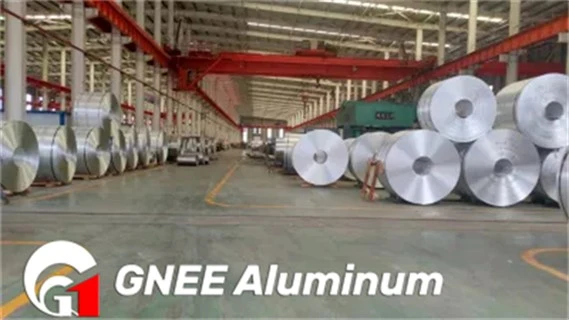
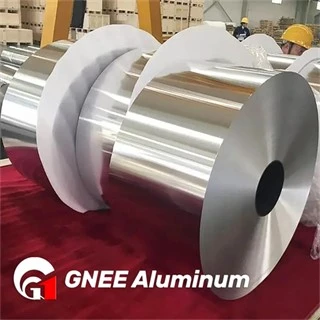
Aluminum foil for batteries is an aluminum foil material, which has higher performance requirements and a more complex process compared with traditional aluminum foil. Aluminum processing materials can be divided into six categories: aluminum sheet and strip, aluminum foil, aluminum extrusion, aluminum wire, aluminum powder and aluminum forgings. Battery aluminum foil belongs to the aluminum foil material, compared with the traditional aluminum foil performance index requirements are higher, the pursuit of the thinnest thickness, the highest strength, the highest dyne value, the smallest thickness difference, the optimal plate type, the cleanest surface of the six extreme values.
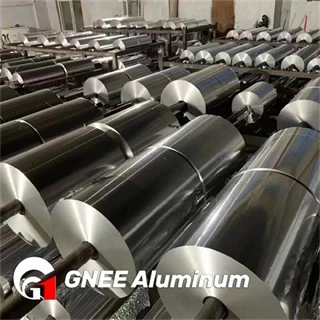
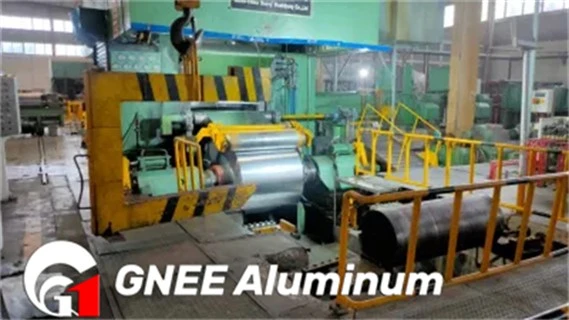
Battery aluminum foil production process is complex, process parameters significantly affect the yield, each step needs know-how accumulation. At present, the battery aluminum foil industry commonly used casting - cold rolling process, that is, through the casting link will be the raw material of aluminum ingots, aluminum billets into aluminum rolled coil, and then through the cold rolling, intermediate annealing, foil rolling link production into battery aluminum foil. Battery aluminum foil production process is more complex, and each step is related to product quality, such as rolling force, rolling speed, annealing and other parameters will affect the consistency and yield of aluminum foil, rolling oil viscosity, additives, will affect the surface wetting tension and uniformity of aluminum foil.