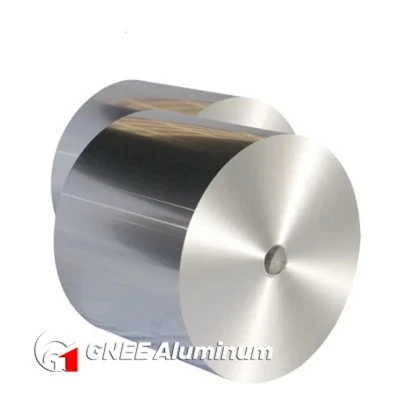
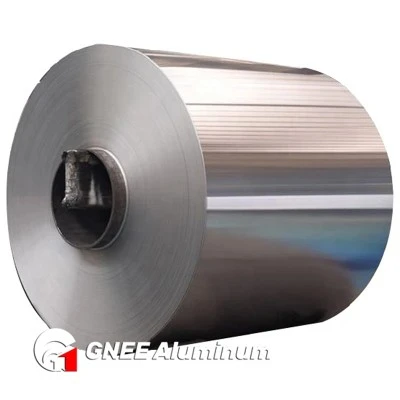
Cold Rolled Aluminium Coil (CRAC) represents a pinnacle of modern material engineering, combining lightweight versatility with structural integrity. Produced through a process of rolling aluminium ingots at room temperature below its recrystallization point, this method yields coils with superior dimensional accuracy, surface finish, and mechanical properties compared to hot-rolled counterparts. The material's crystalline structure remains unaltered by heat treatment, preserving inherent corrosion resistance while achieving tighter thickness tolerances-typically ranging from 0.1mm to 5mm-across alloys like 1050, 3003, 5052, and 6061.
The manufacturing process begins with molten aluminium being cast into slabs, which undergo multiple passes through cold rollers to achieve the desired gauge. This cold working induces strain hardening, significantly enhancing tensile strength and yield properties without compromising ductility. Surface treatments such as sarin film coating or kraft paper wrapping further extend its usability in demanding environments, while customization options allow for slitting, bending, and pattern embossing to meet specific industry requirements. The resulting coils exhibit exceptional flatness and uniformity, making them indispensable in applications requiring precision forming or where weight reduction is critical.
Applications of Cold Rolled Aluminium Coil span diverse industries, driven by its unique blend of formability and strength. In automotive manufacturing, the material's lightweight properties reduce vehicle weight, improving fuel efficiency without compromising structural integrity-5052 and 6061 alloys are particularly favored for fuel tanks and body panels due to their high corrosion resistance and weldability. Architectural projects leverage its sleek surface finish for curtain walls, ceilings, and composite panels, while the aerospace sector utilizes its precision-toleranced dimensions for aircraft components. The material's adaptability extends to marine environments, where 5083 alloy coils withstand saltwater exposure, and to industrial machinery, where its machinability simplifies complex part fabrication. Emerging innovations include cold-formed Z- and C-sections for load-bearing structures, demonstrating post-local buckling strength that rivals traditional steel alternatives.