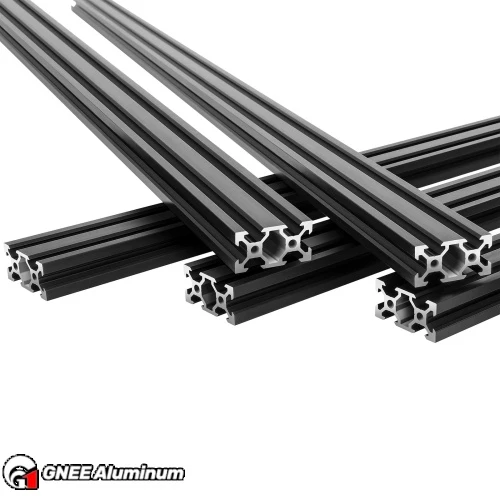
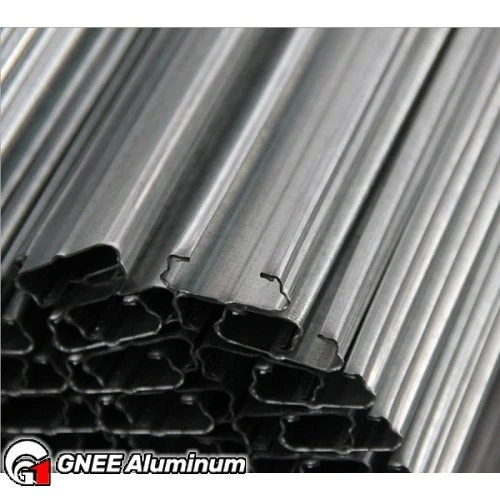
As an efficient and flexible metal processing method, aluminum extrusion has occupied an important position in the manufacturing industry. From building profiles to aerospace parts, aluminum extrusion is widely used in various industries due to its strong plasticity, process diversification and high economy. However, to truly grasp the core of aluminum extrusion process, it is necessary to have a deep understanding of its basic steps, influencing factors and every link of post-processing.
Detailed steps of aluminum extrusion
Aluminum extrusion process is a processing technology that heats aluminum alloy and extrude it into a specific shape through a die. In order to achieve high-quality extrusion molding process, it needs to be carried out scientifically and orderly according to a series of steps.
1. Raw material preparation
Aluminum extrusion process usually uses aluminum alloy round ingots (also called aluminum bars) as raw materials. First, select the appropriate aluminum alloy grade according to product requirements, such as 6 series (6061, 6063) for high strength and corrosion resistance applications, or 7 series (7075) for aerospace. Subsequently, the aluminum bar needs to be surface cleaned to remove the oxide layer and impurities to ensure the smoothness of subsequent processes and product quality.
2. Heating stage
The aluminum bar needs to be heated to a suitable temperature before extrusion, generally 450°C to 500°C. This process can soften the aluminum alloy, improve its plasticity, and reduce the deformation resistance during extrusion. However, it should be noted that too high a temperature may cause the aluminum to be too soft, affecting the quality of the finished product, so the temperature needs to be precisely controlled.
3. Die design and preparation
The die is the core part of the aluminum extrusion process, and its design directly affects the shape, dimensional accuracy and extrusion efficiency of the profile. According to the cross-sectional shape of the profile, the die can be divided into solid die, hollow die and multi-cavity die. The die needs to be preheated to a certain temperature to prevent uneven cooling of the aluminum or damage to the die due to temperature difference during the extrusion process.
4. Extrusion molding
The heated aluminum bar is fed into the extruder and pushed through the die to form the desired cross-sectional shape under the push of the extrusion rod. The key to this process is to control the extrusion speed to ensure that the aluminum flows evenly and avoid defects such as bubbles, cracks or warping. In addition, different die designs and extruder pressure parameters need to be optimized for specific products.
5. Cooling and stretching straightening
The extruded profile needs to be cooled immediately to quickly reduce the temperature and prevent coarse grains and deformation problems. Air cooling or water cooling is usually used, and the specific choice depends on the type of aluminum alloy and profile requirements. After cooling, the profile may be slightly bent due to internal stress. At this time, it needs to be straightened by stretching equipment to ensure dimensional accuracy and shape stability.
6. Cutting and post-processing
The straightened aluminum profile is cut into specified lengths, usually 8-21 feet (about 2.4-6.4 meters). After cutting, the profile is sent to the furnace for aging treatment to obtain the ideal heat treatment state (such as T6 or T5).
In addition, necessary surface treatments such as anodizing, electrophoretic coating or powder coating can improve its appearance and corrosion resistance. Some applications may require further processing such as drilling, welding or assembly.
7. Quality Inspection and Packaging
After completing all processing steps, the finished profiles need to be fully inspected for quality, including dimensional measurement, surface inspection, and performance testing to ensure that they meet design requirements and industry standards. Finally, the profiles are packaged according to order requirements to prevent damage during transportation.
The aluminum extrusion process is a multi-step, sophisticated production process, and each step is crucial to the quality of the final product. From the selection of raw materials to mold design, extrusion molding, and subsequent processing, each link must be closely connected and precisely controlled.