

Aluminum 6061 vs Aluminum 6005: Properties, Differences, and Applications
Aluminum is valued across industries for its low weight, high strength, excellent corrosion resistance, and low density. However, when engineers and manufacturers are faced with multiple aluminum alloy options, selecting the right one can be challenging. Even experienced professionals sometimes struggle to determine which aluminum alloy best suits a specific application.
Although cost is often the first factor manufacturers consider, choosing the lowest-priced aluminum alloy without evaluating its extrudability, weldability, strength, and processing performance can lead to poor results. This is especially true when comparing two closely related materials such as aluminum 6061 vs. aluminum 6005.
So, which alloy is better for your project? Which offers better value, strength, and performance? Below, GNEE provides a detailed comparison to help you make an informed decision.
Aluminum 6061 vs Aluminum 6005 Overview
Both Aluminum 6061 and Aluminum 6005 belong to the 6xxx series aluminum alloys, which are primarily alloyed with magnesium and silicon. This alloy series is well known for its excellent balance of strength, corrosion resistance, and extrudability.
As a professional aluminum supplier, GNEE works extensively with 6xxx series alloys, including 6005, 6061, 6063, 6060, and 6082. These alloys are widely used in extrusion applications due to their favorable mechanical and chemical properties.
Aluminum 6061 is commonly selected for applications requiring higher strength and structural reliability, such as automotive components, construction, and precision machining.
Aluminum 6005, on the other hand, is especially popular for applications that demand good corrosion resistance and bending capability, which is why it is widely used in solar panel frames and mounting systems.
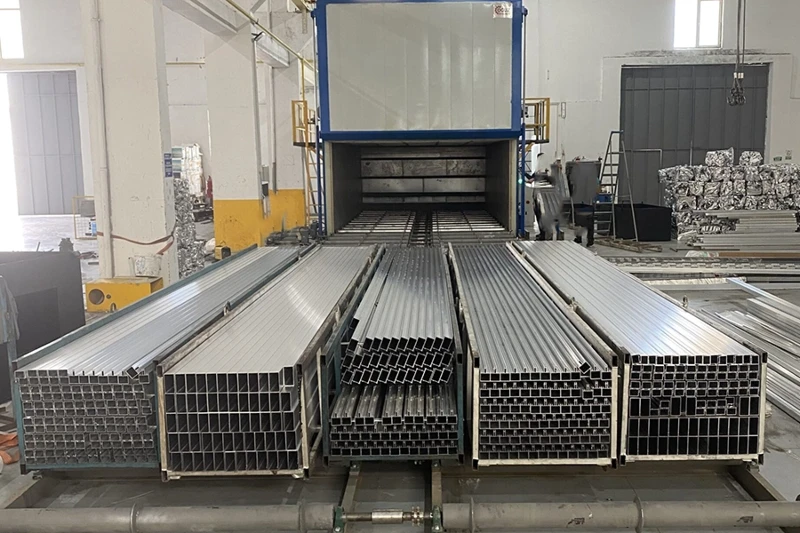
Mechanical Properties of Aluminum 6061 vs Aluminum 6005
Mechanical performance is one of the most important factors when selecting an aluminum alloy. Key indicators include tensile strength, yield strength, and hardness.
Both aluminum 6061 and 6005 demonstrate strong mechanical properties. However, due to its higher magnesium and silicon content, Aluminum 6061 generally offers higher strength than Aluminum 6005, especially in T6 temper.
Typical mechanical properties (minimum values):
Aluminum 6005-T6:
Tensile Strength: ~250 MPa
Yield Strength: ~200 MPa
Hardness: ~85 HBW
Aluminum 6061-T6:
Tensile Strength: ~260 MPa
Yield Strength: ~240 MPa
Hardness: ~95 HBW
This strength advantage makes aluminum 6061 more suitable for load-bearing and high-stress applications.
Chemical Composition of Aluminum 6061 vs Aluminum 6005
While both alloys fall under the same series, their chemical compositions differ, leading to variations in performance.
Aluminum 6061 contains higher levels of magnesium, copper, and chromium, contributing to its superior strength and machinability.
Aluminum 6005 has a slightly higher silicon content, which improves extrudability and surface finish, especially for complex profiles.
Although composition ranges can vary slightly depending on the manufacturer, understanding these differences is critical when choosing between the two alloys. GNEE strictly controls raw materials to ensure consistent chemical composition and stable performance.
Key Characteristics of Aluminum 6005
Aluminum 6005 Corrosion Resistance
Aluminum 6005 offers excellent corrosion resistance, including resistance to saline environments, making it suitable for marine and outdoor applications.
Aluminum 6005 Strength
This alloy provides good strength while maintaining flexibility, positioning it between aluminum 6061 and 6063 in overall mechanical performance.
Aluminum 6005 Welding Performance
Aluminum 6005 can be welded using TIG or MIG methods. Proper filler selection is essential to prevent cracking and ensure joint integrity.
Aluminum 6005 Heat Resistance
Aluminum 6005 maintains stable performance in temperatures ranging from approximately -60°C to 150°C, making it suitable for demanding environments.
Aluminum 6005 Machinability
This alloy is easy to machine, even for complex shapes. Carbide tools and coolant are recommended to achieve optimal surface quality.
Aluminum 6005 Applications
Common uses include:
Solar panel frames
Marine structures and masts
Aerospace structural components
Automotive wheels and parts
Building facades, roofs, and frames
Key Characteristics of Aluminum 6061
Aluminum 6061 Corrosion Resistance
While slightly less corrosion-resistant than aluminum 6005 or 6063, aluminum 6061 still provides strong resistance in most environments.
Aluminum 6061 Strength
Aluminum 6061 is one of the strongest general-purpose aluminum alloys, making it ideal for high-load structural components.
Aluminum 6061 Welding Performance
This alloy is relatively easy to weld, although its composition can increase the risk of hot cracking. Correct welding methods and filler materials are essential.
Aluminum 6061 Heat Treatment
Aluminum 6061 is heat-treatable. The T6 temper is widely used to achieve optimal mechanical properties after solution treatment and aging.
Aluminum 6061 Machinability
6061 has good machinability when proper tooling, cutting parameters, and coolant are used, making it ideal for precision machining.
Aluminum 6061 Applications
Typical applications include:
Automotive brake and suspension components
Aircraft and aviation parts
Structural frames and supports
Sports equipment such as bicycle frames and surfboards
Aluminum 6061 vs Aluminum 6005: Key Differences
Although aluminum 6061 and aluminum 6005 share many similarities, their chemical composition, strength levels, machinability, and weldability differ.
Aluminum 6061 is stronger due to higher magnesium and silicon content
Aluminum 6005 offers better surface finish and anodizing quality
Aluminum 6005 is better suited for complex extruded profiles
Aluminum 6061 performs better in high-stress structural applications
In many cases, aluminum 6005 is chosen when aluminum 6061 cannot achieve the desired extrusion shape or surface appearance.
Aluminum 6061 vs. Aluminum 6005: Which Alloy Should You Choose?
Choosing between Aluminum 6061 and Aluminum 6005 depends entirely on your application requirements.
Choose Aluminum 6061 if your project demands higher strength, structural reliability, and machining precision.
Choose Aluminum 6005 if you need excellent corrosion resistance, superior extrudability, and better anodized surface quality.
For the best results, professional guidance is highly recommended.
GNEE Aluminum Alloy Solutions
As a trusted aluminum supplier from China, GNEE provides expert support in selecting the right aluminum alloy for your project. With advanced extrusion equipment, strict quality control, and verified raw materials, GNEE delivers reliable aluminum 6061 and aluminum 6005 products tailored to your application needs.
For more information about Aluminum 6061 vs. Aluminum 6005, or to discuss your aluminum extrusion requirements, feel free to contact GNEE anytime.
