

The Engineer's Guide to Aluminium Foil for Transformer Winding
For decades, copper wire was the primary conductor in transformer windings. Its superior conductivity made it the obvious choice. However, a silent revolution has been underway, fueled by advancements in material science and production. Today, high-quality aluminum foil for transformer winding is more than just a low-cost option; for many applications, it is a technologically superior solution that increases performance, thermal management, and production efficiency.
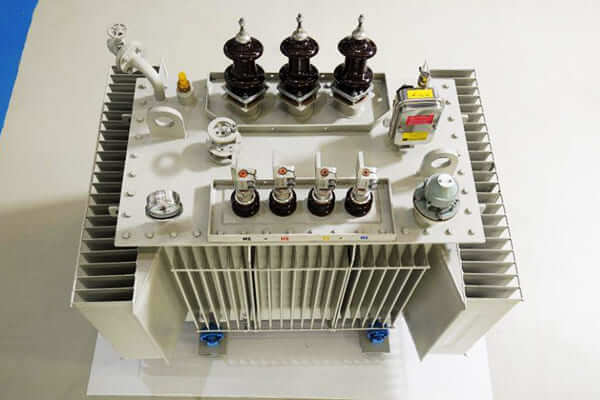
Aluminium Foil for transformer winding
The Technical Heart: Specifications That Define Performance
| Specification | Requirement | Engineering Significance |
| Aluminum Alloy | 1060 / 1350 | 1060 alloy (≥99.6% Al) offers excellent formability. 1350 alloy (≥99.5% Al) is specifically engineered for electrical conductivity. |
| Temper | Annealed (O Temper) | The fully soft 'O' temper provides maximum ductility, ensuring the foil can be wound tightly without fracturing or work-hardening. |
| Conductivity | ≥ 61% IACS (International Annealed Copper Standard) | While lower than copper per volume, this high conductivity per unit weight and cost is the core economic and performance driver. |
| Thickness | 0.2 mm – 3.0mm | The thickness is engineered based on the required current-carrying capacity for the low-voltage winding. |
| Thickness Tolerance | ±0.005 mm | Tight tolerance is non-negotiable. It ensures uniform current distribution and prevents hotspots within the winding. |
| Edge Burr | < 0.02mm | This is the single most critical quality parameter. A sharp burr can slice through the interlayer insulation, causing a catastrophic short circuit. |
Finally, these standards are interrelated. A supplier's ability to supply high-purity alloy with a perfectly soft temper and, most critically, a smooth, burr-free edge distinguishes cheap aluminum from true transformer-grade foil.
Engineering Advantages: Why Foil Outperforms Wire
The switch to aluminum foil is motivated by obvious, verifiable performance improvements that have a direct influence on a transformer's dependability and lifespan.
1. Superior short-circuit strength.
A foil winding distributes electrical current throughout the entire width of the foil sheet.
This removes the axial stress between turns, which is a major failure mode in wire-wound transformers following a short-circuit event.
As a result, the winding acts as a single, solid unit, displaying extraordinary mechanical strength.
2. Optimized thermal performance
A foil winding provides a much bigger surface area for heat dissipation than a circular wire.
Furthermore, the heat distribution across the wide foil is much more even.
This prevents the harmful "hotspots" that can form in wire windings, resulting in a cooler transformer and a longer lifespan for the insulation system.
This better heat management can allow for a more compact and efficient transformer design.
3. Improved electrical characteristics.
The "fill factor"-the percentage of the winding window occupied by the conductor-has significantly improved.
A tightly wrapped foil can attain a fill factor of more than 95%, but wire windings struggle to approach 70% due to air spaces between round wires.
This results in a more compact winding with near-perfect linear voltage distribution, which reduces electrical stress on the insulation.
4. Simplified and Automated Manufacturing
Winding a wide, flat foil is a much easier and more consistent procedure to automate than winding a round wire.
This results in speedier production times, lower labor costs, and, most importantly, a more consistent and dependable finished product.
Aluminum Foil vs. Copper Wire: A Data-Driven Comparison
While tradition favors copper, data show a more nuanced reality in which aluminum foil has substantial advantages, notably in terms of weight and cost efficiency.
| Parameter | Aluminum Foil Winding | Copper Wire Winding | Insight for the User |
| Weight | ~50% lighter for equivalent conductivity | Heavy | Reduces structural support requirements, shipping costs, and installation complexity. |
| Material Cost | Significantly lower and more stable | High and volatile | Provides a major and predictable cost advantage in the final transformer price. |
| Conductivity (per volume) | ~61% of Copper | 100% IACS | Copper is a more efficient conductor in a constrained space. |
| Conductivity (per weight) | ~200% of Copper | 100% | For the same weight, aluminum conducts twice the electricity. This is a key performance metric. |
| Thermal Dissipation | Excellent due to large surface area | Good, but prone to spots | Leads to a more reliable, longer-lasting transformer. |
| Short-Circuit Strength | Superior; withstands axial forces exceptionally well | Good, but vulnerable to axial stress between turns | A critical reliability advantage, especially for transformers in demanding grid environments. |
In essence, copper has more conductivity per volume, but aluminum foil outperforms copper in terms of conductivity per cost and weight, as well as mechanical and thermal qualities.
The Decisive Factor: Choosing GNEE
The theoretical benefits of aluminum foil are only realized if the material is faultless. This sets a high value on the supplier. A Tier-1 supplier is more than a vendor; they are a collaborator in precision manufacturing.
Leading global suppliers, such as GNEE Aluminium, demonstrate their commitment to quality. Based in China, they have made significant investments in the specific technologies required for producing transformer-grade foil. Their edge comes from a few crucial areas:
Precision Slitting Technology: They use modern slitting machines with ultra-hard rotary blades to create edge burrs of less than 0.02mm, which is critical for high-voltage applications.
Quality Control: Their technique includes rigorous quality control checks, such as eddy current testing for conductivity and laser micrometers for continuous thickness verification, to ensure that each coil satisfies strict international requirements.
Alloy Purity: By managing the entire supply chain from billet casting onward, they ensure the use of high-purity 1060 and 1350 alloys devoid of impurities that could impair electrical performance.
Partnering with a supplier like GNEE Aluminium reduces the key risk in foil winding-insulation failure owing to poor edge quality-and guarantees that the final product meets its promise of dependability and performance.
