

6061 aluminum is one of the most versatile and popular aluminum alloys. It is renowned for its excellent mechanical qualities, machinability, weldability, and corrosion resistance. 6061 aluminum is available in a range of tempers, or heat treatments, each with its own distinct characteristics.
The two most popular tempers for 6061 aluminum sheet are T6 and T651. T6 aluminum has undergone solution heat treatment and artificial aging, resulting in strong tensile and yield strength. T651 aluminum has been solution heat treated, artificially aged, and stress relieved, yielding even more flatness and stability than T6 aluminum.
Both 6061 T6 and 6061 T651 aluminum sheets are widely used in precision machining applications. However, T651 is frequently favored because of its superior flatness and stability. This makes it excellent for applications that need tight tolerances and a high level of surface quality.

Comparison of 6061 T6 and 6061 T651 Aluminum Sheets
Mechanical Properties
Mechanical qualities are critical in precision machining because they influence the aluminum material's performance and the longevity of machined parts.
Tensile Strength: Due to the better tempering process, 6061 T651 has a slightly higher tensile strength than 6061 T6.
Yield Strength: Similarly, 6061 T651 has a higher yield strength, making it less susceptible to deformation during machining.
Elongation: Both alloys have good elongation, with 6061 T6 being slightly more ductile.
T651 aluminum sheets have a slightly higher hardness, which means they are more resistant to wear.
Machinability
Machinability is an important consideration in precision machining because it impacts tool life, surface finish, and chip formation.
Tool Wear: 6061 T6 has better machinability than T651; however, the difference is not significant. T651's greater hardness may result in a somewhat lower tool life while machining.
Surface Finish: Because of their improved flatness and stability, T651 sheets are often used for applications that require a high-quality surface finish.
Chip production: Both alloys create manageable chips; however, T651 aluminum sheets are more consistent in chip production due to their increased flatness.
Flatness and Stability
One of the most noticeable differences between the two alloys is their flatness and stability.
6061 T6: These sheets are quite flat, although they may have some residual stress, which might cause deformation during machining.
6061 T651: T651 aluminum sheets are renowned for their superior flatness and stability. They go through a stress-relieving procedure that reduces distortion during machining, making them an excellent choice for precise applications.
Corrosion Resistance
Corrosion resistance is critical, particularly when parts are subjected to hostile conditions or chemicals.
6061 T6: This alloy is corrosion resistant and appropriate for a variety of applications. However, it may not be suitable for very corrosive situations.
6061 T651: T651 aluminum sheets have somewhat better corrosion resistance than T6 due to their stress-relieving procedure. They are commonly used where corrosion resistance is an issue.
Which Alloy is Better for Your Precision Machining Needs?
Your individual precision machining requirements will determine whether you should use 6061 T6 or 6061 T651 aluminum sheets.
Mechanical Properties: If your application requires stronger tensile and yield strength, choose 6061 T651. For applications requiring more ductility, 6061 T6 may suffice.
Machinability: Think about the tool life and surface finish you need. T651 may be a preferable option if surface finish is important and tool wear can be managed well. T6 is ideal for quick machining with little care for surface finish.
Flatness and Stability: When precision and little distortion are required, such as in aerospace or medical device manufacture, 6061 T651's excellent flatness and stability shine.
Corrosion Resistance: For applications in harsh environments, T651's minor corrosion resistance advantage makes it a safer choice.
Examples of Precision Machining Applications
6061 T6: This alloy is widely utilized in the automobile industry for components that require both high strength and lightweight qualities. It is also preferred for general-purpose machining when corrosion resistance is not a top priority.
Aerospace components, precision instruments, and optical systems frequently use T651 aluminum sheets due to their remarkable flatness and stability. Medical gadgets and semiconductor production equipment both benefit from the increased surface finish.
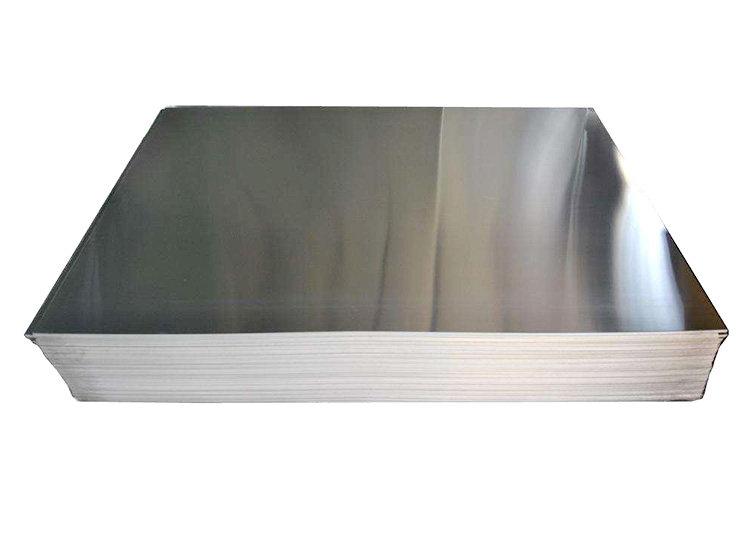
| Feature/Property | 6061 T6 Aluminum Sheet | 6061 T651 Aluminum Sheet | Notes / Impact on Application |
|---|---|---|---|
| Heat Treatment | Solution heat-treated and artificially aged | T6 is stress-relieved by stretching | T651 reduces internal residual stress and is more dimensionally stable |
| Tensile Strength (MPa) | 290-310 | 290-310 | Similar strength for both |
| Yield Strength (MPa) | 240-250 | 240-250 | Strength is similar, but T651 warps less during machining |
| Hardness (HB) | ~95 | ~95 | Comparable hardness |
| Residual Stress | Higher | Lower | T651 better for thick plates and precision parts |
| Machining Distortion | Thin plates manageable; thick plates may warp | Minimal distortion, ideal for thick/complex parts | T651 preferred for CNC and precision machining |
| Dimensional Stability | Standard | Excellent | T651 ensures dimensional accuracy for large parts |
| Typical Applications | General structural components, thin plate brackets, chassis panels, housings, small enclosures | Precision machined parts, aerospace brackets, engine components, molds & dies, UAV frames, thick plate housings | Choice depends on part size and required machining accuracy |
| Cost | Lower | Slightly higher | Extra cost of T651 is offset by improved machining yield and stability |
Conclusion
The aluminum alloys 6061 T6 and 6061 T651 are both ideal for precision machining. However, 6061 T651 aluminum is a preferable choice for high-precision applications that demand tight tolerances and a smooth surface finish. 6061 T6 aluminum is a good choice for situations where cost savings are important or when the part does not require the same level of precision or performance as T651 aluminum.
When choosing an alloy for precision machining, it is critical to examine the unique requirements of your application. If you are unsure about which alloy is best for you, speak with a qualified precision machining manufacturer.