


The 5086 Aluminum Pipe Solution
Saltwater corrosion, constant engine vibration, and high internal fluid pressure-marine and offshore environments are brutal on piping systems. Standard aluminum or steel pipes often pit, rust, or crack at the weld seams, leading to catastrophic leaks and expensive vessel downtime.
When sourcing piping materials, engineers constantly debate: Should I use 5052, 5083, or 5086? Choosing the wrong pipe wastes money and jeopardizes structural safety. The marine grade 5086 aluminum pipe is specifically engineered as the ultimate solution for this dilemma, offering the perfect middle ground between extreme formability and rigid structural strength.
What is 5086 Marine Grade Aluminum Tube?
The 5086 aluminum tube belongs to the 5xxx series of aluminum-magnesium (Al-Mg) alloys. It is a non-heat-treatable alloy, meaning its strength is achieved through strain hardening (cold working) rather than thermal treatment.
It is globally recognized for three core characteristics: exceptional bare-metal corrosion resistance in seawater, high strength without brittleness, and superior weldability. If your project involves marine fluid routing or heavy-duty structural frames, 5086 is the industry standard.
Chemical Composition of 5086 Seamless Aluminum Pipe
The performance of a pipe is completely dictated by its chemistry. Here is what makes 5086 reliable:
| Element | Content (%) | Engineering Function |
| Magnesium (Mg) | 3.5% – 4.5% | The primary strengthener. It creates the tough, self-healing oxide layer that stops seawater corrosion. |
| Manganese (Mn) | 0.20% – 0.70% | Enhances the grain structure, increasing the alloy's toughness and strain-hardening capacity. |
| Chromium (Cr) | 0.05% – 0.25% | Stabilizes the alloy and actively inhibits stress-corrosion cracking (SCC) in harsh environments. |
| Iron (Fe) | ≤ 0.50% | Impurity. Kept low to ensure the material does not become brittle. |
Key Mechanical Properties of 5086 Aluminum Tubing
Buyers must match the temper (condition) of the pipe to their fabrication needs.
- 5086-O aluminum pipe: Yield Strength ≥ 95 MPa. High elongation (≥14%). This is the softest state, strictly used when the pipe must undergo severe bending.
- 5086-H32 / H116 aluminum pipe: Yield Strength ≥ 195 MPa. This is the hardened state, used for straight structural pipes carrying heavy loads or high pressures.
Summary: 5086 aluminum tubing represents the perfect balance: it is strong enough to bear loads, highly weldable without cracking, and naturally resists corrosion.
5086 vs. 5083 vs. 5052 Aluminum Pipe: Which Should You Buy?
Stop guessing which alloy to source. Here is the direct engineering comparison to help you make the right purchasing decision:
| Feature | 5052 Aluminum Pipe | 5086 Aluminum Pipe | 5083 Aluminum Pipe |
| Strength | Lowest | Medium-High | Highest |
| Formability (Bending) | Excellent | Good | Poor (Very stiff) |
| Weldability | Good | Excellent | Excellent |
| Best Used For | Low-pressure fuel lines. | Complex marine piping, boat rails. | Massive, straight pressure vessels. |
The Verdict: If you need to bend a pipe tightly, use 5052. If you need absolute maximum strength and no bending, use 5083. But if your project requires a strong structural pipe that still needs to be bent, welded, and shaped, you must buy 5086 marine aluminum pipe.
5086 Aluminum Available Forms
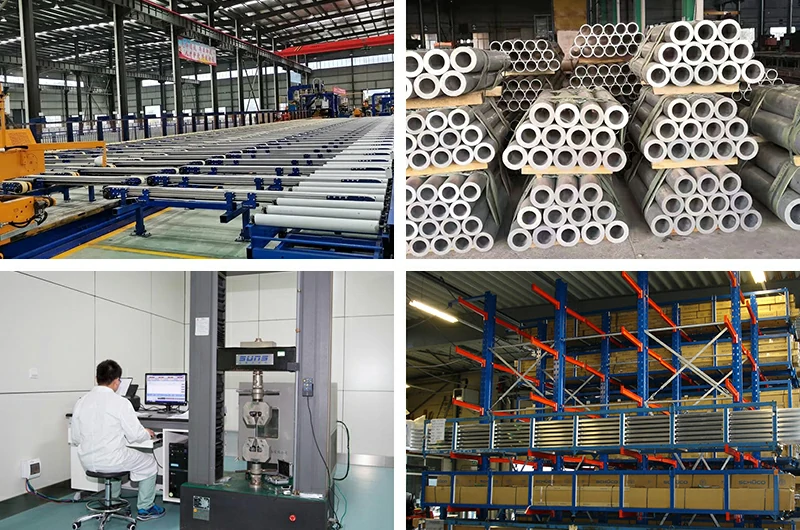
While 5086 is available in sheets and plates for boat hulls, the fluid transfer and structural framing sectors rely entirely on tubular forms. GNEE specializes in:
- 5086 Extruded Aluminum Pipe (ASTM B241): Highly cost-effective. Perfect for structural applications like handrails, masts, and antenna towers.
- 5086 Seamless Aluminum Tubing (ASTM B210): Pierced from a solid billet with zero weld lines. Mandatory for high-pressure gas, LNG, and critical hydraulic lines.
Fabrication and Welding of 5086 Custom Aluminum Tube
Engineering clients often worry about fabrication failures. 5086 eliminates these concerns.
- Welding: It is exceptionally weldable using TIG (GTAW) or MIG (GMAW). When welded with ER5356 filler wire, the Heat-Affected Zone (HAZ) retains over 90% of the base metal's annealed strength.
- Bending: In the O-temper, it cold-forms beautifully. Standard bend radii are typically 1.5t to 2.5t (t = wall thickness).
- Surface: It requires no anodizing or painting to survive in marine environments, dramatically cutting your processing costs.
Applications of 5086 Aluminum Alloy Pipe
Because of its specific properties, this alloy dominates several key industries:
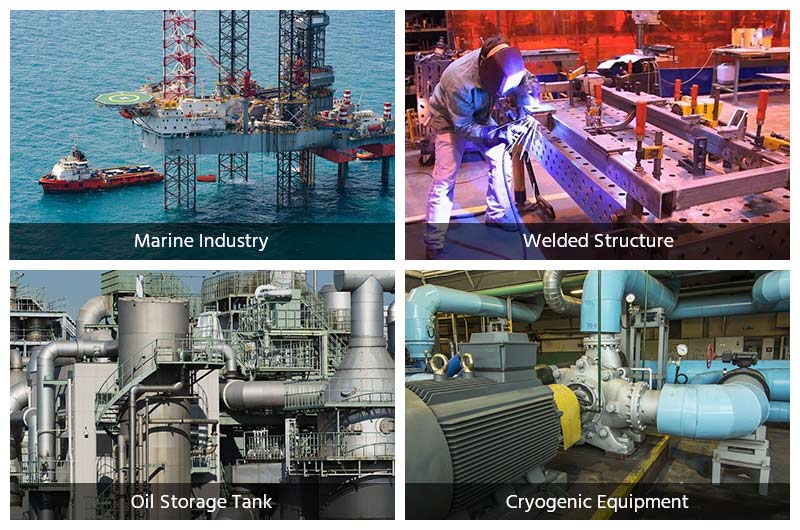
- Marine & Shipbuilding: Seawater cooling pipes, deck handrails, radar masts, and bilge pump lines.
- Transportation: Lightweight structural roll cages and frames for heavy-duty trailers and dump trucks.
- Defense: Tactical vehicle framework and naval weapon mount structures.
- Industrial: Welded unfired pressure vessels and chemical storage piping.
Advantages and Limitations of 5086 Aluminum Tubing
Honest material selection requires looking at both sides.
Advantages:
- Outstanding bare-metal seawater corrosion resistance.
- Excellent weld joint strength.
- Significantly lighter than stainless steel (65% weight reduction).
Limitations:
- Temperature Limit: Do not use 5086 tubing in environments with continuous operating temperatures above 65°C (150°F). Sustained high heat can cause magnesium precipitation, leading to severe stress-corrosion cracking.
- Not for Aerospace: It cannot be heat-treated to reach the ultra-high yield strengths of the 7xxx series required for aircraft frames.

The 5086 Seamless Aluminum Tubing
For procurement managers dealing with pressure, the wholesale 5086 seamless aluminum tubing is the core focus.
- Safety: Because it lacks a longitudinal weld seam, it will not split under extreme internal fluid or gas pressure.
- Cryogenic Performance: Unlike carbon steel pipes that shatter at freezing temperatures, 5086 seamless tubes actually increase in strength down to -196°C, making them the standard for LNG (Liquefied Natural Gas) pipeline routing.
Standards and Certifications for 5086 Marine Pipe
B2B buyers cannot afford compliance failures. GNEE manufactures 5086 pipes in strict accordance with:
- ASTM B210: Standard for drawn seamless aluminum alloy tube.
- ASTM B241: Standard for seamless pipe and seamless extruded tube.
- Marine Certifications: Our materials can be supplied with compliance to major classification societies, including DNV, ABS, LR, and CCS, ensuring your vessel passes inspection.

How to Choose the Right Wholesale 5086 Aluminum Tube
Reduce your decision-making time by following this simple procurement guide:
- Select the Temper: If your pipe needs to be bent, order the -O (Annealed) temper. If it is a straight, load-bearing mast, order the -H32 or -H116 temper.
- Select the Type: If it holds high-pressure gas, specify Seamless. If it is just a handrail, save money and specify Extruded.
- Select the Dimensions: Define your Outer Diameter (OD) and Wall Thickness (e.g., Sch 40, Sch 80) based on your pressure calculations.
Still unsure which wall thickness or temper your marine pipeline requires? Don't risk a material failure. Send your CAD drawings or isometric diagrams to GNEE. Our aluminum experts will provide a free technical assessment and a custom 5086 extruded pipe price quote within 24 hours!
Why Choose GNEE as Your 5086 Aluminum Tube Supplier?
- Massive Inventory & Custom Sizes: We stock standard dimensions and offer custom extrusion capabilities for unique profiles.
- Certified Quality: Every bulk order includes a certified Mill Test Certificate (MTC) with full chemical and mechanical traceability.
- Precision Cutting: We provide exact cut-to-length services, saving you labor costs upon arrival.
- Export-Grade Packaging: We pack all aluminum tubes in ISPM-15 waterproof wooden crates to guarantee zero damage during sea freight.
Get Your 5086 Aluminum Pipe Quote Today
Stop letting supply chain delays and poor-quality materials slow down your shipbuilding or structural projects. Upgrade to GNEE's certified 5086 piping systems.
Contact our engineers to get a free material sample and MTC!