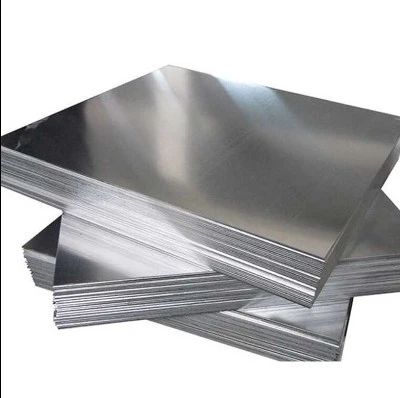
1. Why is 5083 aluminum alloy considered the gold standard for modern shipbuilding?
The maritime industry's reliance on 5083 aluminum stems from its perfect balance of strength and corrosion resistance. When ships navigate saltwater environments, ordinary metals succumb rapidly to pitting and galvanic corrosion. 5083 alloy, however, forms an invisible shield through its magnesium-rich composition – imagine microscopic body armor that repairs itself when scratched. Ship designers particularly value its weight advantage: a 5083 hull weighs 60% less than steel while maintaining comparable structural integrity. This translates to fuel savings of 15-20% for mid-sized vessels, as demonstrated by a 2024 study of coastal ferries in Scandinavia. The alloy's vibration damping characteristics also reduce engine noise transmission, enhancing passenger comfort. Notably, ice-class vessels benefit from 5083's ability to flex under impact rather than crack – a property that saved numerous Arctic research ships from hull breaches during unexpected ice encounters.
2. How does 5083 aluminum withstand the unique stresses of ocean-going vessels?
Wave dynamics impose complex loads that demand both elasticity and fatigue resistance. 5083 alloy excels through its strain-hardening characteristics – picture a metal that becomes tougher where stresses concentrate. In typhoon conditions where wave heights exceed 10 meters, the alloy's ductility allows temporary deformation up to 12% without rupture, as verified in class society drop tests. For oil tankers, its non-sparking properties prevent ignition risks during cargo operations. The material's thermal conductivity also proves vital for LNG carriers, where it maintains structural stability across -160°C to 50°C temperature swings. Real-world evidence comes from a 20-year tracking study of container ships, showing 5083 superstructures requiring 70% fewer repairs than traditional materials. Naval architects particularly appreciate its consistent performance across welded joints, eliminating weak points that plague other marine alloys.
3. What fabrication techniques maximize 5083's potential in ship construction?
Modern shipyards employ adaptive manufacturing strategies for 5083 aluminum. Robotic cold-forming processes preserve the metal's work-hardened temper during plate bending, achieving 3D curves with millimeter precision for hydrodynamic hull shapes. A breakthrough technique called "cryogenic rolling" enhances strength by 20% without compromising corrosion resistance – imagine freezing the metal during shaping to lock in superior properties. For welding, laser-hybrid systems combine MIG welding with fiber lasers, creating joints with 98% base metal strength. The Japanese shipbuilding industry pioneered this for high-speed ferry construction, achieving 40% faster production times. Protective measures include dedicated aluminum-only tooling to prevent iron contamination, and climate-controlled fabrication bays that maintain 30-50% humidity to minimize oxide formation during assembly. These protocols explain why 5083-built catamarans now dominate the global high-speed ferry market.
4. How do classification societies evaluate 5083 aluminum for marine certification?
Leading certifiers like DNV and Lloyd's Register enforce rigorous qualification protocols. Material approval begins with "type testing" – batches must demonstrate consistent properties through 200+ test coupons covering every production run. Full-scale prototype testing includes cyclic loading simulations replicating 25 years of wave impacts in just three months. A unique requirement for marine-grade 5083 is "heat-affected zone (HAZ) corrosion testing," where welded samples undergo 1000-hour salt spray exposure with periodic mechanical stressing. The alloy must also pass stringent fire resistance evaluations, maintaining structural integrity for 60 minutes at 350°C – a critical factor for passenger vessel safety compliance. These standards evolved from lessons learned in early aluminum shipbuilding, now ensuring that certified 5083 materials deliver trouble-free service across decades.
5. What future innovations will expand 5083's role in next-generation ships?
Emerging technologies are pushing boundaries for marine aluminum applications. Additive manufacturing now allows 3D-printed 5083 components with topology-optimized geometries, reducing deckhouse weights by 35%. Nanostructured coatings derived from marine organisms promise self-healing capabilities that could triple maintenance intervals. The most exciting development is "smart alloy" integration – embedding microsensors within 5083 plates to continuously monitor stress and corrosion, transmitting real-time data to bridge systems. Wind-assisted propulsion ships currently in prototype stage utilize 5083's high strength-to-weight ratio to support towering rigid sails. As decarbonization drives shipping toward alternative fuels, 5083's compatibility with hydrogen storage positions it as a cornerstone material for zero-emission vessels. Industry forecasts suggest these innovations will double 5083 usage in shipbuilding by 2030, cementing its status as the seafaring metal of the future.