

Understanding how 5052 H32 aluminum sheet is made isn't just important for metallurgists - it's equally vital for engineers, designers, and procurement specialists who require consistent quality, reliable performance, and dependable supply for critical applications.
This guide breaks down the entire production journey, from raw aluminum to finished sheet, showcasing the precision, expertise, and quality control that define GNEE's 5052 H32 aluminum sheet, and explaining why mastering this process is key to your project's success.
1. Introduction: Why Focus on the 5052 H32 Production Process?
The 5052 aluminum alloy in H32 temper is one of the most versatile and widely used non-heat-treatable alloys. It offers excellent corrosion resistance (especially in marine environments), good weldability, superb formability, and moderate strength - ideal for marine components, fuel tanks, electronic enclosures, and architectural panels.
However, not all 5052 H32 sheets are equal. The production process directly determines the material's consistency and mechanical properties. Understanding it helps you:
Recognize the importance of quality control checkpoints.
Select reliable suppliers with proven process mastery.
Optimize designs with realistic performance expectations.
Diagnose material variations based on production origins.
At GNEE, every step of this process is carefully managed to ensure stable, high-quality 5052 H32 aluminum sheet.
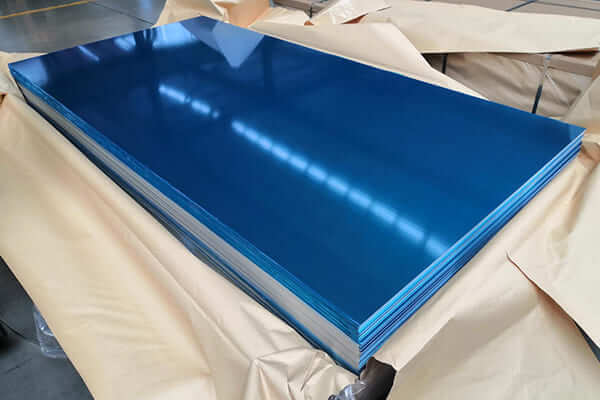
2. The Raw Material: Starting with High-Purity Aluminum
The process begins with high-purity primary aluminum ingots produced through electrolytic reduction. Alloying elements such as magnesium (Mg) and chromium (Cr) are then precisely added to create the 5052 composition.
Typical Chemical Composition (ASTM B209 / EN 485):
| Element | Content (%) |
|---|---|
| Silicon (Si) | 0.25 max |
| Iron (Fe) | 0.40 max |
| Copper (Cu) | 0.10 max |
| Manganese (Mn) | 0.10 max |
| Magnesium (Mg) | 2.2 – 2.8 |
| Chromium (Cr) | 0.15 – 0.35 |
| Zinc (Zn) | 0.10 max |
| Others (each) | 0.05 max |
| Others (total) | 0.15 max |
| Aluminum (Al) | Balance |
Strict control of these elements ensures the corrosion resistance, strength, and work-hardening performance expected from 5052 H32.
3. Casting: Transforming Molten Metal into Solid Slabs
After alloying, molten aluminum is cast into slabs through Direct Chill (DC) casting, the standard method for flat-rolled aluminum products.
Melting & Analysis: The melt is tested to verify chemical composition.
Degassing & Fluxing: Removes impurities and hydrogen to prevent porosity.
DC Casting: Molten aluminum flows into a water-cooled mold. As it solidifies, the base lowers gradually, producing dense, fine-grained slabs ideal for rolling.
This casting process yields uniform ingots with minimal defects - the foundation for GNEE's high-quality sheets.
4. Hot Rolling: Reducing Thickness & Refining Structure
Before rolling, slabs are preheated (450–550°C) to homogenize the microstructure, dissolve alloying elements uniformly, and reduce internal segregation.
Then, through multiple passes on hot rolling mills, the slabs are progressively thinned:
Breakdown rolling: Major thickness reduction on reversing mills.
Finishing rolling: Final reduction on tandem mills to achieve target gauge.
Temperature control during rolling ensures ductility and optimizes the final grain structure, improving both strength and surface quality.
5. Cold Rolling: Achieving Final Thickness and Surface Finish
After hot rolling, the coils are cooled and passed through cold rolling mills to:
Reach precise final thickness.
Enhance surface brightness and smoothness.
Strengthen the material through strain hardening.
Cold rolling also improves dimensional control and prepares the sheet for tempering into the desired H32 condition.
6. Annealing and Tempering: Achieving the H32 Condition
The H32 temper means the sheet is strain-hardened and stabilized to a quarter-hard condition - providing a balance between strength and formability.
Strain Hardening: Cold rolling increases strength beyond the target H32 level.
Stabilization Anneal: A low-temperature heat treatment relieves stresses and slightly restores ductility, stabilizing mechanical properties.
Typical Mechanical Properties (ASTM B209):
| Property | Typical Value (0.063–0.124 in.) |
|---|---|
| Ultimate Tensile Strength | 215–260 MPa (31–38 ksi) |
| Yield Strength | ≥160 MPa (23 ksi) |
| Elongation (in 2") | 7–12% |
This careful combination of cold work and thermal stabilization gives 5052 H32 its reliable balance of strength, corrosion resistance, and formability.
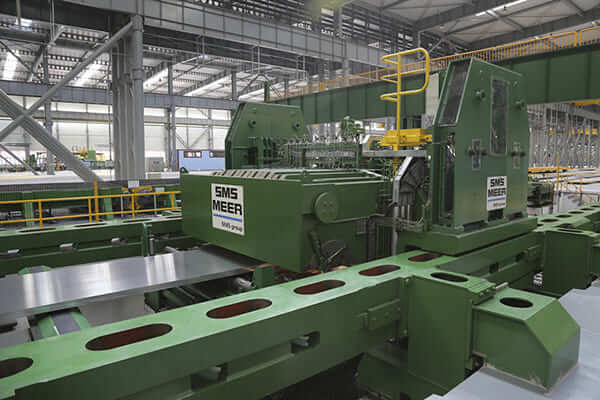
5052 H32 Aluminum Sheet Production Process
7. Finishing Operations: Ensuring Precision and Appearance
Once the sheet achieves its final temper, several finishing processes are applied:
Leveling / Stretching: Ensures flatness and removes internal stresses.
Slitting / Cutting: Converts coils into required widths or lengths.
Surface Finishing: Options include mill finish, brushed, polished, anodized, or coated surfaces.
Protection: Oil coating or interleaving paper is added for transport safety.
GNEE also offers color-coated and anodized 5052 H32 coils for enhanced aesthetics and corrosion protection.
8. Quality Control: GNEE's Commitment to Excellence
From melting to final inspection, GNEE implements strict quality checks:
Chemical Analysis: Confirms alloy composition at melting stage.
Microstructure Examination: Verifies grain uniformity and detects inclusions.
Mechanical Testing: Tensile, yield, elongation, and hardness tests.
Formability Tests: Bending and surface quality evaluation.
Dimensional Verification: Ensures tolerance accuracy for thickness, width, and flatness.
Compliance with ASTM, EN, and ISO 9001 standards ensures every 5052 H32 aluminum sheet meets or exceeds global quality benchmarks.
9. Why the Process Matters
A deep understanding of production allows buyers and engineers to:
Specify with precision - identify reliable suppliers like GNEE.
Predict performance - connect process steps to material behavior.
Value quality - appreciate process control beyond chemical specs.
Collaborate effectively - align technical expectations with production capabilities.
10. Partner with GNEE - Your Trusted 5052 H32 Aluminum Supplier
Producing high-performance 5052 H32 aluminum sheet requires advanced equipment, technical expertise, and strict process management.
GNEE, as a leading Chinese aluminum supplier, offers:
Consistent product quality backed by advanced production lines.
Comprehensive testing and certification.
Tailored solutions for marine, construction, and industrial applications.
If your project demands precision, reliability, and consistent performance, partner with GNEE - where every 5052 H32 aluminum sheet reflects excellence in engineering and manufacturing.