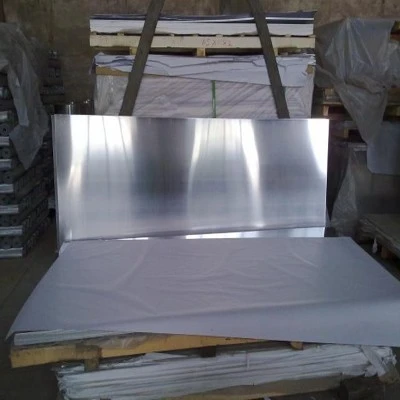
What is 3104 H19 aluminum sheet and why is it specifically used for can bodies?
3104 H19 is a high-strength aluminum alloy in the H19 temper (fully hard), primarily composed of manganese (1.0-1.5%) and magnesium (0.8-1.3%). It is specifically designed for beverage can bodies due to its excellent formability, corrosion resistance, and lightweight properties. The H19 temper provides the necessary rigidity to maintain can structure while allowing for easy deep drawing during manufacturing. Its balanced composition ensures durability during filling, shipping, and storage. This alloy meets strict food safety standards, making it ideal for contact with beverages.
What are the key mechanical properties of 3104 H19 aluminum sheet for can applications?
The typical tensile strength ranges between 270-310 MPa, ensuring structural integrity under pressure. Yield strength is approximately 250-285 MPa, providing resistance to deformation during filling and stacking. Elongation is around 1-3%, reflecting its limited ductility in the H19 temper. The alloy exhibits excellent fatigue resistance, crucial for withstanding repeated handling stresses. These properties are optimized through precise cold rolling and heat treatment processes to meet can-making requirements.
How does 3104 H19 compare to other aluminum alloys used in can manufacturing?
Compared to 3004 (used for can ends), 3104 has higher manganese content for improved strength and formability. It offers better deep-drawing performance than 5052 alloy while maintaining lighter weight than steel alternatives. Unlike 5xxx series alloys, 3104 is heat-treatable, allowing for property optimization. Its corrosion resistance surpasses most steel options without requiring additional coatings. The alloy's recyclability (over 70% of cans are recycled) makes it more sustainable than composite materials.
What are the manufacturing processes involved in producing can bodies from 3104 H19 sheets?
The process begins with blanking circular discs from coiled sheets. These discs undergo deep drawing to form shallow cups, followed by ironing to achieve uniform wall thickness (typically 0.1-0.15mm). Necking and flanging processes create the can's opening mechanism. Each stage requires precise control of lubrication, temperature, and pressure to prevent cracking. The final cans are washed, decorated, and internally coated before filling. Modern lines can produce over 2,000 cans per minute from 3104 H19 material.
What quality control measures are critical for 3104 H19 aluminum can stock?
Sheet thickness must be controlled within ±0.005mm to ensure consistent wall thickness after ironing. Surface finish is critical to prevent defects during forming and printing. Chemical composition is verified through spectrometry to maintain alloy specifications. Mechanical properties are tested via tensile and hardness tests on each coil. Microstructure analysis ensures proper grain size and absence of inclusions that could cause failures. Dimensional tolerances, flatness, and edge quality are rigorously inspected throughout production.