

3003-aluminum-Plate-In-Architectural-Decoration.pdf
3003 aluminum alloy is a common aluminum-manganese alloy (Al-Mn series) and one of the most popular rust-resistant aluminum alloys. It comprises 1.0-1.5% manganese and trace amounts of silicon, iron, copper, and other elements, resulting in distinct alloy properties.
Aluminum-manganese alloy
Rust-proof aluminum alloy
Medium strength
Excellent formability
Good corrosion resistance
Good weldability
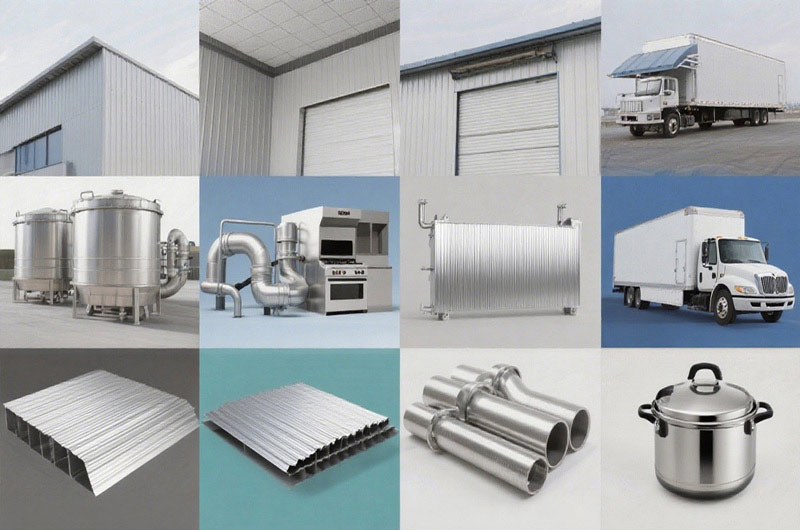
Main Characteristics of 3003 Aluminum Alloy
Mechanical Properties
The tensile strength of 3003 aluminum metal ranges from 142 to 178 MPa, and the conditional yield strength is ≥115 MPa. It has good elongation and hardness of about 40-45 HB, which is higher than that of 1 series pure aluminum, and has better wear resistance and deformation resistance.
Corrosion Resistance
Exhibits exceptional corrosion resistance, comparable to industrial pure aluminum. 3003 aluminum alloy works well against air conditions, fresh water, oceans, food, organic acids, gasoline, and neutral inorganic salt solutions.
Workability
3003 aluminum alloy cannot be strengthened by heat treatment; its mechanical properties can only be improved by cold working. It has high plasticity in the annealed state, good plasticity in the semi-cold-worked state, and low plasticity in the cold-worked state.
Heat Treatment Temper
Common tempers include O (annealed) and H (strain-hardened) series like H12, H14, H16, H18, H22, H24, H26, H28, H112, etc. Different tempers provide varying degrees of strength and ductility.
Application Advantages of 3003 Aluminum Alloy
Lightweight
The density of 3003 aluminum alloy is around 2.73 g/cm³, which is much lower than that of steel. This makes it ideal for weight-sensitive applications.
Corrosion Resistance
Its surface can create a rich oxide film, providing 30% more corrosion resistance in marine climates than 5-series aluminum, making it appropriate for prolonged exposure to hostile environments.
Processing Adaptability
3003 aluminum alloy offers good machinability, making it simple to shear, bend, punch, weld, and perform other manufacturing processes to satisfy complicated production needs.
Cost-effectiveness
Compared to high-strength aluminum alloys, 3003 is less expensive while providing good overall performance, making it a cost-effective material choice.
Applications in Architectural Decoration
3003 aluminum alloy is frequently employed in architectural ornamentation, owing to its high corrosion resistance, decorative appeal, and workability. It is often used for roofing, wall panels, garage doors, and acoustic ceilings.
Roofing Applications
3003 aluminum alloy excels in roofing applications, particularly in the following forms:
Product types include profiled aluminum sheets, corrugated aluminum sheets, and metal roofing systems. These forms offer adequate drainage, good waterproofing performance, and an appealing appearance.
Tempered States: Common tempers include H112, H14, and H24. H112 is suitable for hot-formed goods, as it retains its state after hot processing; H14 and H24, created through cold working, have better strength and hardness, making them suitable for roofing that requires structural integrity.
Common Specifications of 3003 Aluminum Alloy plate
| Item | Specification |
|---|---|
| Thickness | 0.3 – 2.0 mm |
| Effective Width | 800 mm, 828 mm, 1000 mm, and other specifications |
| Length | Typically 1 m, 2 m, 5 m, customizable as required |
| Color-Coated Aluminum Thickness | ≤ 1.5 mm |
| Coating Thickness | Top coat: 25–59 μm / Back coat: ≥ 8 μm |
In roofing applications, 3003 aluminum alloy has lightweight and high-strength qualities, with a unit weight of only one-tenth that of typical glazed ceramic tiles. It also offers excellent waterproofing and weather resistance, with a service life of more than 20 years.
Wall Panel Applications
In wall panel applications, 3003 aluminum alloy is mostly utilized in the following forms:
Product forms include 3003 primarily aluminum panels, 3003 aluminum honeycomb panels, and 3003 color-coated aluminum coils. These have a good ornamental appeal and structural performance.
Tempered States: Common tempers are H14, H24, and H112. H14 and H24 are strong and durable, making them ideal for wall panels that require a flat appearance. H112 is ideal for hot-formed wall panel products.
Common Specifications of 3003 Wall Panel
| Item | Specification |
|---|---|
| Thickness | 0.5–3.0 mm |
| Width | Typically 1000–2000 mm |
| Length | Customized as required, generally not exceeding 6000 mm |
| Coating Thickness | PVDF (fluorocarbon): ≥ 25 μm / Polyester: ≥ 18 μm |
The 3003 aluminum alloy wall panels have high corrosion resistance and attractive features. The surface can be anodized or treated with various coatings to provide a wide range of color possibilities. Aluminum grades 3003 and 3105 are fluorocarbon coated in curtain wall systems, resulting in extremely weather-resistant curtain wall panels that combine beauty and functionality.
Garage Door Applications
3003 aluminum alloy is utilized in garage door applications in the following ways:
Product forms include color-coated aluminum coils and profiled aluminum sheets, which provide good strength, decorative appeal, and ease of processing.
Tempered States: Commonly used in H14 and H24 states, which provide enough strength and hardness to sustain a variety of pressures in everyday use.
Common Specifications
| Item | Specification |
|---|---|
| Thickness | 0.8–2.0 mm |
| Width | Typically 1000–1500 mm |
| Length | Customized according to garage door size |
| Coating Thickness | PVDF (fluorocarbon): ≥ 25 μm / Polyester: ≥ 18 μm |
3003 aluminum alloy garage doors are lightweight, corrosion-resistant, and simple to manufacture, fitting a variety of design requirements while providing enough thermal and acoustic insulation.
Acoustic Ceiling Applications
In acoustic ceiling applications, 3003 aluminum alloy is mostly utilized in the following forms:
Product forms include perforated aluminum panels and acoustic aluminum honeycomb panels, which provide both good acoustic performance and esthetic appeal.
Temper States: Typically utilized in O (annealed) and H14 tempers. O temper has the most flexibility, making perforation and shaping easier, while H14 has enough strength to ensure structural stability in the ceiling.
Common Specifications
| Item | Specification |
|---|---|
| Thickness | 0.6 – 1.5 mm |
| Width | Typically 600–1200 mm |
| Length | Typically 1200–3000 mm |
| Perforation Diameter | 3–10 mm, designed based on acoustic requirements |
| Perforation Rate | 10–30%, designed based on acoustic requirements |
3003 aluminum alloy acoustic ceilings provide excellent acoustic performance, lightweight strength, fire and moisture resistance, and a wide range of decorative treatments to suit both acoustic and aesthetic requirements in a variety of architectural environments.
