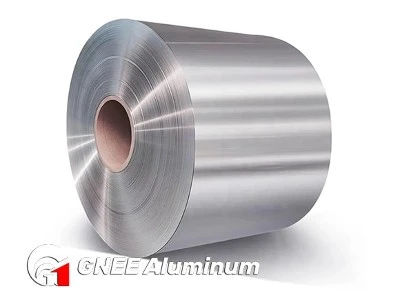
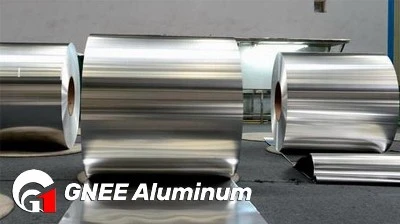
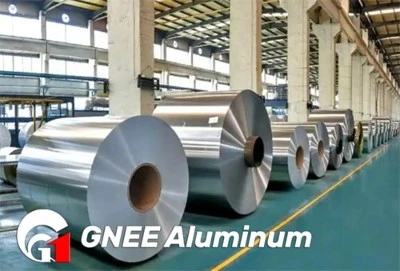
Why is 1200 alloy dominant in jumbo foil roll production?
The alloy's 99.0% minimum aluminum content ensures optimal conductivity (62-65% IACS). Its iron-silicon ratio (0.7-1.0% Fe, 0.05-0.15% Si) enhances tensile strength (70-90MPa) while maintaining 25-35% elongation. Compared to 3000 series, 1200 alloy shows 40% better formability for ultra-thin foils (6-8μm). The homogeneous microstructure minimizes edge cracks during high-speed rolling (up to 2000m/min). Major producers like Hindalco and UACJ prioritize this alloy for food/pharma packaging foils.
What are the standard specifications for industrial jumbo rolls?
Typical roll widths range from 800-2200mm to accommodate slitting machines. Core diameters standardized at 150/200/300mm (aluminum or steel). Maximum outer diameter reaches 1800mm with weight up to 12MT per roll. Thickness tolerance adheres to ±3% per ASTM B479 Class II. Surface quality requires ≤1 visual defect per 10m² (EN 546-3). Anti-corrosion VCI packaging is mandatory for overseas shipping.
How does 1200 alloy foil performance compare in battery vs. packaging applications?
For lithium-ion batteries, annealed O-temper foil (soft) enables 5% deeper drawing depth. Packaging uses H18 temper foil with 15-20% higher puncture resistance. Battery grades demand ≤0.1μm Ra roughness vs. 0.3-0.5μm for flexible packaging. Pinhole standards differ drastically: <3/m² for battery foil vs. <20/m² for food wrap. Recent dual-use developments apply nanocoatings to bridge these requirements.
What advanced processing technologies enhance 1200 foil quality?
Electromagnetic casting produces ingots with 50% fewer inclusions. Computer-controlled rolling mills achieve ±0.2μm thickness variation. In-line laser scanners detect 10μm defects at 15m/s line speed. AI-powered tension control reduces cross-direction thickness deviation to <1%. 2025 innovations include self-lubricating rolls that reduce annealing furnace energy use by 18%.
What sustainability measures are reshaping jumbo roll production?
Closed-loop cooling systems now recycle 92% of rolling emulsion. Hydrogen annealing furnaces cut CO₂ emissions by 35% versus natural gas. Scrap recycling rates exceed 98% through molten metal filtration. Digital twin technology optimizes rolling schedules to reduce energy waste by 12-15%. Major mills like Novelis target carbon-neutral jumbo roll production by 2028 through these advancements.