


Henan Gnee New Material Co., Ltd. is one of the most reliable manufacturers and suppliers of sound barrier aluminum panel in China. With abundant experience, we warmly welcome you to wholesale high quality sound barrier aluminum panel in stock here from our factory. Good service and reasonable price are available.
GNEE manufactures perforated and flat aluminum sound barrier panels for highway, railway, industrial, and outdoor noise-control projects. We supply the aluminum panels only - not complete acoustic systems (no acoustic infill, no steel framing, no posts). If you need panels fabricated to your project spec, send us a drawing.
Standard panel thickness: 0.5–3.0 mm. Panel dimensions up to 2500 mm wide × 6000 mm long. Alloys: 3003, 5052, 5754. Surface finishes: mill finish, powder coating, PVDF.
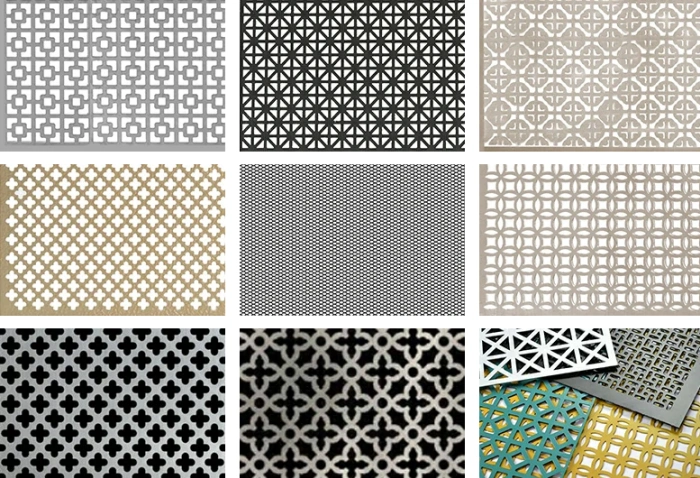
Perforated Aluminum Sound Barrier Panels
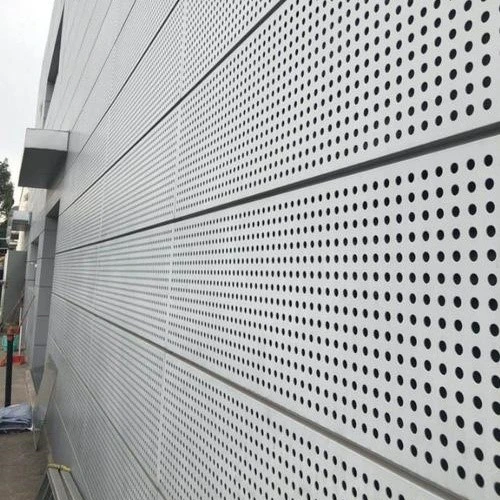
Perforated panels have regularly arranged holes that allow sound to pass through the metal facing into the acoustic infill behind it. The panel itself is not a complete sound absorber - it works as part of a system with acoustic infill (mineral wool, fiberglass), an air cavity, and a solid backing.
Typical configuration for absorptive barriers:
Perforated aluminum facing (open area 20–30%)
Acoustic infill (50–100 mm mineral wool, density 40–80 kg/m³)
Air cavity (50–100 mm)
Solid backing panel
Perforation parameters to specify:
|
Parameter |
Typical Range |
Notes |
|
Hole diameter |
2–10 mm |
Smaller holes = finer appearance, higher tooling cost |
|
Hole pitch |
5–30 mm |
Determines open area together with hole diameter |
|
Open area |
20–30% |
Common range for acoustic applications |
|
Pattern |
Round, square staggered |
Round 60° staggered is most common |
Open area calculation (round holes, 60° staggered):
Open Area (%) = 0.907 × (d / p)² × 100
Where: d = hole diameter, p = hole pitch (center-to-center)
Open area calculation (round holes, square pattern):
Open Area (%) = 0.785 × (d / p)² × 100
Flat Aluminum Sound Barrier Panels
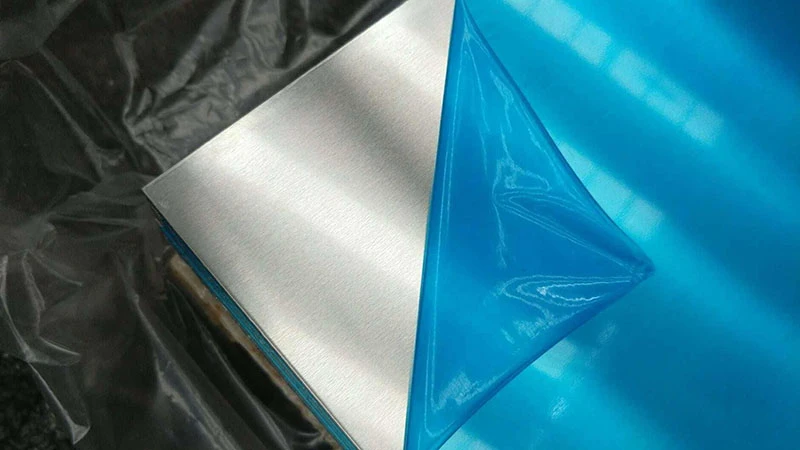
Flat panels have a solid, non-perforated surface. They are used as:
Reflective barrier panels (sound reflects back toward the source)
Backing panels behind acoustic infill
Equipment enclosure walls
Visible-facing panels where a clean appearance is required
Flat panels do not absorb sound - they reflect it. Use them when the barrier design is reflective (no acoustic infill) or as the back panel of an absorptive barrier system.
Perforated vs Flat Aluminum Sound Barrier Panels: Which to Choose
|
Feature |
Perforated Panel |
Flat Panel |
|
Surface |
Holes |
Solid |
|
Acoustic Function |
Sound-transparent facing for absorptive systems |
Sound-reflective barrier |
|
Open Area |
20–30% typical |
0% |
|
NRC (panel alone) |
~0.05–0.15 |
~0.05 |
|
NRC (in complete system with 50mm mineral wool) |
0.70–0.90 |
N/A (used as backing) |
|
Typical Use |
Sound-absorbing barrier (facing the noise source) |
Reflective barrier or backing panel |
|
Cost |
Higher (perforation processing) |
Lower |
Rule of thumb: If your barrier design includes acoustic infill, use perforated panels on the noise-source side and flat panels on the back. If the barrier is purely reflective (no infill), use flat panels throughout.
Aluminum Sound Barrier Panel Specifications
|
Parameter |
Specification |
|
Product |
Aluminum Sound Barrier Panel |
|
Panel Type |
Perforated / Flat |
|
Alloys |
3003, 5052, 5754 (other grades on request) |
|
Temper |
H14, H24, H32, H34 (per alloy) |
|
Thickness |
0.5–3.0 mm |
|
Width |
500–2500 mm (standard: 1000, 1250, 1500 mm) |
|
Length |
1000–6000 mm |
|
Hole Shape |
Round (square, slot on request) |
|
Hole Diameter |
2–20 mm |
|
Hole Pitch |
5–50 mm (center-to-center) |
|
Open Area |
15%–40% (typical: 20%–30%) |
|
Surface Finish |
Mill / Powder Coating / PVDF |
|
Coating Standard |
AAMA 2604 (powder) / AAMA 2605 (PVDF) |
|
Edge Treatment |
Sheared, deburred, or formed per drawing |
|
Application |
Highway, railway, industrial noise control |
|
MOQ |
Negotiable (depends on spec and quantity) |
|
Lead Time |
15–30 days (standard) / 25–45 days (custom) |
Actual alloy, temper, and dimensions confirmed per project requirement and production capability.
Acoustic Performance Reference
The aluminum panel alone does not determine the barrier's acoustic performance - the complete system does. Below are reference values for common configurations. Actual performance must be tested per the project's acoustic standard.
|
System Configuration |
STC / Rw |
NRC |
Notes |
|
1.0mm flat aluminum panel (single layer, no infill) |
20–25 |
0.05 |
Reflective only |
|
2.0mm flat aluminum panel (single layer, no infill) |
25–28 |
0.05 |
Reflective only |
|
Perforated panel + 50mm mineral wool (80kg/m³) + air cavity + flat back panel |
28–32 |
0.75–0.85 |
Absorptive, typical highway barrier |
|
Perforated panel + 100mm mineral wool + air cavity + flat back panel |
30–35 |
0.80–0.90 |
Absorptive, higher performance |
Notes:
STC/Rw values are reference ranges, not guaranteed performance.
Actual performance depends on panel thickness, perforation rate, infill type/density/thickness, air cavity depth, installation quality, and barrier height.
Acoustic testing standards: ISO 717-1 (Rw), ASTM E90 (STC), ASTM C423 (NRC), GB/T 19884.
For project-specific acoustic requirements, send us your target STC/NRC and barrier design for review.
Aluminum Alloys for Sound Barrier Panels
|
Property |
3003 H14 |
5052 H32 |
5754 H111 |
|
Series |
3xxx (Al-Mn) |
5xxx (Al-Mg) |
5xxx (Al-Mg) |
|
Tensile Strength |
140–180 MPa |
290–350 MPa |
245–300 MPa |
|
Yield Strength |
≥ 125 MPa |
≥ 195 MPa |
≥ 170 MPa |
|
Elongation |
≥ 8% |
≥ 12% |
≥ 12% |
|
Density |
2.73 g/cm³ |
2.68 g/cm³ |
2.66 g/cm³ |
|
Typical Use |
General purpose, formed panels |
Outdoor, higher strength |
Outdoor, formed panels |
Recommendation:
3003 - Most cost-effective for standard flat and perforated panels. Good formability for curved or bent panels.
5052 - Best for outdoor environments needing higher strength (highway, coastal areas). Higher cost than 3003.
5754 - Good balance of strength and formability. Common in European spec barrier projects.
If your project spec does not mandate an alloy, 3003 is the default for non-structural panels. 5052 is recommended for panels exposed to high wind loads or coastal environments.
Surface Treatment
|
Finish |
Thickness |
Standard |
Best For |
|
Mill Finish |
N/A |
N/A |
Industrial applications, non-visible panels, lowest cost |
|
Powder Coating |
60–120 μm |
AAMA 2604 / Qualicoat |
Standard outdoor, color matching |
|
PVDF Coating |
30–40 μm (incl. primer) |
AAMA 2605 |
Long-term outdoor (25+ years), infrastructure projects |
Color options: RAL colors, custom colors, metallic finishes.
Notes:
PVDF coating has superior UV resistance and color retention for highway/railway projects with 20+ year design life.
Powder coating is cost-effective for most industrial applications.
Surface preparation (chromating or anodizing pretreatment) is required before coating for adhesion and corrosion resistance.
Applications
Highway Noise Barriers
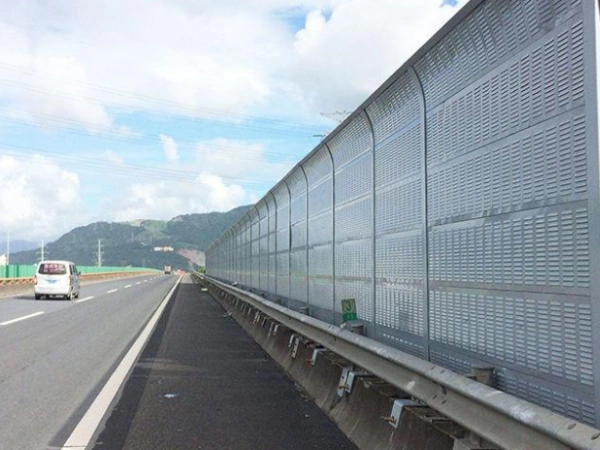
Aluminum panels are used as the facing and backing components of highway sound barriers. Typical configuration: perforated panel (traffic side) + acoustic infill + flat back panel, mounted on steel posts at 2–5m height.
Panel thickness: typically 1.0–2.0mm
Post spacing: 2–4m
Barrier height: 2–5m (design per local noise regulation)
Railway Noise Barriers
Similar to highway barriers but may require higher panels and thicker material for high-speed rail sections.
Panel thickness: 1.5–2.5mm (high-speed rail may require thicker)
Barrier height: 3–5m
Wind load consideration: higher for open rail corridors
Industrial Noise Control
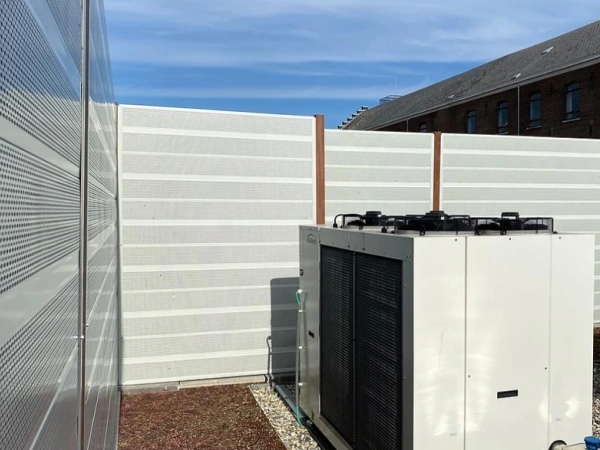
Barrier walls around factory equipment, compressors, generators, and cooling towers.
Typical target: 10–20 dB noise reduction at receiver
Panel thickness: 1.0–2.0mm
May require both absorptive (perforated) and reflective (flat) panels
Equipment Enclosures
Flat or perforated aluminum panels for outdoor equipment housings where noise reduction and weather protection are needed.
Panel thickness: 1.0–2.5mm
May include insulation layer


Installation Notes
Panel orientation: For absorptive barriers, the perforated panel faces the noise source (traffic side). The flat panel is on the back (residential side).
Panel-to-post connection: Panels are typically inserted into H-section steel posts via a groove, or bolted to the post flange. Connection method depends on the barrier system design.
Panel-to-panel joints: Vertical joints between panels should be sealed to prevent sound leakage. Horizontal joints (between panel tiers) may use overlapping or tongue-and-groove edges.
Drainage: The barrier system should include drainage gaps at the bottom to prevent water accumulation in the acoustic infill.
GNEE supplies the panels. The support structure (posts, foundations) and acoustic infill are typically supplied by others or specified by the project design.
How to Order
Send the following for a quote:
|
Item |
Example |
|
Panel Type |
Perforated / Flat |
|
Alloy |
3003 H14 |
|
Thickness |
1.5 mm |
|
Width × Length |
1200 × 3000 mm |
|
Hole Diameter |
3 mm |
|
Hole Pitch |
6 mm (60° staggered) |
|
Open Area |
~23% |
|
Surface |
PVDF, RAL 7016 |
|
Edge / Forming |
25mm bend on long edges |
|
Quantity |
500 panels |
|
Drawing |
Attached (if custom) |
Lead time: 15–30 days for standard specs, 25–45 days for custom configurations.
MOQ: Depends on spec. Contact us with your requirements - we handle trial orders and bulk production.
If you only have partial spec: Send what you know (panel dimensions, alloy, application). We will confirm the rest.
Quality Inspection
Typical inspection items:
Material: Alloy verification per mill test certificate (EN 10204 3.1/3.2)
Dimensions: Thickness (±0.05mm), width, length
Perforation: Hole diameter (±0.1mm), pitch (±0.5mm), open area verification
Flatness: ≤ 2mm/m for panels ≤ 2mm thick; ≤ 3mm/m for panels > 2mm thick
Surface: No scratches, dents, coating defects (per AAMA 2604/2605)
Coating thickness: Measured by coating thickness gauge
Quantity and packaging: Per order confirmation
Third-party inspection available: SGS, BV, TUV.


Packaging
Protective film on both sides (for coated panels)
Stacked on wooden pallets
Edge protectors to prevent deformation
Steel strapping
Custom export packaging per destination

FAQ
Do you supply complete sound barrier systems?
No. GNEE supplies aluminum panels only - perforated and flat. We do not supply acoustic infill, steel posts, foundations, or complete barrier systems. If you need panels fabricated to fit your barrier system design, send us your drawings.
What acoustic performance can I expect?
The panel alone does not determine acoustic performance. A typical absorptive barrier system (perforated panel + 50mm mineral wool + flat back panel) achieves STC 28–32, NRC 0.75–0.85. For target-specific performance, send us your barrier design and acoustic requirements.
What is the difference between powder coating and PVDF?
Powder coating (60–120μm, AAMA 2604) is cost-effective for general outdoor use. PVDF (30–40μm, AAMA 2605) has superior UV resistance and color retention for 20+ year design life. For highway and railway projects, PVDF is typically specified.
Can you produce custom perforation patterns?
Yes. Send us a drawing with hole diameter, pitch, pattern, and open area. Standard round holes in 60° staggered arrangement are most common and most cost-effective. Custom patterns (slots, squares, decorative) are available but may require additional tooling.
Request a Quote
Send us your panel specifications - type, alloy, thickness, dimensions, perforation parameters, surface treatment, and quantity. For custom panels, send a drawing.
GNEE is an aluminum panel manufacturer supplying perforated and flat sound barrier panels to industrial and infrastructure customers worldwide. Quote within 24 hours.

Hot Tags: sound barrier aluminum panel, China sound barrier aluminum panel manufacturers, suppliers, factory, cost of aluminum sheet, Aluminum Sheet Cut To Size, tubular aluminum sheet, 3003 Aluminum Plate Manganese Alloy, racking aluminum sheet, 6061 Aluminum Sheet Plate