

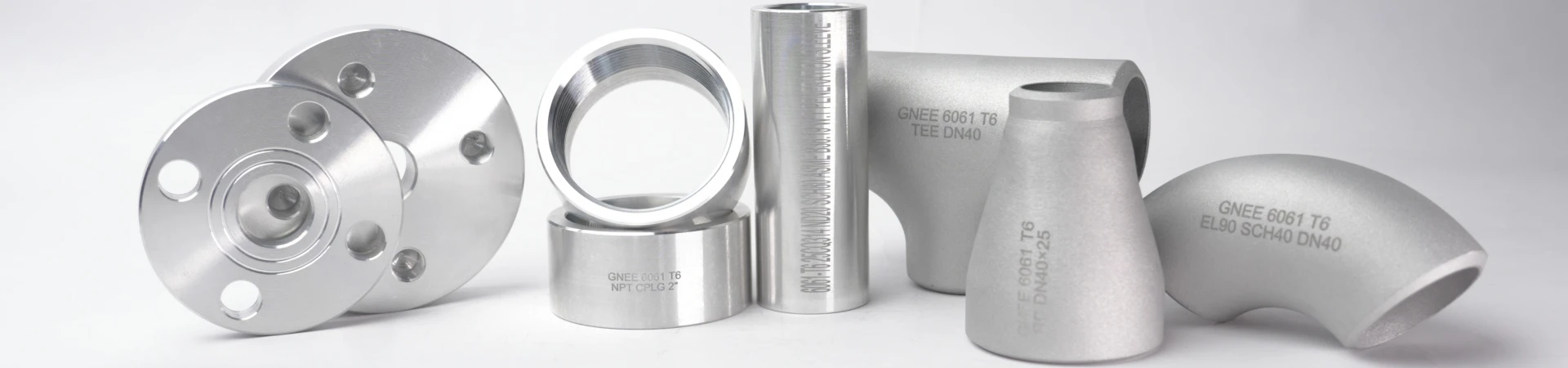
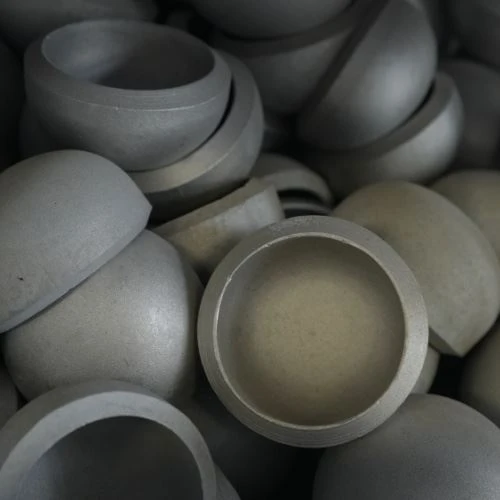

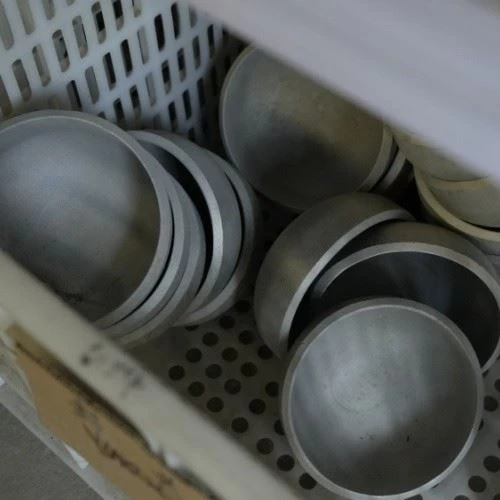
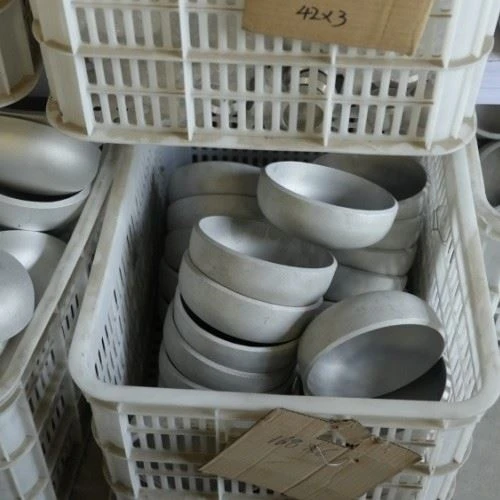
Henan Gnee New Material Co., Ltd. is one of the most reliable manufacturers and suppliers of aluminum pipe cap in China. With abundant experience, we warmly welcome you to wholesale high quality aluminum pipe cap in stock here from our factory. Good service and reasonable price are available.
GNEE supplies aluminum pipe caps for closing the end of a pipe, tube, vessel nozzle, or branch connection. Depending on the connection method, a cap can give a permanent welded closure or a removable threaded closure.
Available types include butt-weld caps, threaded caps, socket-weld caps, and custom aluminum caps. Aluminum alloys can be selected according to corrosion resistance, weight, weldability, and the actual service conditions.
For applicable factory-made wrought aluminum and aluminum-alloy welding fittings, ASTM B361 provides the material and product requirements. ASME B16.9 covers dimensional and related requirements for applicable factory-made wrought butt-welding fittings. For applicable forged aluminum and aluminum-alloy caps with threaded or socket-weld ends, ASME B16.52 may apply.
GNEE can supply standard and custom aluminum pipe caps according to alloy, temper, size, wall thickness, connection type, and applicable standard.
Request a Quote for Aluminum Pipe Caps
1. Aluminum Pipe Cap Types
|
Type |
Description |
Connection |
Applicable Standard |
|
Butt-Weld Cap |
Permanently welded to the pipe end |
Butt Weld |
ASTM B361 / ASME B16.9, where applicable |
|
Threaded Cap |
Removable closure with female thread |
NPT / BSP / Metric |
ASME B16.52, where applicable |
|
Socket-Weld Cap |
Pipe inserted into socket and welded |
Socket Weld |
ASME B16.52, where applicable |
|
Custom Cap |
Special dimensions or shapes |
According to drawing |
Customer specification |
The applicable standard depends on the cap type, manufacturing method, and connection. The standard should be confirmed before production.

2. Butt-Weld Aluminum Pipe Cap
A butt-weld aluminum cap is installed by welding the cap directly to the pipe end. This gives a permanent, leak-tight closure.
This type of cap is commonly selected when:
- Permanent sealing is required
- Leakage risk must be minimized
- The system uses welded aluminum piping
- Future disassembly is not expected
Applicable factory-made wrought aluminum welding caps can be specified according to ASTM B361, while ASME B16.9 provides the dimensional requirements. ASTM B361 covers factory-made wrought aluminum and aluminum-alloy welding fittings, including fittings produced from pipe, tube, plate, forgings, or other wrought forms.
3. Threaded Aluminum Pipe Cap
A threaded aluminum cap closes a pipe end without welding. The cap screws onto the pipe end and can be removed when needed.
Common thread types include:
- NPT
- BSPT
- BSPP
- Metric threads
Threaded caps are useful when:
Periodic maintenance is required
Pipe extensions may be added later
Temporary sealing is needed
Welding is not practical
NPT, BSP and metric threads are different systems and are not interchangeable. The thread standard must always be confirmed before production.
For applicable forged aluminum threaded caps, ASME B16.52 may apply. Note that B16.52 covers forged fittings. If a cap is machined from bar stock instead of forged, B16.52 may not apply. Ask your supplier which production method is used.
4. Socket-Weld Aluminum Pipe Cap
A socket-weld aluminum cap has an internal recess. The pipe is inserted into the socket and welded around the joint.
Compared with butt-weld caps, socket-weld caps offer:
Easier alignment
Suitability for smaller pipe sizes
Common use in utility and instrument piping
Applicable forged nonferrous socket-weld caps may reference ASME B16.52. The actual fitting configuration should be confirmed because not every socket-weld cap necessarily falls under the same dimensional standard.
5. Aluminum Pipe Cap vs Pipe Plug
Caps and plugs are often confused, but they serve different purposes.
|
Item |
Pipe Cap |
Pipe Plug |
|
Installation |
Covers outside of pipe end |
Installed inside fitting opening |
|
Thread |
Female |
Male |
|
Typical Use |
Pipe end closure |
Closing threaded ports |
|
Connection |
Welded or threaded |
Threaded |
|
Size Range |
Small and large pipe sizes |
Usually smaller threaded openings |
A cap closes the end of a pipe. A plug seals an internal threaded opening.
6. Aluminum Pipe Cap Dimensions
For butt-welding fittings, ASME B16.9-2024 covers factory-made wrought butt-welding fittings from NPS 1/2 through NPS 48 (DN15 through DN1200). Caps are included in this range.
Butt-Weld Cap Reference Dimensions
|
NPS |
DN |
Outside Diameter (mm) |
Length E (mm) |
Length E1 (mm) |
Limiting Wall Thickness for E (mm) |
|
1/2 |
15 |
21.3 |
25 |
25 |
4.57 |
|
3/4 |
20 |
26.7 |
25 |
25 |
3.81 |
|
1 |
25 |
33.4 |
38 |
38 |
4.57 |
|
1-1/4 |
32 |
42.2 |
38 |
38 |
4.83 |
|
1-1/2 |
40 |
48.3 |
38 |
38 |
5.08 |
|
2 |
50 |
60.3 |
38 |
44 |
5.59 |
|
2-1/2 |
65 |
73.0 |
38 |
51 |
7.11 |
|
3 |
80 |
88.9 |
51 |
64 |
7.62 |
|
3-1/2 |
90 |
101.6 |
64 |
76 |
8.13 |
|
4 |
100 |
114.3 |
64 |
76 |
8.64 |
|
5 |
125 |
141.3 |
76 |
89 |
9.65 |
|
6 |
150 |
168.3 |
89 |
102 |
10.92 |
|
8 |
200 |
219.1 |
102 |
127 |
12.70 |
|
10 |
250 |
273.0 |
127 |
152 |
12.70 |
|
12 |
300 |
323.8 |
152 |
178 |
12.70 |
|
14 |
350 |
355.6 |
165 |
191 |
12.70 |
|
16 |
400 |
406.4 |
178 |
203 |
12.70 |
|
18 |
450 |
457.0 |
203 |
229 |
12.70 |
|
20 |
500 |
508.0 |
229 |
254 |
12.70 |
|
22 |
550 |
559.0 |
254 |
254 |
12.70 |
|
24 |
600 |
610.0 |
267 |
305 |
12.70 |
Notes:
E is the cap length for wall thickness not exceeding the limiting wall thickness shown in the table.
E1 is the cap length for wall thickness greater than the limiting wall thickness, for NPS 24 and smaller.
For NPS 26 and larger, E1 is by agreement between the manufacturer and purchaser.
The shape of these caps is ellipsoidal and conforms to the requirements of the ASME Boiler and Pressure Vessel Code.
These are standard dimensional references from the applicable ASME B16.9 configuration. They should not be presented as GNEE's guaranteed stock dimensions unless they match the actual products supplied.
Specifying Cap Sizes
Aluminum caps can be specified using NPS, DN or actual outside diameter (OD).
For aluminum tube systems, provide the actual outside diameter and wall thickness if the connection does not use standardized NPS dimensions.
For threaded caps, also specify the thread type (NPT, BSP or metric) and thread size.
7. Technical Specifications
|
Parameter |
Specification |
|
Product |
Aluminum Pipe Cap |
|
Types |
Butt-Weld / Threaded / Socket-Weld / Custom |
|
Connection |
Butt Weld / Thread / Socket Weld |
|
Size |
NPS / DN / OD according to design |
|
GNEE Standard Supply Range |
NPS 1/2–24 where applicable (confirm with GNEE) |
|
Larger Sizes |
Available for evaluation on request |
|
Wall Thickness |
According to applicable standard, pipe dimensions or customer drawing |
|
Alloys |
6061, 6063, 5083, 5086, 3003, 1060 and other suitable aluminum alloys |
|
Temper |
According to alloy, manufacturing process and material specification |
|
Butt-Weld Standard |
ASTM B361 / ASME B16.9 where applicable |
|
Threaded / Socket-Weld Standard |
ASME B16.52 where applicable to forged nonferrous fittings |
|
Thread |
NPT / BSP / Metric where applicable |
|
Surface |
Mill Finish / Anodized / Customer-Specified Finish |
|
Manufacturing |
Formed / Forged / Spun / Machined according to cap design |
|
Inspection |
Visual / Dimensional / Material Verification / Additional Testing on Request |
|
Packaging |
Carton / Wooden Case / Wooden Pallet according to size and shipping requirements |
Note: Size, wall thickness, alloy and connection availability depend on the actual cap design and applicable specification. Not every alloy is available in every size and connection type. They should be confirmed before production.
Manufacturing Options
Production methods vary according to cap size and shape.
- Formed cap: Plate or tube → Forming → Edge preparation → Machining → Inspection
- Spun cap: Blank → Spinning → Trimming → Machining → Inspection
- Forged cap: Forging → Heat treatment if required → CNC machining → Inspection
- Custom cap: Non-standard dimensions produced according to drawings, samples or customer specifications


About Pipe Schedule
Where compatible with the applicable fitting and pipe dimensions, customers may specify pipe schedules such as SCH10, SCH40 or SCH80. However, pipe schedule should not be treated as a standalone pressure rating for an aluminum pipe cap. The actual pressure capability depends on alloy, temper, wall thickness, cap geometry, size, operating temperature, connection method, applicable design code and service conditions.
8. Aluminum Alloy Selection
Different aluminum alloys provide different combinations of strength, corrosion resistance, weldability, formability and machinability.
|
Alloy |
Main Characteristics |
Potential Applications |
|
6061 |
Good strength, machinability and weldability |
Industrial piping and equipment |
|
6063 |
Good extrusion characteristics and surface finish |
Lightweight systems |
|
5083 |
Good corrosion resistance and weldability |
Marine and offshore applications |
|
5086 |
Good corrosion resistance and weldability |
Marine piping |
|
3003 |
Good formability and corrosion resistance |
General-purpose applications |
|
1060 |
High aluminum content and excellent corrosion resistance |
Low-strength applications where suitable |
Note: ASTM B361 Table 1 lists applicable alloys as 1060, 1100, 3003, Alclad 3003, 5083, 5086, 5154, 6061 and 6063. Alloys 6082 and 5052 are not listed in B361 Table 1 and should be confirmed against the actual material specification before being specified for a B361 fitting.
6061 Aluminum Pipe Cap
6061 can be considered for general industrial applications where a combination of strength, machinability, and weldability is required.
5083 Aluminum Pipe Cap
5083 can be considered for compatible marine applications where corrosion resistance and weldability are important. The final alloy and temper should be selected according to the actual piping service, welding procedure, and project requirements.
9. Aluminum Pipe Cap Standards
|
Cap Type |
Applicable Standard |
|
Butt-Weld Cap |
ASTM B361 / ASME B16.9, where applicable |
|
Threaded Cap |
ASME B16.52, where applicable |
|
Socket-Weld Cap |
ASME B16.52, where applicable |
The exact standard should always be confirmed against the actual cap design, manufacturing method, and purchase specification.
Read More: Aluminum Pipe Fittings Standards
10. Applications of Aluminum Pipe Cap
Industrial Piping
Aluminum caps are used to close spare branches or future expansion points in industrial piping systems.
Marine Systems
Aluminum caps in 5083 and 5086 can be considered for seawater and ship piping systems where corrosion resistance is important.
Hydrostatic Testing
Temporary aluminum caps can be used to close pipe ends during system testing where the alloy, wall thickness and test pressure are suitable.
Equipment Nozzles
Caps are often used to protect vessel or equipment nozzles during storage and transportation.
HVAC Systems
Lightweight aluminum caps can be used in compatible air and fluid systems.
Compressed-Air Systems
Aluminum caps can be considered for lightweight compressed-air distribution systems when the alloy, cap design and operating pressure are suitable.


11. Aluminum Cap Selection Guide
|
Requirement |
Recommended Type |
|
Permanent closure |
Butt-Weld Cap |
|
Removable closure |
Threaded Cap |
|
Small pipe size |
Socket-Weld Cap |
|
Marine service |
5083 / 5086 |
|
General industrial use |
6061 |
|
HVAC |
3003 / 6063 |
12. Inspection and Quality Control
GNEE can arrange inspection according to the agreed product specification and purchase order.
Material Inspection
Alloy verification
Temper verification
Chemical composition documentation
Material certificate review
Dimensional Inspection
Outside diameter
Height / length (E or E1 where applicable)
Wall thickness
End preparation
Thread dimensions where applicable
Surface Inspection
Cracks, dents, deep scratches, deformation, surface damage
Additional Testing (depending on purchase specification)
PMI
Dye penetrant testing
Pressure testing where applicable
Customer-specified inspection
Inspection requirements should be agreed before production.
13. Packaging
GNEE uses export packaging designed to protect aluminum pipe caps during handling, loading and international transportation.
Typical packaging includes:
Individual protective bags
Plastic film
Kraft paper
Cartons
Wooden cases
Wooden pallets
Strapping
Small caps can be packed in cartons and secured on wooden pallets. Larger caps can be protected with suitable packaging materials and secured on pallets or inside wooden cases. Packaging can be adjusted according to container loading requirements, cap size, quantity, destination and customer packaging instructions.

14. FAQ
Can aluminum caps be welded?
Yes. Butt-weld and socket-weld caps are designed for welding to compatible aluminum piping. The correct welding procedure should be used for the specific alloy.
Can aluminum caps be threaded?
Yes. Threaded caps are available with NPT, BSP and other thread types. The thread standard must be specified when ordering.
What aluminum alloy is best?
6061 is often used for general industrial applications. 5083 and 5086 are preferred where marine corrosion resistance is important. The best alloy depends on the actual service conditions.
Are custom sizes available?
Yes. Custom caps can be manufactured according to drawings or samples.
Can SCH40 or SCH80 be specified for aluminum caps?
Where applicable, aluminum caps can be designed to match compatible pipe dimensions specified by a pipe schedule. However, SCH40 or SCH80 should not be treated as the standalone pressure rating of an aluminum cap. Pressure capability depends on alloy, temper, wall thickness, geometry, temperature, connection and applicable design requirements.
Can aluminum caps be anodized?
Anodizing is generally suitable for machined or threaded caps. For welded caps, confirm the anodizing requirement together with the welding and finishing process.
Hot Tags: aluminum pipe cap, China aluminum pipe cap manufacturers, suppliers, factory