

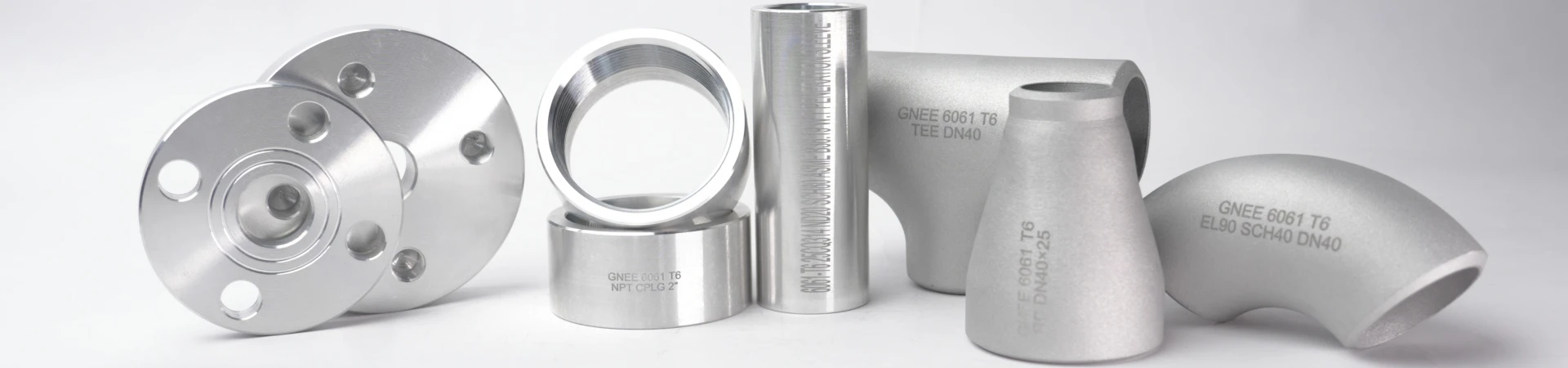


Henan Gnee New Material Co., Ltd. is one of the most reliable manufacturers and suppliers of aluminum elbow in China. With abundant experience, we warmly welcome you to wholesale high quality aluminum elbow in stock here from our factory. Good service and reasonable price are available.
What Is an Aluminum Elbow?
An aluminum elbow is a pipe or tube fitting designed to change the direction of a piping system.
Instead of connecting two straight pipe sections directly, an elbow provides a controlled change in direction while maintaining the required flow path and connection geometry.
For factory-made wrought aluminum and aluminum-alloy welding fittings, ASTM B361 covers the material and product requirements. ASME B16.9 covers dimensions and related requirements for butt-welding fittings, while ASME B16.52 covers applicable forged nonferrous fittings with threaded and socket-welding ends.
GNEE can supply standard and custom aluminum elbows according to alloy, temper, pipe size, wall thickness, angle, radius, connection type, thread specification, and applicable standard.
Request a Quote for Aluminum Elbows
1. Aluminum Elbow Types and Configurations
Aluminum elbows come in different angles, radii, and connection types. The right choice depends on the piping layout, available space, mating pipe dimensions, and connection requirements.
|
Type |
Angle / Radius |
Connection |
Typical Aluminum Alloys* |
Applicable Standard |
|
90°, LR |
Butt Weld |
6061, 5083, 5086, and other suitable alloys |
ASTM B361 / ASME B16.9, where applicable |
|
|
90° Aluminum Short Radius Elbow |
90°, SR |
Butt Weld |
6061, 5083, 5086, and other suitable alloys |
ASTM B361 / ASME B16.9, where applicable |
|
45° Aluminum Elbow |
45°, LR or specified radius |
Butt Weld |
6061, 6063, and other suitable alloys |
ASTM B361 / ASME B16.9, where applicable |
|
180° Aluminum Return Elbow |
180°, applicable radius |
Butt Weld |
6061, 5083, and other suitable alloys |
ASTM B361 / ASME B16.9, where applicable |
|
Aluminum Threaded Elbow |
45° / 90° |
NPT, BSP, or specified thread |
Suitable aluminum alloys |
ASME B16.52 where applicable |
|
Aluminum Socket-Weld Elbow |
45° / 90° |
Socket Weld |
Suitable aluminum alloys |
ASME B16.52 where applicable |
|
Aluminum Reducing Elbow |
90° or specified angle |
Butt Weld / Custom |
Suitable aluminum alloys |
According to design and applicable standard |
* Alloy availability depends on the fitting design, manufacturing process, size, temper, and material specification. Confirm the alloy before production.
2. Aluminum Elbow Connection Types
The connection type is one of the most important specs when buying an aluminum elbow.
Butt-Weld Aluminum Elbow
A butt-weld aluminum elbow is welded directly to the mating pipe or tube. The pipe and fitting ends are aligned and joined by welding. This connection is used for permanent piping assemblies where a welded joint is preferred.
Applicable factory-made wrought aluminum welding fittings can be specified to ASTM B361, and ASME B16.9 covers dimensions and related requirements for factory-made wrought butt-welding fittings.
Typical uses:
- Industrial piping
- Equipment connections
- HVAC systems
- Compressed-air systems
- Marine piping
- Lightweight process piping

Threaded Aluminum Elbow
A threaded aluminum elbow connects to compatible threaded pipe or components using internal or external pipe threads.
Common thread specifications:
NPT
BSPT
BSPP
Metric threads where specified
For applicable forged aluminum and aluminum-alloy threaded fittings, ASME B16.52 covers dimensions, tolerances, marking, ratings and material requirements. The standard also allows special dimensions or threads by agreement between the purchaser and the manufacturer.
Confirm the thread type before production. NPT, BSP, and metric threads are not interchangeable.
Socket-Weld Aluminum Elbow
A socket-weld aluminum elbow has a socket. The mating pipe or tube is inserted into the socket, then welded.
Compared with a butt-weld elbow, the pipe enters the fitting instead of being aligned end-to-end with the weld preparation.
Applicable forged aluminum and aluminum-alloy socket-welding fittings can be specified to ASME B16.52.
3. Aluminum Elbow Dimensions
For standard butt-welding fittings, ASME B16.9-2024 covers factory-made wrought butt-welding fittings from NPS 1/2 through NPS 48 (DN15 through DN1200). The standard covers overall dimensions, tolerances, ratings, testing, and marking.
Common 90° Long-Radius Reference Dimensions
|
NPS |
DN |
Outside Diameter |
Center-to-End |
|
1/2" |
15 |
21.3 mm |
38 mm |
|
3/4" |
20 |
26.7 mm |
38 mm |
|
1" |
25 |
33.4 mm |
38 mm |
|
1 1/4" |
32 |
42.2 mm |
48 mm |
|
1 1/2" |
40 |
48.3 mm |
57 mm |
|
2" |
50 |
60.3 mm |
76 mm |
|
2 1/2" |
65 |
73.0 mm |
95 mm |
|
3" |
80 |
88.9 mm |
114 mm |
|
4" |
100 |
114.3 mm |
152 mm |
|
5" |
125 |
141.3 mm |
190 mm |
|
6" |
150 |
168.3 mm |
229 mm |
|
8" |
200 |
219.1 mm |
305 mm |
|
10" |
250 |
273.0 mm |
381 mm |
|
12" |
300 |
323.8 mm |
457 mm |
Note: These are standard dimensional references from ASME B16.9 for the 90° long-radius butt-weld elbow. They are not a guarantee of GNEE stock for every alloy or wall thickness.
Long-radius elbows need more installation space; short-radius elbows are more compact. For custom aluminum elbows, GNEE can work from a customer drawing or an agreed specification.
Read More: Aluminum Elbow Size Chart
45-Degree Vs. 90-Degree Aluminum Elbow
4. Specifications of Aluminum Elbow
|
Parameter |
Specification |
|
Product |
Aluminum Elbow |
|
Angle |
45°, 90°, 180° return and custom angles where applicable |
|
Radius |
Long Radius / Short Radius / Custom |
|
Size |
NPS / DN / OD according to product design |
|
GNEE Standard Supply Range |
NPS 1/2–24 (confirm actual range with GNEE) |
|
Larger Sizes |
Available for evaluation on request |
|
Connection |
Butt Weld / Threaded / Socket Weld |
|
Wall Thickness |
According to applicable pipe dimensions, fitting standards, or customer drawing |
|
Alloy |
6061, 6063, 5052, 5083, 5086, 3003, 1060, and other suitable aluminum alloys |
|
Temper |
According to alloy, product design and material specification |
|
Thread |
NPT / BSP / Metric where applicable |
|
Surface |
Mill Finish / Anodized / Customer-Specified Finish |
|
Manufacturing |
Formed / Forged / Machined or other qualified process |
|
Inspection |
Visual / Dimensional / Material Verification / Additional Testing on Request |
|
Packaging |
Carton / Wooden Case / Wooden Pallet according to size and shipping requirements |
Standards by Connection Type
|
Elbow Type |
Applicable Standard |
|
Butt-Weld Elbow |
ASTM B361 / ASME B16.9 |
|
Threaded Elbow |
ASME B16.52 |
|
Socket-Weld Elbow |
ASME B16.52 |
Confirm the exact standard against the actual product design and your purchase specification.
Read More: Aluminum Pipe Fittings Standards
About Pipe Schedule
Where the fitting matches compatible pipe dimensions, customers can specify pipe schedules such as SCH10, SCH40, SCH80, or SCH160.
Pipe schedule is not a standalone pressure rating for an aluminum elbow. The actual pressure capability depends on:
Aluminum alloy
Temper
Wall thickness
Elbow geometry
Fitting size
Operating temperature
Connection method
Applicable design code
Service conditions
GNEE recommends confirming the complete fitting specification before assigning a pressure rating.
5. Aluminum Alloy Selection
Different aluminum alloys offer different combinations of strength, corrosion resistance, formability, weldability, and machinability.
|
Alloy |
Main Characteristics |
Potential Elbow Applications |
|
Good strength, machinability and weldability |
Industrial piping, equipment connections, compressed air |
|
|
6082 |
Higher-strength 6000-series alloy |
Engineering and structural applications |
|
6063 |
Good extrusion characteristics and surface finish |
Lightweight tubing and selected fitting applications |
|
5052 |
Good formability and corrosion resistance |
HVAC and fabricated applications |
|
High corrosion resistance and good weldability |
Marine and offshore applications |
|
|
5086 |
Corrosion resistance and good weldability |
Marine and corrosion-resistant systems |
|
3003 |
Good formability and corrosion resistance |
Selected general-purpose and fabricated applications |
|
High aluminum content, excellent corrosion resistance |
Low-strength applications where suitable |
Material selection should be based on the actual fitting design and service conditions. Not every alloy and temper listed above is automatically covered by ASTM B361 for every fitting configuration. ASTM B361 lists 1060, 1100, 3003, 5083, 5086, 5154, 6061, and 6063 in its material table; other alloys such as 6082 and 5052 may be considered for custom or non-B361 designs.
For marine applications, consider corrosion exposure, welding requirements, mechanical loading, and the applicable marine specification.
6. Applications of Aluminum Elbow
Industrial Piping
Aluminum elbows can be used for directional changes in compatible industrial piping systems, equipment connections, and distribution lines.
Compressed Air
Aluminum piping systems often use elbows to change direction in compressed-air distribution networks. The fitting must be compatible with the pipe system and operating pressure.
HVAC and Air Handling
Aluminum elbows can be used in compatible HVAC and air-handling systems where lightweight parts and corrosion resistance are beneficial.
Pneumatic Systems and Machine Equipment
Aluminum elbows are common in pneumatic lines and machine air systems, where low weight and clean connections matter.
Marine and Offshore
Aluminum alloys such as 5083 and 5086 are commonly considered for marine applications where corrosion resistance, low weight, and weldability are important. Match the alloy and temper to the marine environment and project requirements.
Equipment Connections
Aluminum elbows can connect compatible piping with pumps, valves, manifolds, heat exchangers, and other equipment.
Architectural and Structural Tubing
Aluminum elbows can be used in handrails, railings, and structural frames where lightweight and corrosion resistance are required.


7. Inspection and Quality Control
GNEE can arrange inspection according to the product specification and purchase order.
Material Inspection
Alloy verification
Temper verification
Chemical composition documentation
Material certificate review
Dimensional Inspection
Outside diameter
Wall thickness
Center-to-end dimensions
Radius
Angle
End preparation
Thread dimensions where applicable
Surface Inspection
Cracks
Dents
Scratches
Deformation
Visible surface defects
Connection Inspection
Butt-weld: end preparation, bevel dimensions, outside diameter, fit-up dimensions Threaded: thread type, thread size, thread condition, gauge verification where specified. Socket-weld: socket diameter, socket depth, connection dimensions
Additional Testing
Depending on the purchase specification, extra inspection can be arranged, such as PMI, dye penetrant testing, or hydrostatic testing where applicable.
Agree the inspection requirements before production so the correct quality-control plan can be applied.

8. Packaging
GNEE uses export packaging designed to protect aluminum elbows during handling, loading, and international transportation.
Typical packaging:
Individual protective bags
Plastic film
Kraft paper
Cartons
Wooden cases
Wooden pallets
Strapping
Small fittings go in cartons, then on pallets. Large elbows can be secured on pallets or packed in wooden cases, depending on size and shipping requirements.
Packaging can be adjusted for container loading, fitting size, quantity, destination, and customer packaging instructions.

9. FAQ
10. Request a Quote for Aluminum Elbows
GNEE supplies aluminum elbows for industrial, HVAC, marine, equipment, and other compatible piping applications.
For an accurate quotation, please provide:
|
Required Information |
Example |
|
Product |
90° Aluminum Elbow |
|
Angle |
90° |
|
Radius |
Long Radius |
|
Alloy |
6061-T6 |
|
Size |
NPS 2 / DN50 |
|
Connection |
Butt Weld |
|
Wall Thickness |
SCH40 / Specified Thickness |
|
Standard |
ASTM B361 / ASME B16.9 |
|
Quantity |
100 pcs |
|
Application |
Industrial Piping |
For threaded or socket-weld elbows, also specify the thread type or socket dimensions.
For custom aluminum elbows, please send your drawing, sample, or detailed specification.
Hot Tags: aluminum elbow, China aluminum elbow manufacturers, suppliers, factory