Yes, 6061 aluminum plate is highly weldable and is one of the most commonly fabricated materials in the aerospace, marine, and structural industries. However, welding this specific alloy-especially the popular 6061-T6 temper-presents specific challenges.
At GNEE, we supply premium aluminum plates worldwide. Our clients often ask how to maintain structural integrity when welding this material. The two primary concerns are hot cracking during the weld and a significant loss of strength in the heat-affected zone (HAZ).
This direct guide provides the exact methods, filler metals, and techniques required to weld 6061 aluminum plates successfully.
How to Prevent Hot Cracking in 6061 Aluminum Plate
The unique chemical composition of 6061 aluminum makes it extremely susceptible to solidification cracking (hot cracking) if welded incorrectly.
The golden rule for welding 6061 aluminum plate is: Never perform an autogenous weld (welding without a filler metal). Melting two pieces of 6061 together without adding a different alloy will almost guarantee cracks as the metal cools.
To prevent cracking, you must introduce a filler metal that changes the chemistry of the weld pool. Additionally, avoid excessive preheating. For 6061-T6 aluminum plate, preheating above 250°F (120°C) will permanently destroy the T6 heat treatment and ruin the metal's strength.
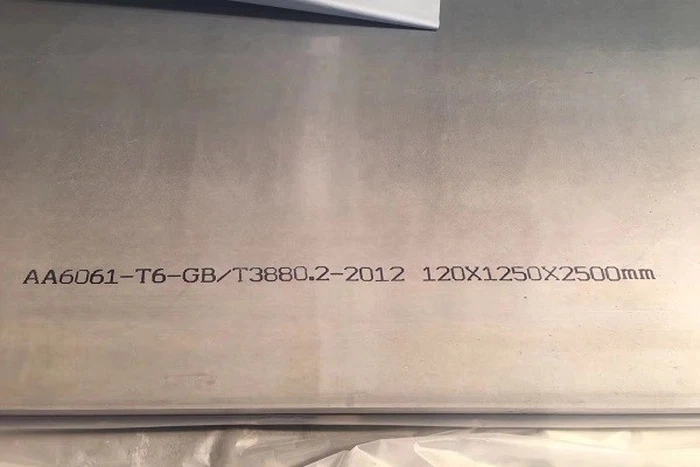
Choosing the Right Filler Metal for 6061-T6 Aluminum Plate
Selecting the correct filler wire is the most important decision for your welding project. You have two primary industry-standard options for 6061-T6 aluminum plate: 4043 and 5356.
Here is how to choose between them based on your application:
- Choose 4043 Filler Metal (Aluminum-Silicon) if:
You want the easiest welding experience with excellent flow and the lowest risk of hot cracking.
The welded plate will operate in high-temperature environments (above 150°F / 65°C).
Warning: Do not use 4043 if the part will be anodized after welding, as the weld seam will turn dark gray or black.
- Choose 5356 Filler Metal (Aluminum-Magnesium) if:
Your project requires higher shear strength and better ductility.
The plate will be used in a marine environment (excellent corrosion resistance).
The final product will be color-anodized. 5356 provides a very close color match to the 6061 base plate.
Understanding Strength Loss in Welded 6061-T6 Aluminum Plate (HAZ)
When you buy 6061-T6 aluminum plate from GNEE, the "T6" means it has been artificially aged for maximum strength. The intense heat of TIG or MIG welding acts as a localized annealing process.
This creates a Heat-Affected Zone (HAZ) around the weld where the aluminum loses its T6 properties and becomes significantly weaker. Engineers must calculate for this "as-welded" strength, not the original T6 strength.
Mechanical Properties Comparison: Base 6061-T6 vs. As-Welded HAZ
| Mechanical Property | 6061-T6 Aluminum Plate (Base Metal) | As-Welded Condition (In HAZ) |
| Ultimate Tensile Strength | 45,000 psi (310 MPa) | ~ 24,000 psi (165 MPa) |
| Yield Strength | 40,000 psi (276 MPa) | ~ 15,000 psi (103 MPa) |
Note: The strength in the HAZ drops by up to 50%. If full strength is required, the entire fabricated assembly must undergo Post-Weld Heat Treatment (PWHT) to restore the T6 temper, though this is expensive and can cause distortion.
Selecting the Best Shielding Gas for 6061 Aluminum Plate
To achieve a clean weld without porosity, you must protect the molten pool from atmospheric contamination using an inert shielding gas.
- 100% Argon: This is the standard choice for welding most 6061 aluminum plates. It provides excellent arc stability, smooth weld profiles, and a strong cleaning action to remove oxides.
- Argon/Helium Mixture (Typically 75/25 or 50/50): If you are welding very thick 6061 aluminum plates (over 1/2 inch or 12mm), adding helium to the argon increases the heat of the arc. This allows for deeper penetration and faster travel speeds.
Pre-Weld Surface Preparation for 6061 Aluminum Plate
Aluminum forms a tough oxide layer on its surface that melts at a much higher temperature (3700°F) than the base aluminum (1200°F). If you do not remove this layer before welding your 6061 aluminum plate, the oxide will sink into the weld pool, causing severe porosity and a weak joint.
Immediately before welding, wipe the joint area with a solvent like acetone to remove grease and oil. Then, brush the weld zone firmly with a clean stainless-steel wire brush dedicated only to aluminum.

Get High-Quality 6061 Aluminum Plate from GNEE
Welding 6061 aluminum plate requires precision, but it starts with sourcing reliable, certified base materials. Poor quality aluminum with internal impurities will result in failed welds regardless of your technique.
As a leading global supplier, GNEE provides strictly tested 6061-T6 aluminum plates that guarantee consistent chemical composition and excellent weldability. Whether you are building marine structures, aerospace components, or heavy-duty frames, we have the precise thickness and dimensions you need.
Struggling with material selection or need a bulk supply for your next fabrication project? Contact GNEE today. Our technical team is ready to help you choose the right aluminum plate and provide a fast, competitive quote.