

When choosing the right aluminum alloy for your engineering project, understanding the differences between grades is essential. Aluminium 5005 and 5052 are both popular choices, each with distinct properties that make them suitable for various applications. But how do you determine which one is best for your needs? This article explores the key differences between Aluminium 5005 and 5052, including material properties, corrosion resistance, weldability, and more. Whether you are working in marine, construction, or automotive industries, this guide will help you make an informed decision.

Aluminium 5005 vs 5052: Key Differences
Chemical Composition
The chemical makeup of Aluminium 5005 and 5052 significantly affects their characteristics and applications:
Magnesium Content: Aluminium 5052 contains a higher magnesium content (2.2%–2.8%), enhancing both strength and corrosion resistance. Aluminium 5005 has about 0.8% magnesium.
Chromium Content: Aluminium 5052 includes chromium (0.15%–0.35%), which improves corrosion resistance and prevents grain boundary precipitation that could weaken the material. Aluminium 5005 has negligible chromium.
Manganese Content: Aluminium 5005 contains around 0.4% manganese, which enhances strength and wear resistance. Aluminium 5052 has very low manganese levels.
Mechanical Properties
The mechanical performance of these alloys determines their suitability for various applications:
Tensile Strength: Aluminium 5005 ranges from 110 to 230 MPa, while 5052 ranges from 190 to 320 MPa, making 5052 more suitable for applications requiring higher strength.
Fatigue Strength: Aluminium 5005 has a fatigue strength of 38–86 MPa, whereas 5052 ranges from 66–140 MPa, showing better durability under cyclic loading.
Shear Strength: Aluminium 5005 provides 70–130 MPa; 5052 offers 120–180 MPa, making it more resistant to shear forces.
Corrosion Resistance
Both alloys resist corrosion, but 5052 is superior, particularly in marine environments, due to its higher magnesium and chromium content. Aluminium 5005 performs well in general atmospheric conditions and is preferred in architectural applications for its excellent anodized color uniformity.
Aluminium 5052: Ideal for marine hardware, shipbuilding, and other corrosive environments.
Aluminium 5005: Commonly used in construction, roofing, cladding, and decorative elements where environmental conditions are less harsh.
Both alloys can be anodized to enhance corrosion resistance further. Anodized 5005 offers excellent color consistency, while anodized 5052 strengthens already superior corrosion protection, making it suitable for harsh and aesthetic-sensitive applications.
Weldability
Weldability is a key consideration for manufacturing:
Aluminium 5005: Welds easily with MIG or TIG techniques. The lower magnesium content can result in slightly weaker joints, but it is easier to work with. Recommended filler: 5356 for anodized projects.
Aluminium 5052: Offers excellent weld strength and durability, particularly in marine or high-stress environments. Suitable for all standard welding methods. Recommended fillers: 4043 or 5356 (5356 preferred for anodizing).
Formability
Formability, or the ability to undergo shaping without cracking, is influenced by composition and mechanical properties:
Aluminium 5005: With moderate strength and good ductility, it is easy to form into various shapes, ideal for decorative and architectural components requiring extensive shaping.
Aluminium 5052: Higher magnesium content increases strength while slightly reducing ductility. In softer tempers (like O), it remains highly formable, suitable for marine, automotive, and industrial applications needing durable shapes.
Tensile Strength & Ductility: 5005 has lower tensile strength (110–230 MPa) but good elongation (1.1%–23%), making forming easier. 5052 has higher tensile strength (190–320 MPa) and elongation up to 27%, maintaining excellent ductility for complex forming.
Application Suitability
| Property | Aluminium 5005 | Aluminium 5052 |
|---|---|---|
| Strength | Medium | Higher |
| Weldability | Good, standard techniques | Excellent, all standard methods |
| Corrosion Resistance | Good in atmospheric conditions | Excellent, especially marine environments |
| Typical Uses | Roofing, cladding, decorative architectural elements | Marine components, fuel tanks, high-stress industrial and food-grade applications |
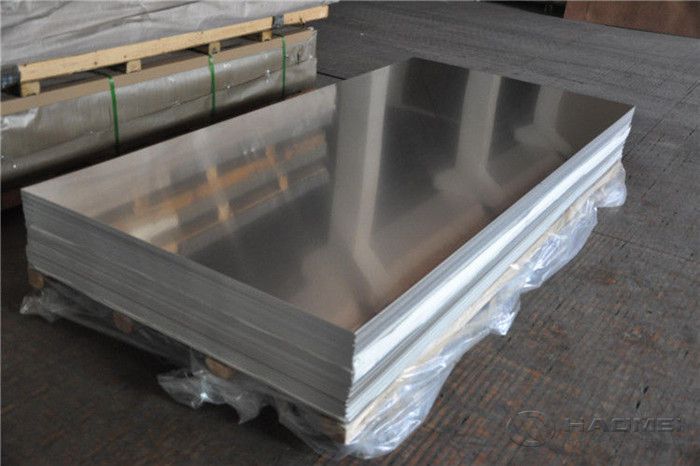
Both alloys offer good weldability and formability, but 5052 excels in strength, durability, and corrosion resistance, making it ideal for demanding applications. Selection should be based on the specific project requirements, considering mechanical properties, environmental conditions, and cost.