What is the main difference between 6061 and 6063 aluminum?
The key difference is that 6061 aluminum offers higher strength, while 6063 aluminum provides a smoother finish and better corrosion resistance. Choose the alloy that best matches your project requirements. For guidance, suppliers like GNEE can help you compare both options.
Can I weld both 6061 and 6063 aluminum?
Yes, both alloys are weldable. 6061 aluminum welds easily and maintains strong performance after welding, while 6063 aluminum also welds well, especially for architectural and extrusion profiles.
Which alloy is better for outdoor projects?
6063 aluminum is more resistant to outdoor corrosion, making it suitable for window frames, outdoor furniture, and decorative building elements. 6061 aluminum also performs well outside, especially for applications that require additional strength.
Is 6061 aluminum more expensive than 6063?
Typically, 6061 aluminum is widely available and often comes at a lower cost. 6063 aluminum can be slightly more expensive because it offers a smoother appearance and is preferred for architectural designs. GNEE provides both options depending on your specific needs.
When comparing 6063 and 6061 aluminum, you'll notice clear differences. 6061 aluminum is significantly stronger than 6063, making it suitable for applications that need to support heavy loads or withstand high pressure. 6063 aluminum, however, is more flexible, easier to bend and shape, and provides a smoother surface finish with excellent corrosion resistance. Both alloys belong to the 6000 series, but each is best suited for specific tasks.
Main Differences
6061 aluminum is stronger and harder.
6063 aluminum is easier to bend and shape.
6061 aluminum has good corrosion resistance, even in marine environments.
6063 aluminum conducts heat better and looks smoother.
6061 aluminum is typically slightly less expensive due to higher production volume.
Both alloys are widely available, and suppliers like GNEE can provide both depending on your project requirements.
Quick Comparison
| Property | Aluminum 6061 | Aluminum 6063 |
|---|---|---|
| Ultimate Tensile Strength | 124–290 MPa | 145–186 MPa |
| Yield Strength | 276 MPa | 214 MPa |
| Hardness | 107 Hv | 83 Hv |
| Fatigue Strength | 96 MPa | 69 MPa |
| Thermal Conductivity | 167 W/mK | 201–218 W/mK |
| Density | 2.7 g/cm³ | 2.7 g/cm³ |
| Corrosion Resistance | Good | Excellent |
| Surface Finish | Moderate | Smooth |
| Machinability | Easy | Fair |
| Melting Point | Higher | Lower |
| Cost | Slightly lower | Slightly higher |
| Anodizing | Good | Excellent |
Tip: Use 6061 aluminum for parts that require high strength, such as vehicle or machinery components. Choose 6063 aluminum for parts that require a smooth finish and aesthetic appeal, like window frames, doors, or decorative elements.
Recommended Applications
6061 Aluminum: Truck beds, trailers, yachts, motorcycles, bicycle frames, and structural components.
6063 Aluminum: Roofs, windows, door frames, furniture, stairs, shelving, signage, trims, and architectural decorations.
Always select the alloy that fits your project needs. If strength is the priority, go with 6061. If appearance and easy shaping are more important, 6063 is the better choice.
6061 Aluminum Alloy Properties
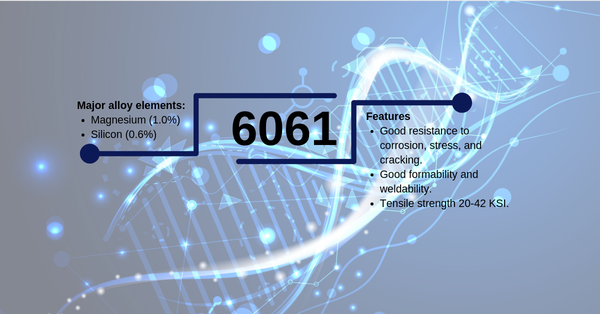
Key Features: High strength, good machinability, weldable, and corrosion-resistant.
6061 contains magnesium and silicon, giving it high tensile and yield strength.
| Temper | Ultimate Tensile Strength (MPa) | Yield Strength (MPa) | Elongation (%) |
|---|---|---|---|
| 6061-T4 | 180–210 | 110 | 10–16 |
| 6061-T6 | 290–310 | 240–270 | 8–10 |
| 6061-T651 | 310 | 270 | 10–12 |
Workability: Easy to cut, drill, and shape. Melting point: 582–652°C. Weldable and versatile.
Common Uses:
Welded assemblies and structural supports
Extrusions for machinery and buildings
Aircraft, truck, and marine frames
Beverage cans, furniture, fasteners, heat exchangers
Chemical equipment and tanks
GNEE supplies high-quality 6061 aluminum suitable for heavy-duty and structural applications.
6063 Aluminum Alloy Properties
Key Features: Smooth finish, excellent corrosion resistance, good for aesthetic applications.
6063 is not as strong as 6061 but is still sufficient for many construction and decorative projects. It bends and shapes easily, making it ideal for detailed designs.
| Property | 6063 Aluminum Alloy | 6061 Aluminum Alloy |
|---|---|---|
| Corrosion Resistance | Excellent, ideal for architectural use | Good |
| Surface Finish | Smooth, visually appealing | Rougher, better for structural strength |
Workability: Melting point ~615°C. Can be welded, cut, drilled, and shaped into custom forms.
Common Uses:
Windows and door frames
Curtain walls and railings
Furniture, display systems, and shelving
Tubes, pipes, racks, conduits, and solar frames
Vehicle trims, trailers, and enclosures
GNEE provides premium 6063 aluminum for architectural and decorative applications, offering durability with a smooth, corrosion-resistant finish.
Choosing Between 6061 and 6063
Evaluate your project needs: Strength, corrosion resistance, weldability, appearance, and shaping requirements.
Use 6061 for high-strength applications.
Use 6063 for smooth finishes, aesthetic designs, and outdoor durability.
Check heat treatment and standards compliance.
Consult experts or suppliers like GNEE if unsure.
By following this guide, you can select the right aluminum alloy for your project, balancing strength, appearance, and cost.