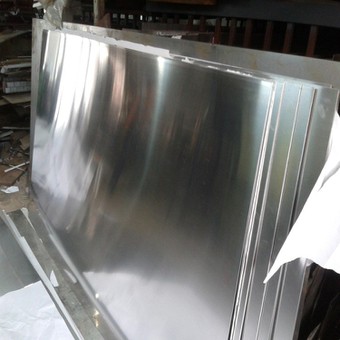
What makes 5083 alloy highly corrosion-resistant?
The alloy contains 4–4.9% magnesium and 0.5% manganese, forming a protective oxide layer that resists seawater, chemicals, and atmospheric corrosion. Its high resistance to chloride-induced pitting makes it ideal for marine applications.
What are the mechanical properties of 5083 aluminum plate?
It has a tensile strength of 290 MPa (annealed) and 310 MPa (H116 temper), with excellent weldability. Its elongation rate is 15–20%, ensuring good formability for complex shapes in shipbuilding and aerospace.
In which industries is 5083 aluminum plate commonly used?
It is widely used in marine engineering (hull structures, offshore platforms), transportation (automotive fuel tanks), and aerospace (fuel lines). Its corrosion resistance also suits chemical processing equipment.
How does 5083 compare to 6061 aluminum alloy?
While 6061 is stronger and heat-treatable, 5083 offers superior corrosion resistance, especially in saline environments. 6061 is better for structural parts, whereas 5083 excels in harsh, corrosive conditions.
What are the welding considerations for 5083 aluminum plate?
TIG and MIG welding are recommended, with ER5356 filler rods for optimal ductility. Pre-cleaning is essential to avoid porosity, and post-weld stress relief may be needed for critical applications.