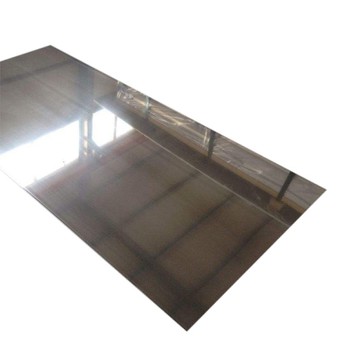
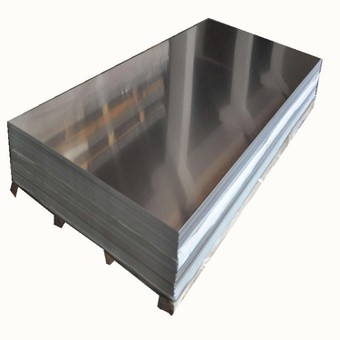
What are the key differences between 1100-H14, H18, and O tempers?
The 1100-H14 temper is strain-hardened to a half-hard state, balancing formability and strength. H18 is fully hard, offering higher tensile strength but reduced ductility. The O temper (annealed) is the softest, ideal for deep drawing or complex forming. H14 is commonly used for general fabrication, while H18 suits applications requiring rigidity. O temper is preferred when maximum malleability is needed.
What are the typical applications of 1100 aluminum sheets?
1100 aluminum sheets are widely used in chemical equipment due to their excellent corrosion resistance. They are also popular for food processing machinery and storage containers because of their non-toxic properties. The material is often chosen for architectural trim and roofing for its workability. In electronics, it serves as heat sinks or shielding components. Its high reflectivity makes it suitable for light fixtures and decorative panels.
How does the chemical composition of 1100 aluminum affect its properties?
With 99% minimum aluminum content, 1100 offers superior corrosion resistance compared to alloyed grades. The small amount of copper (0.05-0.20%) slightly increases strength without compromising formability. Its high purity makes it highly conductive for both heat and electricity. The simple composition allows for excellent weldability using various methods. However, it has lower mechanical strength than alloyed grades like 3003 or 5052.
What are the machining characteristics of 1100 aluminum sheets?
1100 aluminum machines easily but tends to gum up cutting tools due to its softness. Sharp tools and proper lubricants are recommended to achieve clean cuts. It produces long, stringy chips during turning operations that require proper management. The material can be sawed, drilled, and punched without special equipment. Its softness makes it less ideal for precision machining compared to harder alloys.
How should 1100 aluminum sheets be stored and maintained?
Store sheets in a dry environment to prevent oxidation and water staining. Keep them separated from more noble metals to avoid galvanic corrosion. Use protective coatings or paper interleaving for long-term storage. Clean with mild, non-abrasive cleaners to maintain surface finish. Regular inspection for pitting or white corrosion is recommended in humid environments.