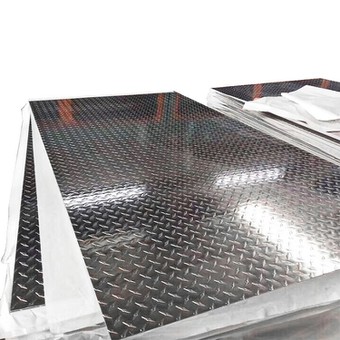
What are the key differences between 1060, 1070, and 1100 aluminum alloys in embossed decorative sheets?
The primary distinction lies in their aluminum content and minor alloying elements. 1060 contains 99.6% aluminum with ≤0.05% copper/manganese, while 1070 has 99.7% purity and ≤0.03% impurities. 1100, with 99%+ aluminum, offers superior formability for deep-drawing applications like kitchenware. All three are non-heat-treatable but differ in tensile strength: 1070 exhibits slightly higher hardness than 1060, whereas 1100 balances ductility and moderate strength. Their surface finish varies too-1060's smoother surface suits printing, while 1070 often requires polishing.
How does the diamond tread pattern enhance the functionality of these aluminum sheets?
The embossed diamond tread creates a textured surface that significantly improves slip resistance, making it ideal for flooring, stair treads, and vehicle running boards. The raised geometric pattern also hides minor scratches and wear, maintaining aesthetic appeal in high-traffic areas. Additionally, the design reinforces structural rigidity, allowing thinner gauges (0.8–12mm) to bear heavier loads. This makes it popular in architectural cladding and industrial walkways. The pattern depth typically ranges from 0.1mm to 1.5mm depending on application requirements.
What surface treatment options are available for these embossed aluminum sheets?
Common treatments include anodizing for corrosion resistance (especially for outdoor use like signage), PVDF fluorocarbon coating for weatherproofing, and powder coating for color customization. Some manufacturers apply chemical oxidation to create matte or glossy finishes. The embossing process itself can incorporate pre-treatment textures like "orange peel" or "stucco" for specialized visual effects. Electroplating is rare due to aluminum's passive oxide layer.
What industries primarily use these embossed aluminum sheets, and why?
Construction dominates demand (62% market share) for facade cladding and interior decor due to their lightweight and corrosion resistance. Transportation sectors utilize them for vehicle flooring and trim panels. The packaging industry values 1100 alloy sheets for stamped containers, while electronics employ 1070 for capacitor foils. Emerging applications include solar panel framing (1060) and EV battery enclosures. Their recyclability aligns with green building trends, boosting adoption.
How do pricing and MOQ (Minimum Order Quantity) vary among these alloys?
FOB prices range 2,000–2,000–4,000/ton, with 1060 often cheapest at ~$18/kg for bulk orders. 1070 commands a 5–8% premium due to higher purity. MOQs typically start at 3 metric tons for coils and 1 ton for sheets. Thinner gauges (0.2–0.5mm) cost 15–20% more than standard 1–3mm sheets. Custom embossing patterns may incur additional tooling fees. Regional factors also apply-Qingdao port shipments are most cost-effective for exports.