


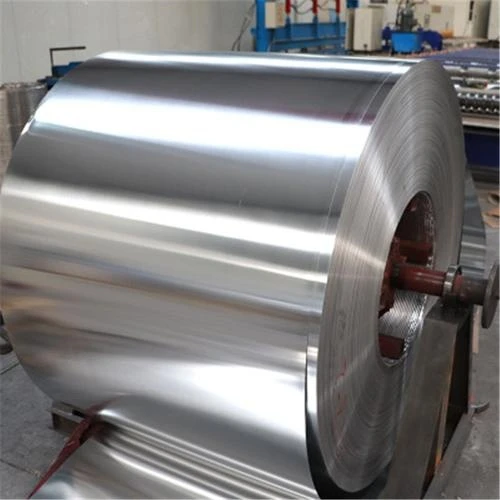

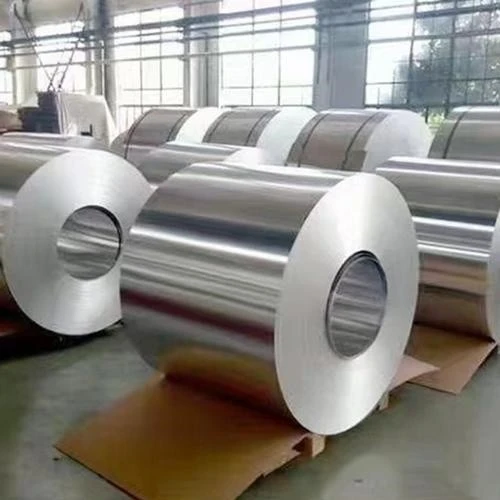

Henan Gnee New Material Co., Ltd. is one of the most reliable manufacturers and suppliers of 5754 aluminum coil for gis shells in China. With abundant experience, we warmly welcome you to wholesale high quality 5754 aluminum coil for gis shells in stock here from our factory. Good service and reasonable price are available.
Modern industrial applications require materials that can handle tough environments without failing. Whether you are building high-voltage electrical equipment, automotive components, or marine structures, you need a metal that balances strength, workability, and long-term durability.
The 5754 aluminum coil is a standard Al-Mg (5000 series) alloy specifically designed to meet these exact needs. It contains between 2.6% and 3.6% magnesium, giving it excellent corrosion resistance, medium strength, and superior weldability.
This guide covers everything purchasing managers and engineers need to know about 5754 aluminum coils, focusing on their use in GIS (Gas-Insulated Switchgear) shells, automotive fuel tanks, and other daily industrial applications.
What is a GIS Shell and Why Use 5754 Aluminum coil?
A Gas-Insulated Switchgear (GIS) system houses high-voltage conductors, circuit breakers, and transformers inside a sealed metal tube. This tube is filled with an insulating gas, usually SF6 (Sulfur Hexafluoride) or a modern eco-friendly alternative.
The metal shell must do three things perfectly: hold the high-pressure gas without leaking, protect the inner components from rain and salt, and avoid overheating caused by electrical currents.
5754 aluminum coil is a non-heat-treatable Al-Mg (5000 series) alloy containing 2.6% to 3.6% magnesium. Unlike standard structural steel, 5754 aluminum directly meets the extreme safety and operational demands of high-voltage power equipment. Manufacturers unroll, cut, bend, and weld these coils into the cylindrical shells that make up the GIS infrastructure.

Key Features and Advantages of 5754 Aluminum Coil
1. Eliminating Eddy Current Heating
High-voltage alternating current (AC) passing through the internal conductors creates a strong magnetic field. If the outer shell is made of standard carbon steel, this magnetic field generates "eddy currents" in the metal, causing the shell to heat up to dangerous temperatures.
The 5754 Solution: 5754 aluminum is completely non-magnetic. It does not generate severe eddy currents. This keeps the GIS shell cool, preventing energy loss and protecting the internal insulation from heat damage.
2. Preventing SF6 Gas Leaks
SF6 is an expensive gas and a highly potent greenhouse gas. GIS shells operate under pressure. If the metal has internal micro-cracks or welds poorly, the gas will leak over time, causing the equipment to fail its internal insulation tests.
The 5754 Solution: 5754 aluminum alloy offers superior weldability. When using TIG (Tungsten Inert Gas) or MIG (Metal Inert Gas) welding, 5754 melts and fuses with virtually no hot cracking. The resulting weld seam is dense and perfectly sealed, ensuring zero gas leakage over a 30-year lifespan.
3. Surviving Harsh Outdoor Environments
Substations are often built in harsh environments-coastal areas with salt spray, heavily polluted industrial zones, or humid tropical regions. Rust compromises the structural integrity of the pressurized shell.
The 5754 Solution: Due to its specific magnesium content, 5754 aluminum naturally forms a thick, protective oxide layer when exposed to the atmosphere. It provides excellent corrosion resistance against marine and industrial pollution without needing heavy, expensive anti-rust coatings.
4. Reducing Foundation and Installation Costs
High-voltage GIS equipment is massive. If made of heavy metals, it requires reinforced concrete foundations and heavy-duty cranes for installation.
The 5754 Solution: With a density of just 2.66 g/cm³, 5754 aluminum is about one-third the weight of steel. This dramatic weight reduction lowers shipping costs, speeds up site installation, and reduces the structural load on substation floors.
As a leading 5754 aluminum coil supplier, GNEE offers flexible sizes, reliable tempers, and factory-direct pricing. Contact our sales team today to get a fast quote for your project!
The Product Specification of 5754 Aluminum Coil
|
Alloy |
5754 aluminum coil strip |
|
Temper |
F,O,H111,H12,H14,H16,H18,H22,H24,H26,H28,H32,H34,H36,H38,etc |
|
Thickness(mm) |
0.20-8.00 |
|
Width(mm) |
100-2650 |
|
Length(mm) |
C |
|
ID |
Ø505mm or customized |
|
Package |
Eye to sky or Eye to wall |
|
Certificate |
DNV,ABS,CCS,BV |
|
Application |
High-speed rail noise barriers, tank car body materials, alloy doors and windows, etc. |
|
Sample |
Available |
Chemical composition of 5754 Aluminum Coil
|
Alloy |
Si |
Fe |
Cu |
Mn |
Mg |
Cr |
Ni |
Zn |
Ti |
Zr |
Al |
|
5754 |
0.40 |
0.40 |
0.10 |
0.50 |
2.60-3.60 |
0.30 |
- |
0.20 |
0.15 |
- |
Remainder |
Mechanical Properties of 5754 Aluminum Coil
|
Alloy |
Temper |
Tensile strength Rm(Mpa) |
Yield strength Rp0.2(MPa) |
Elongation A(%) |
Hardness HBWα |
|
5754 |
O/H111 |
190-240 |
≥80 |
≥12 |
38 |
|
|
H32 |
220-270 |
≥130 |
≥11 |
- |
Surface Treatment Options of 5754 Aluminum Coil for GIS Shells
Depending on your final product's use, we can supply the coil with different surface finishes.
Mill Finish: The standard industrial surface, directly from the rolling mill.
Anodized: Enhanced corrosion resistance and surface hardness.
Brushed or Polished: Used for visible panels requiring a clean, metallic look.
Color-Coated (PE / PVDF): Ideal for outdoor architectural panels or noise barriers.
Stucco Embossed: Adds an anti-slip texture and hides surface scratches.
Protective Film: A PVC layer applied to prevent scratches during your stamping or bending process.


Do you need a specific temper or custom width for your GIS equipment or auto parts? GNEE supports mixed specification orders with short lead times. Send us your technical requirements now, and our engineers will provide a customized solution within 24 hours!
Recommended Sizes by Application
| Application | Recommended Thickness | Notes |
| GIS shell enclosure | 2.0 mm – 5.0 mm | Prioritizes structural strength and gas sealing |
| Automotive fuel tank | 1.5 mm – 3.0 mm | Requires excellent deep drawing capability |
| Tank truck body | 3.0 mm – 6.0 mm | Needs high structural strength for liquid load |
| Noise barrier panels | 1.0 mm – 3.0 mm | Focuses on lightweight and outdoor corrosion resistance |
| Marine structures | 3.0 mm – 8.0 mm | Built for long-term seawater exposure |
Choosing the Right Temper of 5754 aluminum coil for GIS Enclosures
1. 5754 H111 Temper (Most Popular for GIS)
H111 means the coil has been fully annealed (softened) but received a slight amount of strain hardening during the final manufacturing processes like stretching or leveling.
Why use it: It provides the perfect balance. It is ductile enough to be rolled into cylindrical tubes without cracking, yet it retains enough structural rigidity to serve as a pressurized gas container. It also maintains very stable mechanical properties after welding.
2. 5754 H32 Temper (Quarter Hard)
H32 is strain-hardened and then stabilized by a low-temperature heat treatment. It has higher yield strength than H111.
Why use it: This is used for flat panels, large rectangular switchgear cabinets, or external junction boxes where bending angles are not extreme, but a higher resistance to physical impact is required.
3. 5754 O Temper (Fully Soft)
The aluminum is completely annealed.
Why use it: If your specific GIS component requires extreme deep drawing, such as creating complex domed end caps or special flange connections, O-temper provides the highest elongation and will not tear under heavy machine pressing.


Not sure which temper fits your GIS rolling and welding machines? GNEE's material experts are ready to help. Send us your engineering drawings or technical requirements, and we will recommend the perfect 5754 aluminum coil specification.
Get your free technical consultation today!
Quality Testing for GIS Grade Aluminum
- Ultrasonic Testing (UT): This is non-negotiable for GIS materials. We use UT to scan the aluminum coil for internal air bubbles, porosity, or inclusions. Even microscopic internal holes can expand under gas pressure, so only 100% solid metal passes.
- Surface Inspection: GIS shells are often welded using automated robotic arms. The aluminum surface must be perfectly flat and free of heavy rolling oils, black spots, or deep scratches that could interfere with the welding arc.
- Spectrometer Analysis: Every batch is tested to ensure the Magnesium content is exactly between 2.6% and 3.6%, guaranteeing consistent welding performance.
- Mechanical Testing: We stretch test samples from every coil to confirm the yield strength meets the strict safety factors required for pressure vessels.


Packaging and Delivery for Heavy Industry
Aluminum coils for GIS shells are heavy-often weighing up to 5 tons each. They require heavy-duty packaging to survive ocean freight and prevent moisture from causing surface oxidation before they reach your factory.
- Export Seaworthy Packing: The coils are wrapped in layers of thick, waterproof PVC film and kraft paper.
- Desiccants: We place moisture-absorbing packets inside the wrapping to keep the environment dry during long sea voyages.
- Palletizing: Coils are secured onto reinforced wooden pallets using heavy-duty steel bands. Edge protectors are placed under the bands to prevent them from digging into the aluminum.
- Loading Orientation: We can pack the coils "Eye to Sky" (vertical) or "Eye to Wall" (horizontal) depending on how your factory's forklifts and decoiling machines are set up.

Understanding the SMM Pricing Model
Final Price = SMM Aluminum Ingot Price + Factory Processing Fee
- SMM Ingot Price: SMM stands for Shanghai Metals Market. This is the daily base price of raw aluminum, which fluctuates based on global supply and demand.
- Processing Fee: This is GNEE's fixed manufacturing cost. It covers the alloying (adding Magnesium), rolling, leveling, slitting, and packaging.
What affects the processing fee?
- Thickness: Mid-range thicknesses (like 3mm - 6mm) are the standard for GIS and have the most economical processing fees.
- Width: Custom slitting to very specific widths requires extra machine setup time.
- Order Volume: Because setting up a massive rolling mill takes time, larger orders (e.g., full container loads of 20-25 tons) significantly reduce the processing cost per ton.
We provide daily updated quotations based on real-time market data to ensure you get the most competitive cost for your project.
Why Source GIS Aluminum Coils from GNEE?
1. Tailored to the Power Industry
We understand the difference between commercial-grade aluminum and GIS-grade aluminum. We prioritize surface cleanliness, flatness, and internal density, ensuring your automated welding lines never stop due to bad material.
2. Flexible Order Capability
GIS projects often require different widths for different sections of the equipment. We accept multi-size orders. We can slit large master coils into the exact widths your rolling machines require, eliminating scrap waste at your factory.
3. Large Capacity and Fast Supply
With advanced cold-rolling mills and large stock inventories of raw aluminum, we keep lead times short. Whether you need a 5-ton trial order or a 100-ton monthly supply contract, our supply chain is stable.
4. Complete Traceability
Every coil we ship comes with a unique identification number and a detailed Mill Test Certificate (MTC). You will have full traceability of the chemical composition and mechanical tests, which is required for high-voltage equipment certification.


Hot Tags: 5754 aluminum coil for gis shells, China 5754 aluminum coil for gis shells manufacturers, suppliers, factory, affordable aluminum coil, aluminum coil for flexibility, aluminum coil for forming, aluminum coil for retrofit, aluminum coil for roofing, aluminum coil for signage